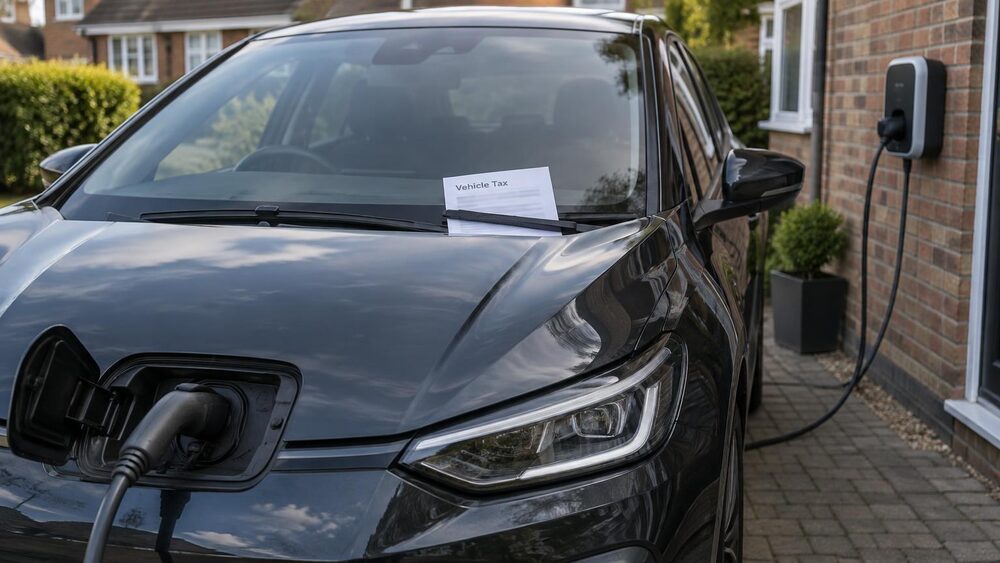
Electric, zero and low emission cars, vans and motorcycles are now subject to the vehicle tax rates that were introduced on 1 April 20251. The change applies to both new and existing vehicles, and the amount payable depends on the type of vehicle and when it was registered1.
The Consumer Council, which publishes consumer guidance on electric vehicles, states the position plainly:
"Electric, zero and low emission cars, vans and motorcycles are now subject to the vehicle tax rates that were introduced on 1 April 2025."
The same guidance notes that this change applies to both new and existing vehicles, and that the amount payable depends on the type of vehicle and when it was registered1. The rates themselves, and the bands that apply to each vehicle type and registration date, are not set out in the published guidance; they are held on the GOV.UK page on vehicle tax for electric and low emissions vehicles1.
Why it matters for households
The tax now applies to vehicles already on the road, not only to new purchases, so owners of existing electric, zero and low emission cars, vans and motorcycles are within scope from 1 April 20251. What a household pays depends on two things: the type of vehicle and when it was registered1.
This sits alongside other costs of running an electric vehicle. The Consumer Council notes that the initial upfront purchase price of an electric vehicle tends to be higher than its petrol or diesel equivalent, while running and maintenance costs are lower1. Battery electric vehicles typically have much lower maintenance costs than petrol or diesel vehicles because they have fewer moving parts, whereas a plug-in hybrid retains a petrol or diesel engine and has similar maintenance requirements to a conventional vehicle1.
Charging costs vary by method. Home charging is described as the cheapest option compared with public charging, and using rapid or ultra rapid chargers on the public network can be more expensive than petrol1. A typical electric vehicle with a 60kWh battery takes just under nine hours to charge from empty to full with a 7kW charging point, and home charging at 7kW adds up to 30 miles of range per hour1. With a 50kW rapid charger, many electric vehicles can add up to 100 miles of range in around 35 minutes1.
For households without off-street parking, the Department for Infrastructure has launched charging solutions across pavements in Northern Ireland: an engineered channel cut into the footway, and a cable cover temporarily placed on a footway, the second of which is being introduced through a six-month rolling pilot allowing ongoing monitoring and evaluation1.
Electric vehicles remain subject to the MOT test from three years old, as other cars are, but do not require an emissions or noise test1.
What happens next
The electric vehicle chargepoint grant offers up to £350 towards the cost of installing a chargepoint at a property, subject to criteria including living in a flat you own, renting a residential property, or having on-street parking1. From 1 April 2026 the maximum grant will increase from £350 to £500 per socket1. The grant is not applied for by the buyer: the seller includes it as a discount in the purchase price, and only government-approved vehicles are eligible1.
Installing a home charging point is carried out by qualified specialist installers, and it is a legal obligation to notify Northern Ireland Electricity Networks of the installation of a charge point1. The typical cost of a home charge point is around £800 to £1,500, after which the household pays only for the electricity used1.
Further information on tax treatment of these vehicles is available on the GOV.UK page on vehicle tax for electric and low emissions vehicles1.
Sources1 cited
- Electric vehicles | Consumer Council consumercouncil.org.uk
 GOV.UKOfficial information on tax, benefits and government services
 MoneyHelperFree, impartial money and pensions guidance, set up by government
 Citizens AdviceFree advice on money, consumer and legal problems in England and Wales
 Turn2usFree benefits calculator and grants search from a charity
 Citizens Advice ScotlandFree advice across Scotland