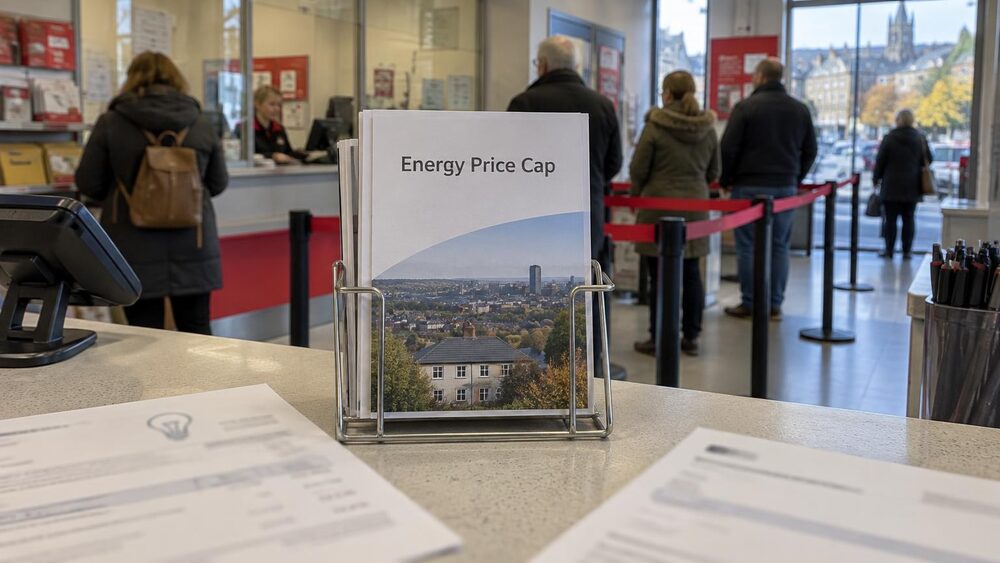
The energy price cap rose to £1,849 a year for a typical dual-fuel consumer on 1 April 2025, an increase of 6.4% compared with January's cap1. The Economics Observatory, citing higher wholesale gas prices, said the change raised the average annual cost for households from £1,738 to £1,8492. Consumer Scotland put the cap at £1,849 per year for the quarter from 1 April to 30 June 2025, and said that figure is 62% higher than the £1,138 charged between April and June 20213.
The cap limits what suppliers can charge per unit of energy and standing charge for households on a standard variable tariff3. It is not a cap on total bills: the £1,849 figure describes a household with typical energy use3.
Other regulated bills rose on the same date. The average annual water bill in England and Wales rose by £123 to £603, a 26% increase2. Which? reported that average water bills in Scotland rise by £44 a year, and that households in Northern Ireland are not billed for water1. On council tax, Which? said the average annual bill in England rises by £106 in the new tax year, with all 32 Scottish local authorities announcing increases averaging 9.6%, Welsh rises ranging from 5% to 9.2%, and Northern Ireland domestic rates rising by between 3.65% and 5.99%1. The Economics Observatory said nine in ten councils raised prices by 5%, the maximum permitted without a local referendum2.
| Measure | Change reported |
|---|---|
| Energy price cap, typical dual-fuel household | £1,738 to £1,849 a year, up 6.4%2 |
| Average water bill, England and Wales | Up £123 to £603, a 26% rise2 |
| Average council tax bill, England | Up £1061 |
| Council tax, Scotland | All 32 authorities increased, averaging 9.6%1 |
| Stamp duty threshold, England and Northern Ireland | £250,000 to £125,0001 |
The cap rise fed into wider inflation. The consumer price index rose to 3.5% in the year to April 2025, 0.9 percentage points higher than the previous month and the steepest increase since the peak of the post-pandemic inflationary wave, according to the Economics Observatory2. It said regulated household bills contributed 0.8 percentage points to that rise, and that UK inflation was then the second highest in the G7, behind Japan at 3.6%2.
"The energy price cap has increased over the past 12 months, from £1,690 in April 2024 to £1,849 in April 2025."
Why it matters for households
The cap applies to households on a standard variable tariff, so the April figure sets the maximum unit rates and standing charges those customers face for the quarter to 30 June 20253. Consumer Scotland's survey, carried out between 31 January and 14 February 2025 with 1,656 respondents, found 16% (equivalent to 393,000 households) said they found it difficult to keep up with energy bills, down from 26% a year earlier and 35% in winter 2022-20233. The proportion in energy debt rose to 15%, equivalent to 383,000 households in Scotland, up from 9% a year earlier3. A third (33%) said they could not heat their home to a comfortable level because of affordability concerns3. Debt and arrears in the Great British energy market reached £3.85bn in the fourth quarter of 2024, a record high3. Consumer Scotland also reported that 34% of respondents in energy debt or arrears said they had been put on a prepayment meter because of that debt, up from 16% a year earlier3.
The same date brought other changes to household costs. Stamp duty in England and Northern Ireland became payable on purchases above £125,000 rather than £250,000, with the first-time buyer threshold falling to £300,000 from £425,0001. The national living wage for workers aged 21 and over rose from £11.44 to £12.21 an hour, while employer national insurance contributions rose from 13.8% to 15% and the threshold at which employers start paying them fell from £9,100 to £5,000 a year2. The Economics Observatory said food and non-alcoholic drink inflation rose 0.4 percentage points in April, and that rising labour costs are likely to be felt most acutely in hospitality and retail2.
What happens next
The £1,849 cap covers 1 April to 30 June 20253. Consumer Scotland said it welcomed the UK government's plan to broaden eligibility for the Warm Homes Discount in winter 2025-2026 to include all households receiving means-tested benefits3. It also noted the shift from universal Winter Fuel Payments to means testing, which affected pensioners in winter 2024-20253. On income tax, Which? reported that the freeze on income tax and national insurance thresholds, first implemented in 2022, will end in 2028, with personal thresholds then rising in line with inflation; the Office for Budget Responsibility forecasts an additional 7.8 million taxpayers will have been drawn into higher bands by then1. The Bank of England's May 2025 Monetary Policy Report projects CPI peaking at 3.7% in September 2025, then falling to 2.4% by the second quarter of 20262.
Sources3 cited
- Spring into the new tax year: 7 tips to prepare your finances - Which? which.co.uk
- Why has UK inflation risen? - Economics Observatory economicsobservatory.com
- Insights from the 2025 Energy Affordability Tracker (HTML) | Consumer Scotland consumer.scot

 Financial Ombudsman ServiceFree, independent help when a complaint about a firm is not put right
 FSCSProtects your money if a bank, insurer or investment firm fails
 FCA Warning ListCheck whether a firm is authorised before you deal with it
 MoneyHelperFree, impartial money and pensions guidance, set up by government
 Citizens AdviceFree advice on money, consumer and legal problems in England and Wales