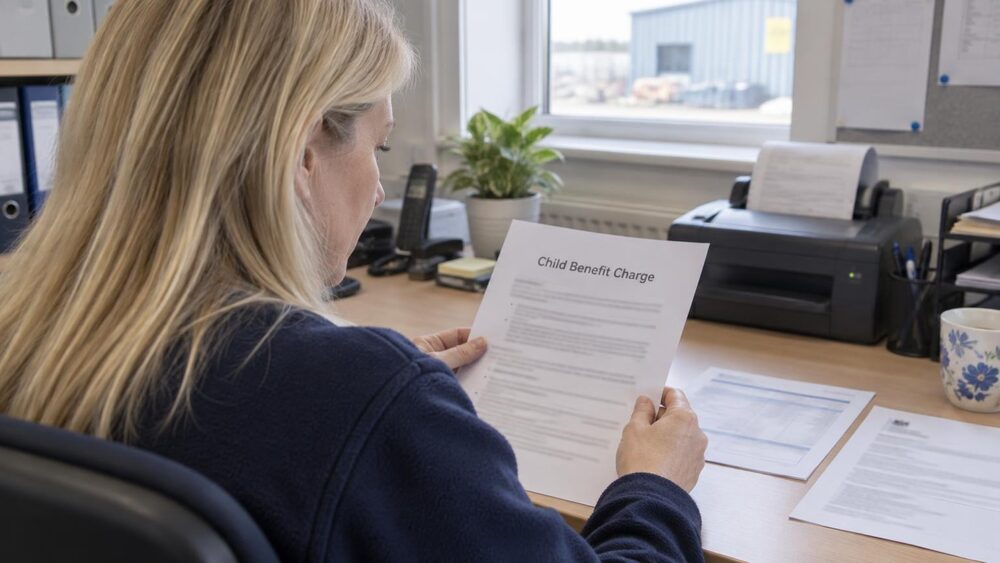
Families who owe the high income child benefit charge (HICBC) will be able to pay it through their tax code and company payroll rather than filing a Self Assessment return, under changes announced in the Spring Statement and reported by Which? on 18 April 20251. The new digital service is due to come into effect in summer 2025, and HMRC will contact affected families when it launches1.
The high income child benefit charge is a tax on child benefit that applies if a claimant or their partner earns more than £60,0001. Under the rules in place at the time of the report, paying the charge required filing a Self Assessment tax return1. Where a claimant or their partner earns over £80,000, the full benefit entitlement must be repaid through HICBC1. Once registered with HMRC, parents will be able to choose to have the charge collected through their company payroll, so they will no longer need to file a return to report child benefit1.
"thanks to changes announced in the Spring Statement, families will soon be able to pay HICBC directly through their tax code."
Child benefit rose on 6 April 2025 to £26.05 a week (£1,355 a year) for the eldest or only child and £17.25 a week (£897 a year) for each additional child1. Those figures are a 1.7% increase on the £1,331 a year for the eldest child and £881 a year for each additional child paid in 2024-251. The annual uplift is linked to the rate of inflation in September of the previous year; the 2025-26 increase is based on September 2024, when the Consumer Price Index fell to 1.7%1. Inflation had since risen to 2.6% at the time of the report1.
| Child benefit rate | 2024-25 | From 6 April 2025 |
|---|---|---|
| Eldest or only child | £1,331 a year | £1,355 a year (£26.05 a week) |
| Each additional child | £881 a year | £897 a year (£17.25 a week) |
The number of families claiming child benefit has fallen to its lowest level since 2003, according to HMRC figures cited in the report, with a steady decline in families claiming and receiving payments since the charge was introduced in 20131. Claimants who fail to report child benefit and pay the charge can face a penalty and interest on what they owe from the day payment was due, and late payment interest on taxes stood at 8.5%1.
Why it matters for households
The payroll route changes how the charge is paid, not who owes it. Families where one partner earns above £60,000 remain liable, and those above £80,000 still repay the full benefit entitlement1. What changes from summer 2025 is the administration: instead of a Self Assessment return, the charge can be collected through the tax code and payroll once a parent registers with HMRC1. Until the service launches, the existing reporting duty and the penalty and interest rules continue to apply to anyone who does not report the benefit and pay what is owed1.
Claiming child benefit also carries National Insurance credits, which count towards state pension entitlement for people who are not working, and can be transferred to a partner who is in work1. The report puts the value of the credits at up to £921 a year, the same as the current cost of buying voluntary contributions at £17.75 a week, and notes this applies even where a family chooses not to receive payments1.
What happens next
The changes come into effect in summer 2025, and HMRC will contact affected families when the new digital service launches1. No specific launch date has been reported.
Sources1 cited
- How child benefit is changing this year - Which? which.co.uk
 GOV.UKOfficial information on tax, benefits and government services
 MoneyHelperFree, impartial money and pensions guidance, set up by government
 Citizens AdviceFree advice on money, consumer and legal problems in England and Wales
 Turn2usFree benefits calculator and grants search from a charity
 Citizens Advice ScotlandFree advice across Scotland