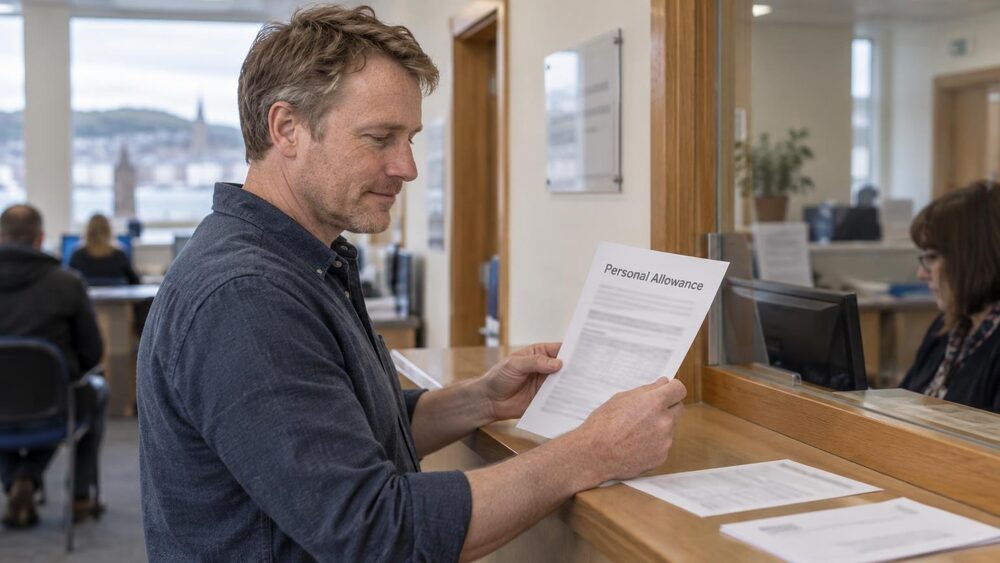
The UK-wide Personal Allowance remains frozen at £12,570, the Scottish Government confirmed in its Scottish Income Tax 2025 to 2026 factsheet, published on 4 December 2024. The factsheet states that the UK Government confirmed the freeze in the 2024 Autumn Statement1.
The Scottish Government set out changes to Scottish Income Tax rates and bands for 2025-26. The Starter rate band will increase by 22.6% and the Basic rate band by 6.6%, which the factsheet says will increase the thresholds for paying both the Basic and Intermediate rate of tax by 3.5%1. It adds that this increase is significantly above inflation, which it gives as 1.7% based on the Consumer Price Index from September 20241. The Higher, Advanced and Top rate thresholds will be frozen at their current levels in cash terms to the end of this Parliament (2026-27)1.
The Scottish Fiscal Commission has forecast that Income Tax will raise just under £20.5 billion in 2025-26 in Scotland1.
| Band | 2024-25 | 2025-26 | Rate |
|---|---|---|---|
| Starter | £12,571 to £14,876 | £12,571 to £15,397 | 19% |
| Basic | £14,877 to £26,561 | £15,398 to £27,491 | 20% |
| Intermediate | £26,562 to £43,662 | £27,492 to £43,662 | 21% |
| Higher | £43,663 to £75,000 | £43,663 to £75,000 | 42% |
| Advanced | £75,001 to £125,140 | £75,001 to £125,140 | 45% |
| Top | Over £125,140 | Over £125,140 | 48% |
The table assumes individuals receive the standard Personal Allowance. The factsheet notes that those earning more than £100,000 see their Personal Allowance reduced by £1 for every £2 earned over £100,0001.
"The UK Government confirmed in the 2024 Autumn Statement that the UK -wide Personal Allowance will remain frozen at £12,570."
The factsheet estimates that over 34% of Scottish adults, more than 1.6 million out of 4.65 million, are not affected by the 2025-26 policy changes because their income is below the UK-wide Personal Allowance of £12,5701. It says those earning less than around £30,300, about 51% of Scottish taxpayers, will continue to pay slightly less Income Tax in 2025-26 than if they lived elsewhere in the UK, and that no taxpayer will pay more Scottish Income Tax in 2025-26 than in 2024-25 on their current income1.
On take-home pay, the factsheet gives an example: taxpayers earning the median income of £29,800 in 2025-26 will be £5 better off than if they lived elsewhere in the UK and £15 better off than in 2024-25, and £12 better off than if all Income Tax bands had risen with inflation1. At £50,000, the position relative to the rest of the UK in 2025-26 is minus £1,528, while the position relative to 2024-25 is plus £151.
Why it matters for households
The Personal Allowance is the amount of income most people can receive before paying Income Tax, and it applies across the UK. Because it stays at £12,570, the point at which Income Tax starts does not move for 2025-26, and more of any pay rise falls into taxed income than would be the case if the allowance rose with prices. The freeze was confirmed by the UK Government in the 2024 Autumn Statement1.
For Scottish taxpayers, the changes to the Starter and Basic bands mean the thresholds at which the Basic and Intermediate rates begin rise by 3.5%, while the Higher, Advanced and Top thresholds stay at their current cash levels to 2026-271. The factsheet says almost half (47%) of Scottish households are better off, with over three-quarters (76%) either better off or unaffected as a result of the Scottish Income Tax changes, and that around 62% of households in Scotland are better off or unaffected under the Scottish tax and social security system compared with the rest of the UK1. It also says the negative impact of frozen thresholds principally falls on the highest earning 20% of households, with the top 10% paying an average of 0.1% of their income, around £130, more1.
People earning above £100,000 are affected by the taper, under which the Personal Allowance is reduced by £1 for every £2 of income above that level1. The guide to losing your Personal Allowance above £100,000 sets out how that reduction works, and the complete guide to personal tax in the UK covers allowances and bands more broadly. Married couples and civil partners may be able to transfer part of the allowance through the Marriage Allowance, and the comparison of Marriage Allowance and Married Couple's Allowance explains which applies to whom.
What happens next
The Scottish rates and bands described here are proposed for 2025-26, with the Higher, Advanced and Top thresholds frozen to the end of this Parliament in 2026-271. The factsheet does not set out a date on which the Scottish Parliament will vote on the proposals, and no further UK-wide changes to the Personal Allowance beyond the confirmed freeze have been reported1.
 GOV.UKOfficial information on tax, benefits and government services
 MoneyHelperFree, impartial money and pensions guidance, set up by government
 Citizens AdviceFree advice on money, consumer and legal problems in England and Wales
 Turn2usFree benefits calculator and grants search from a charity
 Citizens Advice ScotlandFree advice across Scotland