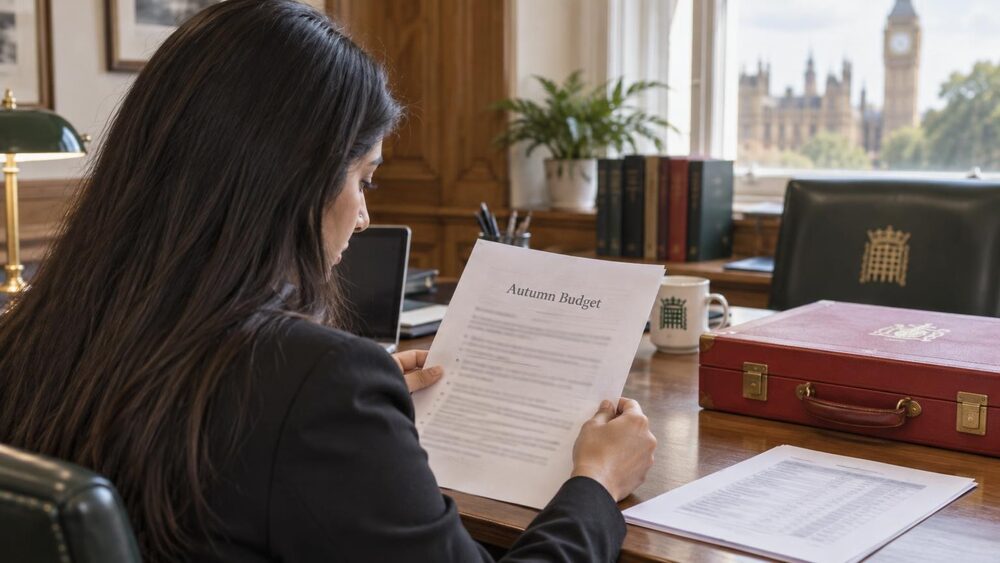
Rachel Reeves delivered the Autumn Budget on 30 October 2024, Labour's first Budget in 14 years and the first ever delivered by a woman, according to Full Fact1. The Chancellor of the Exchequer was also the first woman to deliver the Budget, the fact-checking organisation noted1. Outgoing Conservative leader Rishi Sunak responded for the Opposition1.
The single biggest tax-raising measure was an increase in employers' National Insurance contributions (NICs), which the Office for Budget Responsibility (OBR) expects to raise £25.7 billion a year by 2029/30, before accounting for the indirect effects of the policy1. The changes include a 1.2 percentage point rate increase, a reduction in the threshold at which employers begin paying NICs from £9,100 to £5,000 a year, and an increase in the Employment Allowance, the relief smaller employers can claim on their NICs liabilities1. The OBR forecasts that approximately three-quarters of the employer NICs will be passed on to employees through lower real wages1. It also says the passing-on is partly responsible for what it forecasts will be a "sharp" slowdown in real household disposable income growth in 2026/27 and 2027/281.
Overall, taxes are set to increase by £40 billion1. The Institute for Fiscal Studies said the Budget will see a 1.21% increase in taxes as a percentage of GDP by the end of the forecast period, while the Spring Budget in 1993 saw a 1.45% rise1. In cash terms, the OBR told Full Fact the overall tax increase is higher than in 1993, when Conservative chancellor Norman Lamont raised taxes by £38.5 billion1.
On the £22 billion figure, the OBR review found the Treasury knew in February about pressure on departments' budgets for 2024/25 amounting to £9.5 billion above what was known to the OBR at the time of the Spring Budget1. It added that "the size of the reserve to meet those pressures was reduced by £3.5 billion", information not shared with the OBR1. The Treasury audit published in July found the forecast overspend on departmental spending in 2024/25 was expected to be "£21.9 billion above the resource departmental expenditure limit (RDEL) totals set by the Treasury" in the 2024 Spring Budget1.
On bus fares, the £2 cap on single bus fares will be replaced with a £3 cap for the whole of 20251. Full Fact notes that before the general election the £2 cap in England had been due to end in December, but the Conservatives had pledged in their manifesto to extend it1.
The OBR forecasts real GDP cumulative growth from 2024 to 2028 of 7.1% under the Budget, down from 7.6% in March's forecast1. It forecasts growth of 1.1% this year, up 0.4 percentage points, and 2% in 2025, up 0.1 percentage points1. Growth in 2026 is forecast at 1.8%, down 0.2 percentage points, and 1.5% in 2027 and 2028, down 0.3 and 0.2 percentage points respectively1.
"Changes to employer NICs include a 1.2 percentage point rate increase, a reduction in the threshold at which employers begin paying NICs from £9,100 to £5,000 a year and an increase in the Employment Allowance"
Why it matters for households
The employer NICs changes take effect from the Budget, and the OBR expects most of the cost to reach employees through lower real wages rather than higher tax on payslips1. The OBR links the passing-on partly to a forecast "sharp" slowdown in real household disposable income growth in 2026/27 and 2027/281. The bus fare change means the £2 cap on single fares in England becomes a £3 cap for the whole of 20251. The Budget's tax rises total £40 billion overall1.
What happens next
The OBR forecasts the net economic effect of Budget measures on the level of output "begins to turn positive from 2032-33 onwards"1. It also says there is a roughly one-in-five chance that annual GDP growth in 2025 is either negative or above four per cent1. Full Fact said it had contacted both Labour and Conservatives for comment and would update its article if it received a response1.
Sources1 cited
- Autumn Budget 2024: fact checked - Full Fact fullfact.org
 GOV.UKOfficial information on tax, benefits and government services
 MoneyHelperFree, impartial money and pensions guidance, set up by government
 Citizens AdviceFree advice on money, consumer and legal problems in England and Wales
 Turn2usFree benefits calculator and grants search from a charity
 Citizens Advice ScotlandFree advice across Scotland