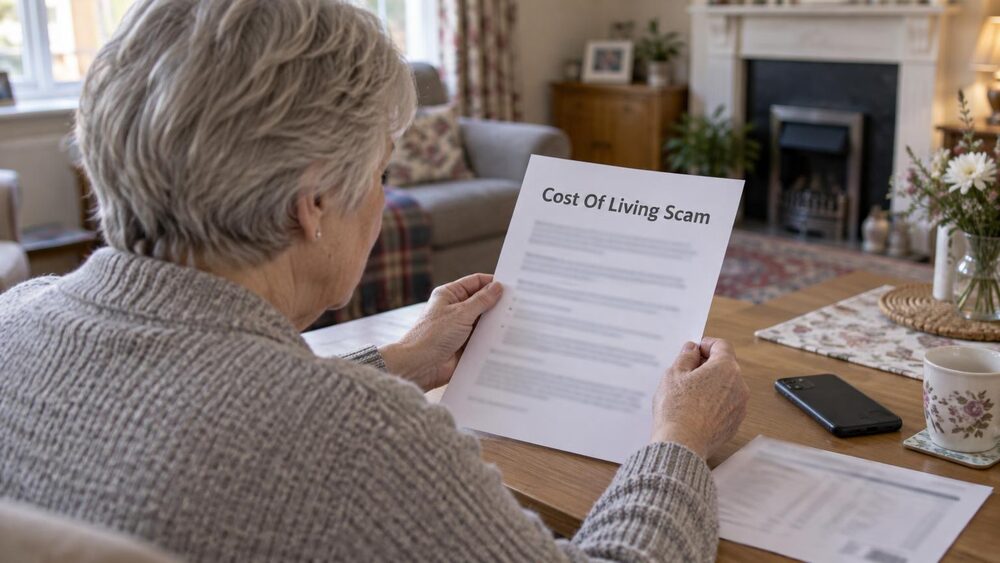
Which? reported on 18 September 2024 that scammers are using a text message and a copycat government website to try to steal personal information by imitating the Cost of Living Payments scheme1.
The text refers to an "annual allowance", which is not an official government scheme, and claims the recipient's 2023-2024 allowance has not been received1. It says there is a window of "three working days" to submit an application "as soon as possible"1. The link leads to a site using gov.uk logos, fonts and branding, alongside genuine links to the official gov.uk website, and asks for a name, phone number, email address and home address to register for a "£900 Cost of Living payment", as well as financial information1. Which? entered fake details and was taken on to a payment page1. It said the site was created the week before publication, and that asking for a "state" and "zip code" is a further sign of a scam because those terms are not typically used in the UK1.
"Scammers are attempting to steal personal information using a phoney 'annual living allowance' text and website."
The genuine Cost of Living Payments were offered to some people who were already entitled to certain benefits or tax credits on particular dates between 2022 and 2024, and no application is needed: eligible people are paid automatically1. Payments of £299, £300, £301, £324 and £326 were made to people receiving:
| Benefits and tax credits attracting Cost of Living Payments |
|---|
| Income-based Jobseeker's Allowance (JSA) |
| income-related Employment and Support Allowance (ESA) |
| Income Support |
| Pension Credit |
| Universal Credit |
| Child Tax Credit |
| Working Tax Credit |
The government has previously warned that messages asking people to apply or to contact someone about payments could be scams1. Scam websites can be reported to the National Cyber Security Centre, and texts forwarded to 7726; scams can also be reported to Action Fraud, or to the police on 101 in Scotland1.
Why it matters for households
The scam targets people who may be waiting for, or believe they are owed, cost of living support, and it asks for both identity details and financial information1. Anyone who has clicked a link and shared personal or financial information is advised to contact their bank immediately using the number on the back of their card, and to be cautious about further messages asking them to move money or make payments, as scammers may make contact again1. The official Cost of Living Payments have already been paid automatically to eligible recipients for the 2022 to 2024 period, so no application process exists for them1. More generally, fake websites and online shopping scams are covered in the site's scams and fraud guidance.
What happens next
No further action by government or regulators has been reported. Which? published the warning on 18 September 20241.
Sources1 cited
- Annual living allowance text scam - Which? which.co.uk
 FCA Warning ListCheck whether a firm is authorised before you deal with it
 Financial Ombudsman ServiceFree, independent help when a complaint about a firm is not put right
 Citizens AdviceFree advice on money, consumer and legal problems in England and Wales
 MoneyHelperFree, impartial money and pensions guidance, set up by government