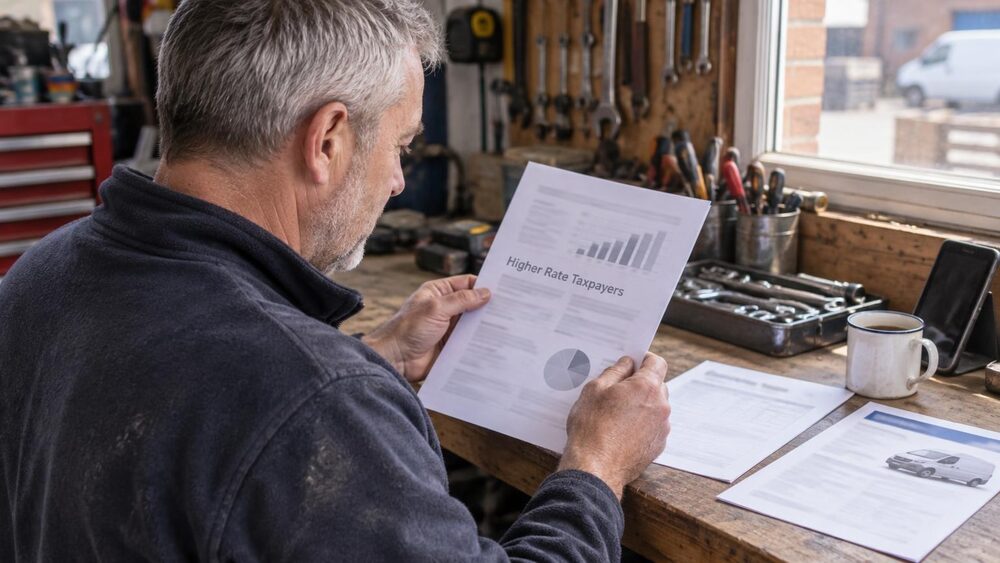
The number of people paying the 40% higher rate of income tax in England, Wales and Northern Ireland rose from 4.43 million in 2021-22 to 6.31 million in 2024-25, according to HMRC figures reported on 25 July 20241. That is an increase of 42% over three years, against a rise of 220,000, or 5%, in the previous four years from 2017-18 to 2021-221.
The same data shows the total number of income tax payers rose by 13%, from 33 million in 2021-22 to an estimated 37.4 million in the current financial year1. More than two million people have started paying basic-rate tax for the first time since 2021-22, and more than 500,000 have moved into the additional-rate bracket, where numbers have more than doubled1.
The thresholds have been frozen since 2021-22, so wages rising while bands stay fixed pull more people into higher bands, an effect described as fiscal drag1. For income tax in England, Wales and Northern Ireland, the bands are:
| Band | Rate | Income range |
|---|---|---|
| Basic | 20% | £12,570 to £50,270 |
| Higher | 40% | £50,271 to £125,140 |
| Additional | 45% | more than £125,140 |
The personal allowance is £12,5701. It is reduced by £1 for every £2 earned over £100,000, so by £125,140 all income is taxed1. Scotland has different bands and rates1.
"The jump from 4.43 million in 2021-22 to 6.31 million in 2024-25 is colossal compared to the increase of 220,000 seen during the previous four years."
Why it matters for households
A frozen threshold means a pay rise can move someone into the 40% band without any change in the tax rules, so the proportion of earnings taken in tax rises. The figures cover England, Wales and Northern Ireland only; Scottish taxpayers face separate bands1. The £100,000 threshold also affects the personal allowance, so earners just above it lose part of the allowance as income rises1.
For those affected, the report notes several tax-free or tax-relieved options. Up to £20,000 can be held in a cash or stocks and shares Isa, and up to £50,000 in premium bonds, which pay no interest but enter a monthly prize draw with prizes from £25 to £1m1. Pension contributions attract 20% relief automatically for basic-rate taxpayers; higher and additional-rate taxpayers must claim the remainder, 20% or 25% respectively, through a self-assessment return1. On dividends, the basic rate is 8.75%, the higher rate 33.75% and the additional rate 39.35%1.
What happens next
No further HMRC release or government decision is reported in the material. The 2024-25 figures are described as covering the current financial year1.
 GOV.UKOfficial information on tax, benefits and government services
 MoneyHelperFree, impartial money and pensions guidance, set up by government
 Citizens AdviceFree advice on money, consumer and legal problems in England and Wales
 Turn2usFree benefits calculator and grants search from a charity
 Citizens Advice ScotlandFree advice across Scotland