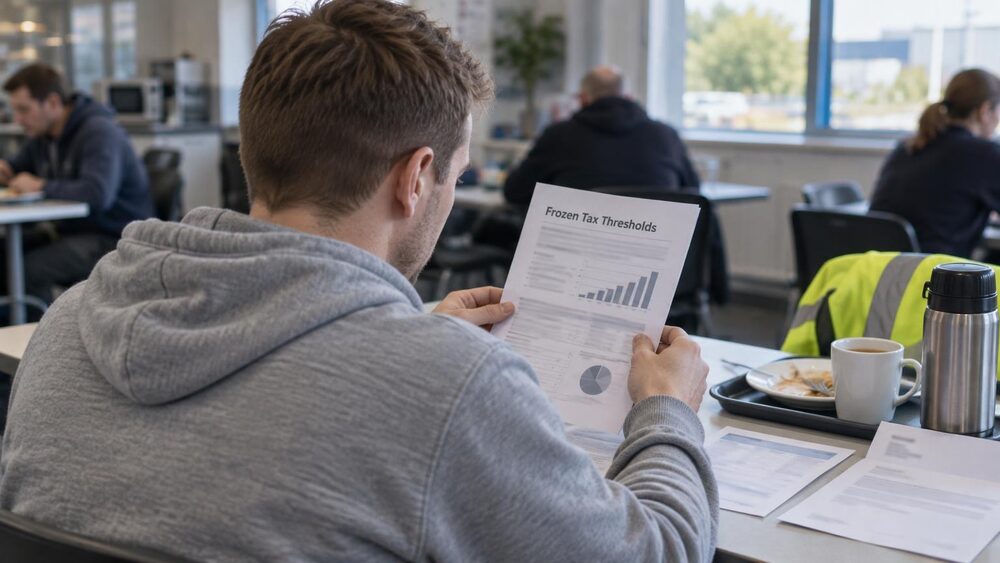
The Resolution Foundation has set out the effect of freezing Income Tax and National Insurance thresholds instead of raising them in line with inflation, in a briefing published on 20 November 2023 ahead of that year's Autumn Statement. The think tank says the freeze, rather than an uplift of 6.7 per cent, will raise £8 billion and cost all basic rate employees £270, and pensioners £1701.
The briefing frames the freeze as one of the "tax rises already in train" that would sit alongside any rate cut announced at the fiscal event1. It puts the freeze in the context of a wider £40 billion set of tax rises over a six-year freeze in personal and employer tax thresholds1.
The distributional figures in the briefing are specific. Someone on the median salary of £27,000 would be around £120 worse off, and the biggest loss, in both cash and proportional terms, would be for someone earning around £13,5001. The briefing states that a person would only be a winner in April if they earn between £40,000 and £51,000 from these offsetting tax changes1.
On a possible 1p cut to the basic rate, which the briefing treats as the frontrunner at the time, it says 36 million people including 8 million pensioners would benefit, with an average gain of around £200, at a cost of £7 billion per year1. It adds that an income of at least £50,270 would be needed to receive the maximum benefit of £380, that 80 per cent of the gains go to the richest half of the population and half to the top quarter, and that poorer workers on Universal Credit lose 55 per cent of any tax cut through means-testing1.
"If we think about the impacts of these changes next April in particular, the Income Tax and National Insurance thresholds being frozen (rather than increasing by 6.7 per cent in line with inflation) will raise £8 billion"
| Measure | Figure given |
|---|---|
| Revenue raised by the threshold freeze | £8 billion1 |
| Cost to all basic rate employees | £2701 |
| Cost to pensioners | £1701 |
| Cost to someone on the median salary (£27,000) | around £120 worse off1 |
| Largest loss, in cash and proportional terms | someone earning around £13,5001 |
| Wider tax rises from the six-year threshold freeze | £40 billion1 |
Why it matters for households
A freeze means the points at which Income Tax and National Insurance start to be paid, and the points at which higher rates begin, stay where they are while pay rises. More of a pay rise is therefore taxed than would be the case under an inflation-linked uplift. The Resolution Foundation's estimate is that this costs a basic rate employee £270 and a pensioner £170, relative to a 6.7 per cent uprating1.
The effect is not uniform. The briefing says the largest loss falls on someone earning around £13,500, and that a worker on the median salary of £27,000 is around £120 worse off, while those earning between £40,000 and £51,000 come out ahead once the offsetting changes are combined1. Households receiving Universal Credit lose 55 per cent of any tax cut through means-testing, according to the briefing1.
The freeze sits within a wider set of threshold freezes that the briefing values at £40 billion over six years1. The background to how inflation normally feeds into thresholds and benefits is set out separately.
What happens next
The briefing was published on 20 November 2023, two days before that year's Autumn Statement, and describes the rate cut as likely but still uncertain at that point1. It does not set out a timetable for the threshold freeze beyond describing it as a six-year freeze and referring to impacts "next April"1. No further dates for the freeze are given in the briefing.
Sources1 cited
- The coming tax reshuffle: winners and losers • Resolution Foundation resolutionfoundation.org
 GOV.UKOfficial information on tax, benefits and government services
 MoneyHelperFree, impartial money and pensions guidance, set up by government
 Citizens AdviceFree advice on money, consumer and legal problems in England and Wales
 Turn2usFree benefits calculator and grants search from a charity
 Citizens Advice ScotlandFree advice across Scotland