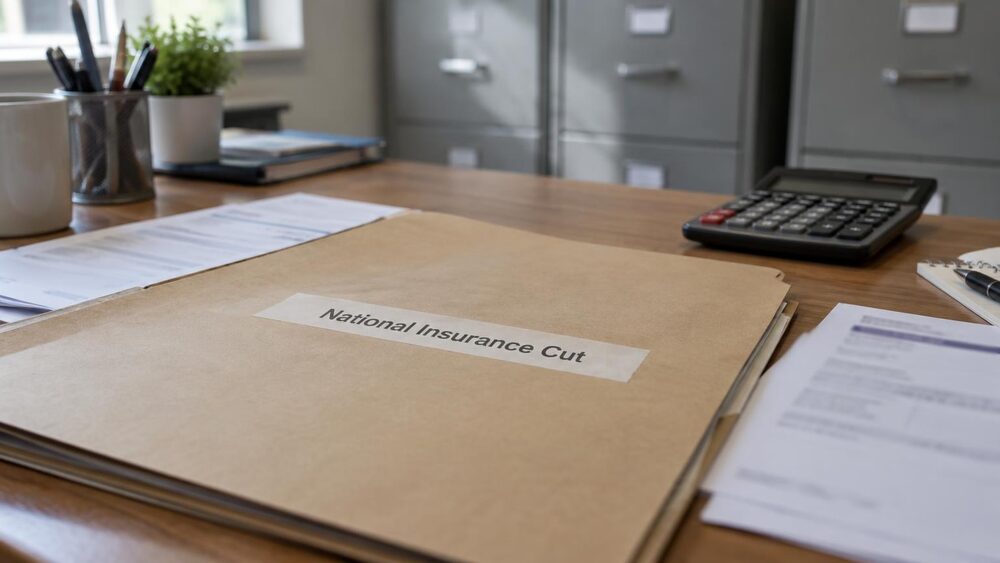
Jeremy Hunt announced a further 2p cut in National Insurance in his Spring Budget on 6 March 2024, according to the Resolution Foundation, which describes the measure as the centrepiece of the Budget1. The cut applies to employee and self-employed National Insurance rates and follows January's 2p cut in employee rates and a 1p cut in the rate for the self-employed1. Full Fact reported before the speech that the Chancellor was widely expected to make the cut, and that the government may claim it will save the average worker around £450 a year, as it did for the similar 2p cut in last year's Autumn Statement2. Full Fact's check of that earlier claim found it was true but did not tell the full story, because it did not take account of other tax changes including frozen income tax thresholds2.
National Insurance does not apply to unearned income, nor to the earnings of people over state pension age, so the Resolution Foundation calculates the £10 billion-a-year tax cut is worth nothing directly to pensioners1. Which? states that those over state pension age do not pay National Insurance, though in some cases self-employed workers over state pension age may pay Class 4 contributions until the end of the tax year in which they reach state pension age3. It adds that if you are already receiving the state pension, the National Insurance changes will not impact you in any way, and that for those under state pension age the 2p cut will not impact entitlement to the state pension, because entitlement depends on years of contributions rather than the amount paid3. To claim the full rate of the new state pension you need 35 years, and over 10 years to get anything at all3.
The Resolution Foundation says that policies announced since 2019, including the six-year freeze to tax thresholds, will cut the incomes of pensioners by an average of £900 a year, with the largest losses felt by pensioners on the highest incomes1. It adds that the six-year freeze to income tax thresholds will lead to an average loss of £770 a year for 8 million taxpaying pensioners1. Looking at all tax and benefit policies announced since 2010, including the triple lock and the new state pension, it finds pensioners are on average £1,000 better off, with middle-income pensioner households set to gain £1,400 on average, pensioners in the poorest fifth set to gain £560 on average, and only those in the richest 5 per cent set to lose overall, by £1,800 on average1.
Which? reports that the state pension will rise by 8.5% in April 2024, reflecting September's inflation figure under the triple lock3. The triple lock, introduced by the Conservative-Liberal Democrat coalition government in 2011, increases state pension payments each year by whichever is higher of September's Consumer Price Index, average earnings growth as of July, or a guaranteed minimum of 2.5%3. Which? says experts have warned nearly half a million more pensioners may need to start paying income tax in the 2024-25 tax year once the state pension rises in April, because of the triple lock and frozen tax thresholds3. It also notes that all pensioners are required to pay income tax if they exceed their personal allowance, and that if total income from all sources including the state pension is greater than the personal allowance, tax is due on the state pension and is normally deducted from private pension or earnings paid through PAYE3.
"The centrepiece of Jeremy Hunt's Spring Budget was a 2p cut in employee and self-employed National Insurance rates"
Why it matters for households
Employees and the self-employed under state pension age pay less National Insurance on their earnings from the point the cut takes effect, while pensioners see no direct change to their National Insurance bill, since people over state pension age do not pay it3. Entitlement to the state pension is unaffected by the rate cut for those still below state pension age, because qualifying years depend on contributions paid or credited rather than amounts3. National Insurance credits can be awarded during periods out of work because of illness, unemployment or maternity leave, to parents of children under 12 for whom child benefit is claimed, and to carers3. Pensioners who receive the state pension see the 8.5% April rise, but the Resolution Foundation's figures show the freeze to income tax thresholds reducing pensioner incomes on average over this parliament, with the effect concentrated among higher-income pensioner households3.
What happens next
The Resolution Foundation notes that the Chancellor has said abolishing National Insurance would not happen in the next parliament but is a "long-term ambition"3. Which? reports that the Liberal Democrats have publicly confirmed they will keep the triple lock if elected, and that it is rumoured both Labour and the Conservatives will keep it in their manifestos, though this had not been publicly confirmed by either party as of 15 March 20243. Full Fact notes that the Institute for Fiscal Studies describes this as "the biggest tax-raising parliament in modern times"2.
Sources3 cited
- Pensioner progress • Resolution Foundation resolutionfoundation.org
- Fact checking the Budget - Full Fact fullfact.org
- National Insurance cuts and the state pension - 7 questions answered - Which? which.co.uk
 GOV.UKOfficial information on tax, benefits and government services
 MoneyHelperFree, impartial money and pensions guidance, set up by government
 Citizens AdviceFree advice on money, consumer and legal problems in England and Wales
 Turn2usFree benefits calculator and grants search from a charity
 Citizens Advice ScotlandFree advice across Scotland