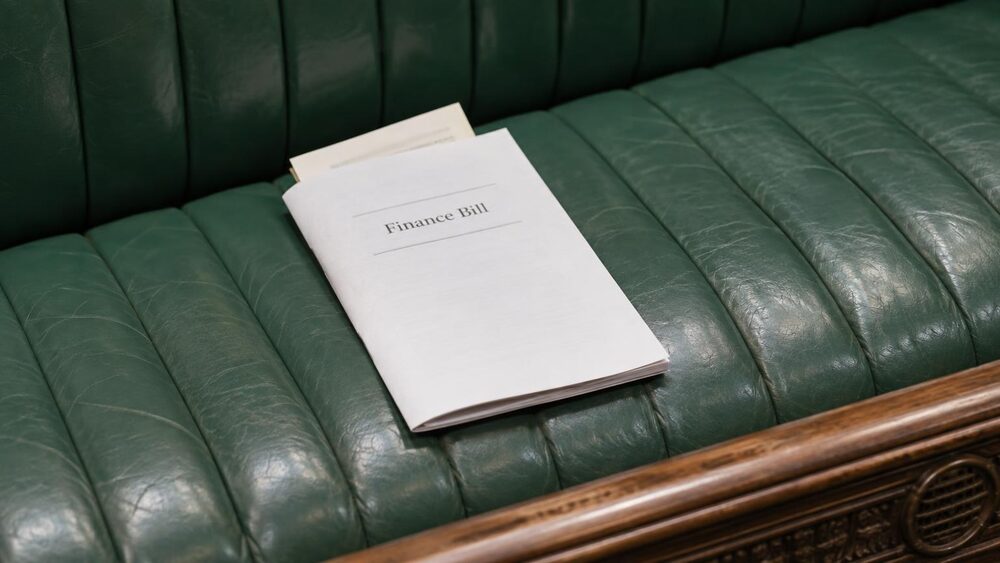
The House of Commons voted on the 37 Ways and Means resolutions covering the measures to be included in the Finance Bill 2023-24 at the end of its debate on 27 November 2023, and did not divide on any of them1. The resolutions are a procedural step required before the Government can publish a Finance Bill, and the Government introduced them following the Chancellor's Autumn Statement1. The Finance Bill 2023-24 was then introduced and received its first reading1.
Jeremy Hunt presented the Autumn Statement to the House on 22 November 20231. In his statement the Chancellor announced a cut in the main rate of National Insurance contributions paid by employees, primary Class 1 NICs, and the main rate paid by the self-employed, Class 4 NICs1. The Commons debated the Ways and Means resolutions on 22, 23 and 27 November 2023, formally on the resolution relating to rates of tobacco products duty, while MPs debated the wider contents of the Autumn Statement and the broader UK economic and fiscal context1.
The Library sets out the two measures that gathered most interest in the Bill: the abolition of the pensions lifetime allowance, on which HMRC published a tax information and impact note explaining the policy from 6 April 2024, and the announcement that capital allowance full expensing would be made permanent1. An overwhelming majority of the proposals in the Bill had already been published by the Government in July 20231. Separate legislation was introduced on 23 November 2023 to give effect to some changes, and it undertook all its remaining Commons stages on 30 November 20231.
"At the end of the debate on 27 November 2023, the House voted on the Ways and Means resolutions. The House did not divide on any of them."
The Bill's second reading took place on Wednesday 13 December 20231. Drew Hendry's amendment to decline the Bill's second reading was negatived on division by 46 ayes to 296 noes, and the second reading was agreed to on division by 291 ayes to 54 noes1. The Committee of the Whole House stage took place on 10 January 2024, and the Public Bill Committee stage on 16 January 2024, after which the Bill finished that stage without amendment1. The deadline for Members to table amendments was Wednesday 31 January 20241. The Bill returned to the floor of the House on Monday 5 February 2024 for Report Stage and third reading, where the House divided on third reading and agreed it by 283 ayes to 39 noes1. It received Royal Assent on 22 February 2024 and became the Finance Act 20241.
Why it matters for households
The Bill carries the tax measures announced in the Autumn Statement, including the cut to the main rate of employee National Insurance contributions and the main rate for the self-employed1. The abolition of the pensions lifetime allowance is covered by a tax information and impact note explaining the policy from 6 April 20241. The tax measures in the Bill took effect through the Finance Act 2024, which received Royal Assent on 22 February 20241. The Library notes that the Government's Impact on Households document and HMRC's tables of tax rates and allowances for 2023/24 and 2024/25 were published alongside the Autumn Statement1.
What happens next
The Bill has completed its passage and became the Finance Act 2024 on 22 February 20241. No further stages of this Bill have been reported.
Sources1 cited
- Autumn Statement 2023 and Finance Bill 2023-24 - House of Commons Library commonslibrary.parliament.uk
 GOV.UKOfficial information on tax, benefits and government services
 MoneyHelperFree, impartial money and pensions guidance, set up by government
 Citizens AdviceFree advice on money, consumer and legal problems in England and Wales
 Turn2usFree benefits calculator and grants search from a charity
 Citizens Advice ScotlandFree advice across Scotland