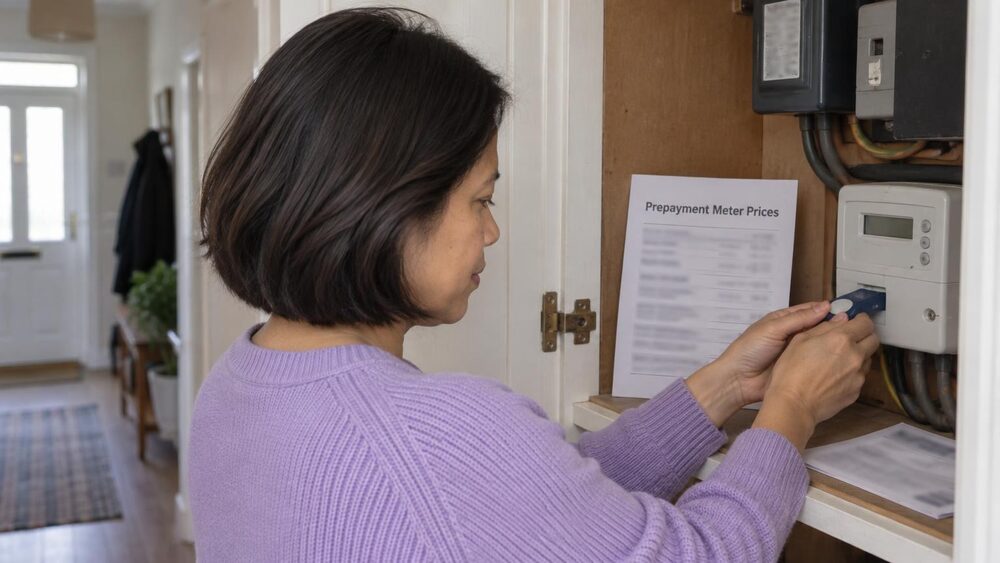
Households with prepayment meters have not been charged more for their energy than comparable direct debit customers since 1 July 2023, according to Age UK1. The change ended a price premium that had applied to prepayment tariffs.
Age UK states: "However, from 1 July 2023, households with prepayment meters won't be charged more for their energy."1
The charity also reports that Ofgem has been reviewing how to make the removal permanent. "From April 2024, Ofgem are reviewing ways to permanently remove the 'premium' on prepayment meter prices," it says1. The outcome of that review has not been reported.
Separately, Age UK says customers who had a prepayment meter wrongly installed to recover energy debt, or where supplier processes were not followed adequately, between 1 January 2022 and 31 January 2023 are due compensation following a compliance review by Ofgem1. It adds that some will have a portion of their debt written off1. The amounts and timings of that compensation have not been reported.
The abrdn Financial Fairness Tracker, published in December 2023, puts a figure on the saving: "This price premium was scrapped in July 2023, saving PPM households around £21 a year on their bills"2. The tracker, produced by the Personal Finance Research Centre at the University of Bristol, surveyed 5,594 households in October 20232.
| Item | Detail |
|---|---|
| Premium removed | 1 July 20231 |
| Estimated annual saving per prepayment household | Around £212 |
| Ofgem review of permanent removal | From April 20241 |
| Compensation window for wrongly installed meters | 1 January 2022 to 31 January 20231 |
Age UK notes that a price cap applies to most standard variable prepayment tariffs1, and that prepayment meters can be topped up using a key or card at local shops1. It also says households should not have to pay to have a prepayment meter installed1, and that suppliers should not install them in the most vulnerable households1.
Why it matters for households
The change affects households that pay for gas or electricity through a prepayment meter rather than by direct debit. From 1 July 2023, the unit rates and standing charges on prepayment tariffs are no longer set higher than the equivalent direct debit tariff, so the same amount of energy costs the same on either payment method1. The tracker estimates the saving at around £21 a year for a prepayment household2.
The practical effect is that prepayment customers no longer pay a penalty purely for how they pay. That matters because prepayment meters are more common among households on lower incomes and those managing debt. The tracker found that 4.8 million households, or 17% of all households, were in serious financial difficulties in October 2023, up from 2.8 million, or 10%, in October 20212. Among those in serious difficulty, 65% had taken on new debt in the past six months, compared with 19% of financially secure households2.
The compensation route covers a defined group: those whose meters were installed to recover energy debt, or where supplier processes fell short, between 1 January 2022 and 31 January 20231. Age UK says some of those customers will also have part of their debt written off1. It does not set out how much compensation is due or when payments will be made.
For anyone checking a prepayment meter reading, Age UK says to take the five black numbers from left to right and ignore any red numbers1. It also notes that smart meters are being offered to every household in England, Wales and Scotland, that there is no charge for installation, and that they send readings to the supplier automatically1.
What happens next
Ofgem's review of ways to remove the prepayment premium permanently began from April 20241. No conclusion has been reported. The compensation process for wrongly installed meters, covering installations between 1 January 2022 and 31 January 2023, is also under way, with no payment timetable reported1.
Households wanting to understand their options can read our guides to cutting household bills and financial inclusion, or find free money guidance from MoneyHelper, Citizens Advice and money coaching services.
Sources2 cited
- Types of energy meters explained | Age UK ageuk.org.uk
- abrdn Financial Fairness Tracker (Oct 2023): Turning a corner? bristol.ac.uk

 Financial Ombudsman ServiceFree, independent help when a complaint about a firm is not put right
 FSCSProtects your money if a bank, insurer or investment firm fails
 FCA Warning ListCheck whether a firm is authorised before you deal with it
 MoneyHelperFree, impartial money and pensions guidance, set up by government
 Citizens AdviceFree advice on money, consumer and legal problems in England and Wales