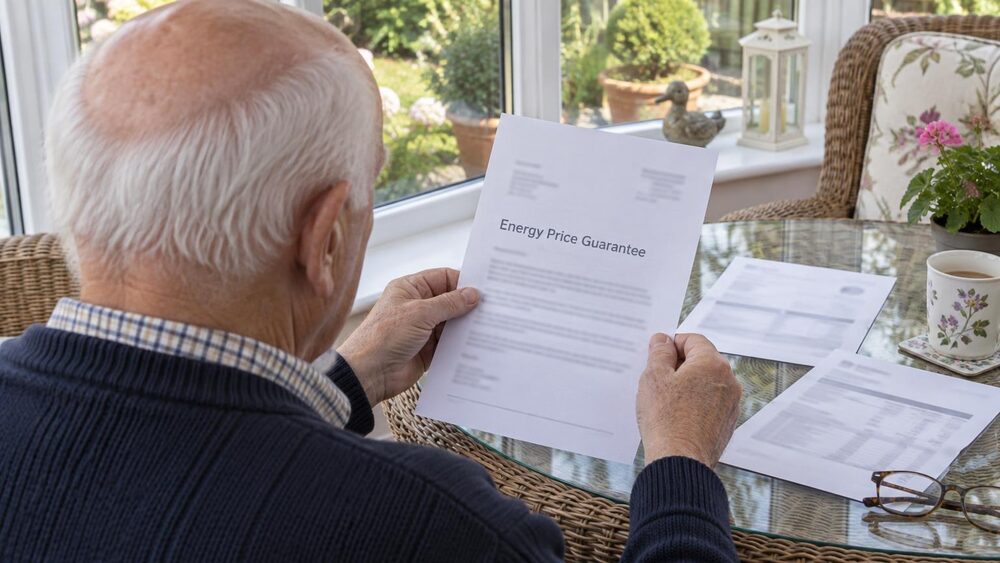
The Energy Price Guarantee (EPG) was extended to the end of June 2023, Consumer Scotland said in a response to an Ofgem call for input on the debt-related costs allowance in the energy price cap, published on 17 May 20231. The extension is referred to in the section of that response dealing with recent market developments, alongside the Energy Bill Support Scheme (EBSS) and changes to the practice around involuntary prepayment meter installation1.
Consumer Scotland is the statutory body for consumers in Scotland, established on 1 April 2022 under the Consumer Scotland Act 2020 and accountable to the Scottish Parliament1. Its response sets out its position on how Ofgem should treat debt-related costs within the energy price cap, the mechanism that limits what suppliers can charge per unit of gas and electricity1.
The response states that the most recent cap period allowed for debt-related costs representing 6% of typical dual fuel standard credit bills, 1% of typical dual fuel direct debit bills and 0.4% of dual fuel prepayment meter bills1. Consumer Scotland said this structure, calculated on the basis of debt risk between payment types, "does not reflect a principle of fairness", and that it would like to see parity of debt-related allowance between direct debit and standard credit consumers1.
"We would encourage Ofgem to adopt an approach which delivers, as far as possible, an affordable cost for consumers through the price cap mechanism, whilst also minimising the risk of a high burden of bad debt which will increase future costs for consumers."
The response also cites Consumer Scotland's own research on affordability by payment type.
On government support, Consumer Scotland said the EBSS and EPG interventions are likely to have lowered debt-related costs incurred by suppliers, but that this has to be viewed within the wider context of the cost of living crisis1. Its research found one-third of consumers reported not managing well financially, 35% reported it was difficult to keep up with energy bills and 68% reported rationing their energy use1. It said there may be more customers in debt because of the wider cost of living crisis1.
The response also notes Scottish Government support outside the UK-wide scheme. In May 2023, the Scottish Government announced its own £10m extension of the Fuel Insecurity Fund, which directs consequentials from the UK Government's Household Support Fund to vulnerable households, with energy debt applications administered through the Home Heating Support Fund1. A second initiative, the Social Housing Fuel Support Fund, issued 15,986 fuel vouchers to July 2022 at a total value of £783,314; figures for its third round were due to be published in July 20231.
Why it matters for households
The EPG is one of the mechanisms that has limited the amount households pay for each unit of gas and electricity, and its extension to the end of June 2023 means that limit applied for longer than it otherwise would have1. The debt-related costs allowance sits inside the energy price cap and is recovered through bills, so how Ofgem distributes it between payment types affects what standard credit, direct debit and prepayment meter customers each pay towards supplier bad debt1. Consumer Scotland's figures show the allowance currently falls most heavily on standard credit bills at 6% of a typical dual fuel bill, against 1% for direct debit and 0.4% for prepayment meters1. Its evidence also indicates that standard credit customers report more difficulty keeping up with bills than direct debit customers, though fewer than prepayment meter customers1. Households in Scotland may also be affected by the Fuel Insecurity Fund and its associated debt write-offs, which are administered separately from the UK-wide scheme1.
What happens next
Consumer Scotland said it has not taken a view on questions 11 to 15 of the call for input, but is comfortable with Ofgem working towards an October 2023 cap adjustment if that is the decision taken1. Figures for the third round of the Social Housing Fuel Support Fund were due to be published in July 20231. No further detail on the EPG's position after the end of June 2023 is given in this response1.

 Financial Ombudsman ServiceFree, independent help when a complaint about a firm is not put right
 FSCSProtects your money if a bank, insurer or investment firm fails
 FCA Warning ListCheck whether a firm is authorised before you deal with it
 MoneyHelperFree, impartial money and pensions guidance, set up by government
 Citizens AdviceFree advice on money, consumer and legal problems in England and Wales