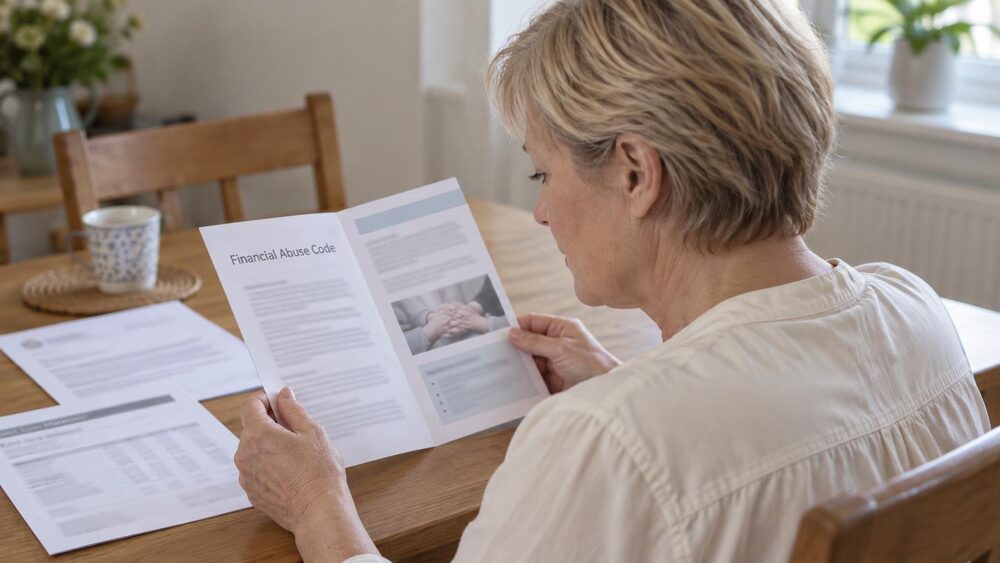
The banking industry body UK Finance expanded its voluntary code of practice on financial abuse in January to cover how banks deal with debt separation, according to Which?1. The code was first launched in 2018 and has been signed up to by some of the biggest high street banks1.
The code requires staff to have training to spot and sensitively deal with financial abuse, and participating banks should have a "vulnerable customer" department customers can speak to1. UK Finance told Which?:1
"Seeking help is the first step in victims regaining control of their money and their independence, and it is imperative that the individual is treated in a sensitive, compassionate manner."
Some banks offer help beyond the code. HSBC allows victims to request a generic sort code to stop a perpetrator knowing their whereabouts, and TSB launched an Emergency Flee Fund in December to help people fleeing abusive relationships1.
Why it matters for households
Financial abuse covers a broad spectrum, from a carer taking money from a client to a partner controlling everyday spending, building up debts in someone else's name, or manipulating someone into signing over property1. In 2021 the Domestic Abuse Act was updated to legally recognise economic abuse as a form of domestic abuse1. Abusers can be romantic partners, family members, friends or carers1.
The change to the code matters most for people carrying joint debts with an abuser, because it sets out how banks should handle separating those debts. The guidance took effect in January 20231.
Charities report rising demand. Hourglass, which works to prevent the abuse of older people, took 2,909 calls relating to financial abuse in 2022, compared with 1,676 in 2021, a rise of 73%1. Its deputy chief executive, Veronica Gray, said people over 50 hold 70% of the wealth in the UK, adding: "This in itself makes them a target. Wealth does not equal protection."1
According to the charity Surviving Economic Abuse, the average debt in victims' names resulting from an abuser's control over their finances now stands at £20,000, compared with around £3,000 in 20201. Two thirds of domestic abuse survivors believe abusers are using the cost of living crisis as a tool for coercive control, according to a survey by Women's Aid1.
In a survey of 1,025 Which? members, 4% said they had been the victim of financial abuse and 13% said they knew someone who had been1. A survey by Hourglass and Hodge Bank in October 2021 found more than nine in 10 people aged 45 to 70 think financial service providers are not doing enough to protect older people from financial abuse1.
Lasting power of attorney can be misused, with attorneys taking advantage of the person they are meant to protect1. Sheree Green, director of Greenchurch Legal Services, said that by the time the Office of the Public Guardian is involved it may be too late: "By then, most of the money is gone, and often victims are living hand to mouth."1
What happens next
No further changes to the code have been reported. The sources do not set out a timetable for reviewing the expanded guidance or for extending it to banks that have not signed up.
Support contacts given by Which? include Hourglass on 0808 808 8141, Surviving Economic Abuse on 0808 196 8845, and the Office of the Public Guardian safeguarding unit at opg.safeguardingunit@publicguardian.gov.uk1.

 Financial Ombudsman ServiceFree, independent help when a complaint about a firm is not put right
 FSCSProtects your money if a bank, insurer or investment firm fails
 FCA Warning ListCheck whether a firm is authorised before you deal with it
 MoneyHelperFree, impartial money and pensions guidance, set up by government
 Citizens AdviceFree advice on money, consumer and legal problems in England and Wales