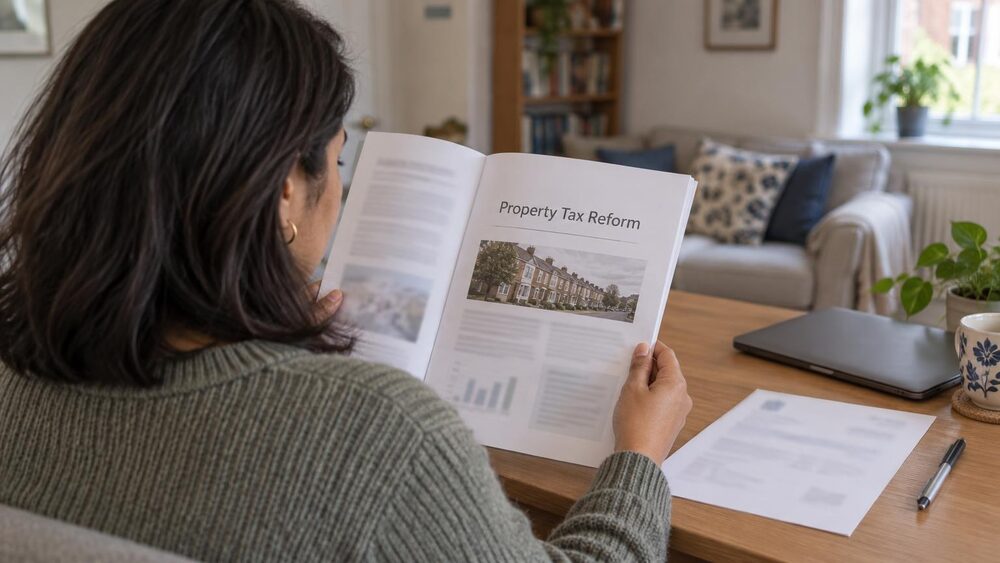
The Resolution Foundation published a briefing note, Home Economics, on 24 September 2026 setting out how England taxes residential property and proposing that Council Tax and Stamp Duty be replaced with a single annual tax charged at 0.7 per cent of property value1. The note says the reform should be revenue-neutral and charged on occupiers, with a rebate scheme for poorer households and deferral of bills until sale for those with substantial housing equity but little income1.
The foundation says the UK raises more from property taxes than any other OECD country, at 3.7 per cent of GDP in 2023 against an OECD average of 2 per cent, but that the design is poor1. Council Tax bills in England still rest on 1991 valuations, and since 1995 prices have risen 7.3-fold in Inner London against 4.2-fold in the North East1. By 2030-31, it estimates the average effective annual tax rate on a £100,000 home, taking Council Tax and Stamp Duty together, will be almost three times that on a £1 million home1.
Measured against a uniform proportional property tax, the foundation says 61 per cent of households in England will be overpaying by an average of £430 a year by 2030-31, while 36 per cent will be underpaying by an average of £680 a year1. It puts the regional split at 85 per cent of North East households losing by an average of £710 a year, against four-fifths (80 per cent) of London households underpaying by an average of £950 a year1. It also says 63 per cent of households below the 80th percentile of the income distribution lose out, while 56 per cent of households in the top 5 per cent underpay1.
On London, the foundation says the capital underpaid £3.1 billion of tax in 2024-25 relative to the value of its housing, and that if the rest of England were taxed at a rate as low as London's, that would amount to a £12.3 billion tax cut1. Mortgage Introducer reports the same £3.1 billion figure for 2024-25 and cites Hannah Aldridge, senior research and policy analyst at the think tank, calling it "a huge £3.1 billion subsidy for those living in London"2. It also reports illustrative comparisons: Burnley households pay the equivalent of 1.98 per cent of their home's value in Council Tax each year, the highest ratio in the country, against 0.12 per cent in Westminster2. It gives the Band D bill in Burnley as £2,549 where the average home is worth about £129,000, and £1,050 in Westminster where the average is about £844,0002. Applying a 0.7 per cent rate, it says the Burnley bill would fall to roughly £900 a year and the Westminster bill would rise to roughly £5,9002.
"Council Tax should be replaced with a proportional property tax charged at a single rate of 0.7 per cent of value"
The foundation also recommends that Council Tax and Stamp Duty reform come together, warning that abolishing Stamp Duty in isolation would be a large giveaway to the best-off and to established owners and would leave the system more regressive1. Mortgage Introducer reports the foundation's estimate that Stamp Duty stops around 100,000 house purchases a year, and that announcing abolition alone would stall the market, hand existing owners a windfall and leave a £15 billion hole in the public finances2.
Why it matters for households
The proposals are recommendations, not government policy, and no change to bills has been announced. The foundation's figures describe how the current system distributes costs: by 2030-31 it expects most households in England to be paying more than a proportional tax on value would imply, with the largest gains concentrated in London and the largest losses in the North East1. Under its illustrative 0.7 per cent rate, a £350,000 home would attract £2,450 a year and a £1 million property £7,0002. The foundation says its rebate scheme would protect poorer households and that bills could be deferred until sale for those with substantial equity but little income1.
Separately, Mortgage Introducer reports that the High Value Council Tax Surcharge starts in April 2028 at £2,500 a year for homes worth £2 million to £2.5 million, rising to £7,500 above £5 million, and that the Treasury is reported to be considering cutting the threshold to £1.5 million, which has not been confirmed2. It also reports that Burnley MP and former minister John Healey is due to deliver his first Budget as chancellor on 28 October, and that he said in July of changing or scrapping Stamp Duty at the next Budget: "That won't be happening."2
What happens next
The foundation says the Government should use the Autumn Budget to begin building an up-to-date database of property valuations, which it calls the precondition for almost any sensible reform and which it says will take at least two years to complete1. It recommends ministers commit to leaving Stamp Duty unchanged for the rest of this Parliament and announce well before any phase-out begins that Stamp Duty paid during the transition will count as a credit against future property tax bills1. It also calls for a commission on residential property taxes to build consensus, including on how to phase in changes for losers and winners alike1. Mortgage Introducer reports that a parliamentary petition calling for an independent review of Council Tax and Stamp Duty passed 100,000 signatures, and that more than 100 Labour MPs are said to be pushing for reform2. It reports criticism of the foundation's framing from Dan Neidle of Tax Policy Associates and from Lucian Cook of Savills, who called merging a local annual tax with a national transaction tax "a big political call to make"2. The Treasury said tax decisions are for the chancellor at fiscal events2.
 MoneyHelperFree, impartial money and pensions guidance, set up by government
 Citizens AdviceFree advice on money, consumer and legal problems in England and Wales
 ShelterFree housing advice from a charity
 GOV.UKOfficial information on tax, benefits and government services
 Financial Ombudsman ServiceFree, independent help when a complaint about a firm is not put right