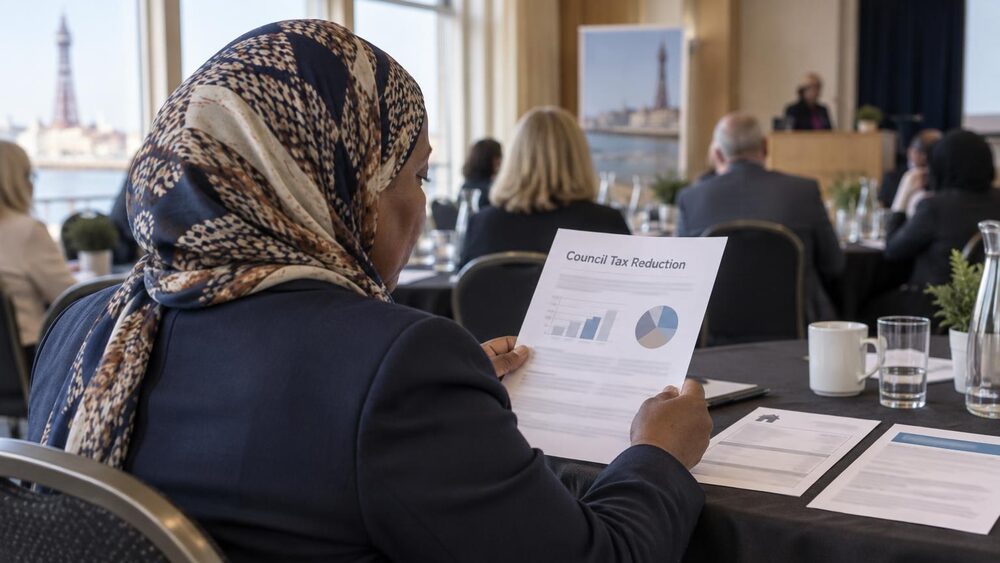
Findings from a Council Tax Reduction (CTR) survey covering England were presented at the Institute of Revenues, Ratings and Valuation's (IRRV) Spring Conference and Exhibition on 18 May 20221. The work was carried out by entitledto with the New Policy Institute, and the analysis was done by entitledto benefits expert Karen Holmes1.
The survey found that 11% of local authorities in England changed how they calculate Council Tax Reduction for 2022/23, a total of 35 local authorities1. The most common change was to reduce minimum payments for the poorest households, done by 16 local authorities, while only two local authorities increased their minimum payment this year1.
The second most common change was to introduce an income-banded scheme, by 12 local authorities, and around a quarter of Council Tax Reduction schemes are now income banded1. Simplifications reported in the survey included abolishing non dependant deductions or setting a flat rate, by 9 local authorities, and removing tariff income on capital, by 6 local authorities1.
"We were pleased to present the findings from our latest Council Tax Reduction (CTR) survey at the Institute of Revenues, Ratings and Valuation's (IRRV) Spring Conference and Exhibition today."
The figures cover changes between 2021/22 and 2022/23, identified by reviewing each local authority's website so that the organisation's benefits calculators hold accurate and up-to-date information on entitlement to this benefit1. The survey also identified 84 income-banded schemes now in place across the country1.
| Change to CTR scheme for 2022/23 | Local authorities |
|---|---|
| Reduced minimum payments for the poorest households | 16 |
| Introduced an income-banded scheme | 12 |
| Abolished non dependant deductions or set a flat rate | 9 |
| Removed tariff income on capital | 6 |
| Increased minimum payment | 2 |
Source: entitledto, 18 May 20221. The table lists the changes reported; the 35 authorities that made any change may appear in more than one category or in none of those listed.
Why it matters for households
Council Tax Reduction is a means-tested discount on the council tax bill, and each local authority in England runs its own scheme, so the rules that decide how much support a household gets depend on where it lives1. The survey reports that 35 local authorities changed how they calculate CTR for 2022/23, which means the remaining authorities made no change to their calculation1. Where schemes did change, the direction most often reported was a lower minimum payment, meaning the poorest households in those 16 areas keep less of their bill to pay themselves, while in two areas the minimum payment rose1. The 12 authorities that moved to an income-banded scheme join a group that now accounts for around a quarter of all schemes, and the 84 income-banded schemes identified operate across the country1. Households in areas that abolished non dependant deductions or set a flat rate, or removed tariff income on capital, are affected by simpler calculations for those elements1.
What happens next
The findings were presented on 18 May 20221. No further dates or planned changes to individual schemes are set out in the report, and no timetable for a future survey has been reported1.
Sources1 cited
- Council Tax Reduction schemes in England 2022/23 entitledto.co.uk
 GOV.UKOfficial information on tax, benefits and government services
 MoneyHelperFree, impartial money and pensions guidance, set up by government
 Citizens AdviceFree advice on money, consumer and legal problems in England and Wales
 Turn2usFree benefits calculator and grants search from a charity
 Citizens Advice ScotlandFree advice across Scotland