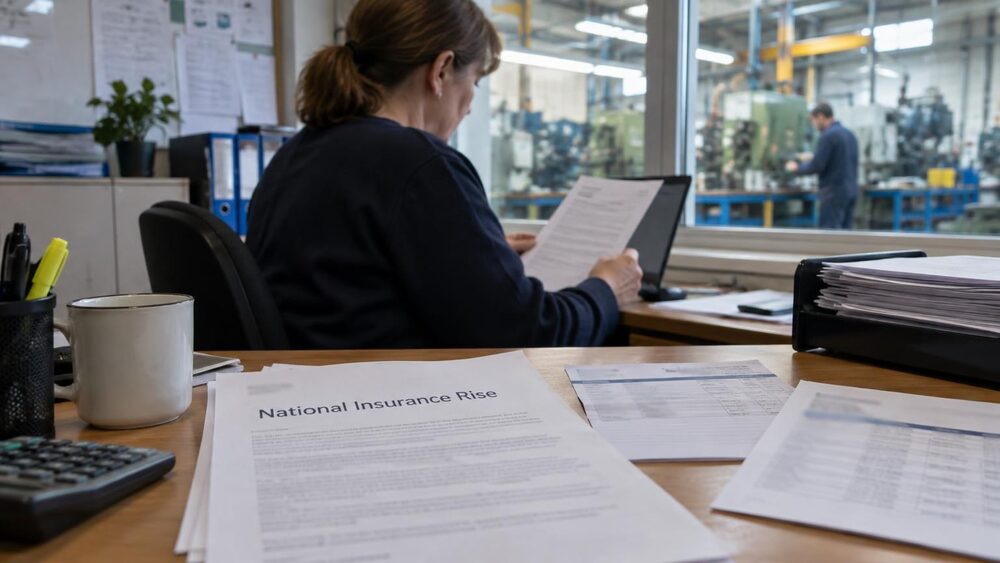
National Insurance contribution rates rose by 1.25 percentage points from April 2022, a change announced in September 2021 as a health and social care levy1. The Resolution Foundation described the rise as "a precursor to the proper Health and Social Care Levy which will exist from 2023"2. The increase applied to employee contributions, with employer contributions also rising3.
For an employee earning £30,000 a year, Class 1 National Insurance was £2,452 in 2021-22 and £2,665.90 in 2022-23, according to Which?1. A self-employed worker with profits of £20,000 paid £1,097 in 2021-22 through a mix of Class 2 and Class 4 contributions, rising to £1,201.10 in 2022-231. The Resolution Foundation estimated the NI rate rise, excluding the effect of the threshold rise, would lower the average income of households in the bottom half of the distribution by around £140 (0.6 per cent), while those in the top half would lose £730 (1.2 per cent)2.
The rise formed part of a wider set of April 2022 changes. State pensions increased by 3.1 per cent on 6 April 20221, and the National Living Wage rose from £8.91 to £9.50 an hour for workers aged 23 and over1. The Resolution Foundation put the combined overnight rise in taxes and energy bills at an average of £1,200 a year per household in April2. UK Finance noted that "April will see the 1.25 percentage point rise in National Insurance contributions" alongside "an expected 54 per cent rise in gas and electricity bills for the typical household following the revision to Ofgem's energy price cap"4.
The Work and Pensions Committee, in a report published on 30 September 2022, listed "the increase in National Insurance contributions from April 2022" among the changes affecting savers, and noted that "the Government had frozen the lower earnings threshold in 2022/23"5.
"National Insurance (NI) rates will rise by 1.25 percentage points (as a precursor to the proper Health and Social Care Levy which will exist from 2023)."
| Change from April 2022 | Detail |
|---|---|
| NI rate rise | 1.25 percentage points1 |
| State pension | Up 3.1% on 6 April 20221 |
| National Living Wage (23 and over) | £8.91 to £9.50 an hour1 |
Why it matters for households
The NI rise reduced take-home pay for employees and increased costs for employers from April 20221. For the self-employed, the change affected Class 2 and Class 4 contributions1. The Resolution Foundation estimated the combined effect of the NI rise and the Income Tax threshold freeze, which also began in April, at an average of £600 per household, or 1.4 per cent of disposable income2. UK Finance said payments were "likely to come under greater pressure through 2022 as the cost-of-living squeeze weighs more heavily"4. The Work and Pensions Committee noted that the lower earnings threshold was frozen in 2022/235.
What happens next
The Health and Social Care Levy was due to exist as a separate charge from 20232. The Work and Pensions Committee's report of 30 September 2022 gave the Government two months to respond to its recommendations5.
Sources5 cited
- 13 price changes in 2022, and what they mean for your money - Which? which.co.uk
- The Year of the Squeeze • Resolution Foundation resolutionfoundation.org
- The big squeeze • Resolution Foundation resolutionfoundation.org
- Household-Finance-Review-2021-Q4-FINAL-2.pdf ukfinance.org.uk
- Protecting pension savers, five years on from the pension freedoms: Saving for later life - Work and Pensions Committee publications.parliament.uk
 GOV.UKOfficial information on tax, benefits and government services
 MoneyHelperFree, impartial money and pensions guidance, set up by government
 Citizens AdviceFree advice on money, consumer and legal problems in England and Wales
 Turn2usFree benefits calculator and grants search from a charity
 Citizens Advice ScotlandFree advice across Scotland