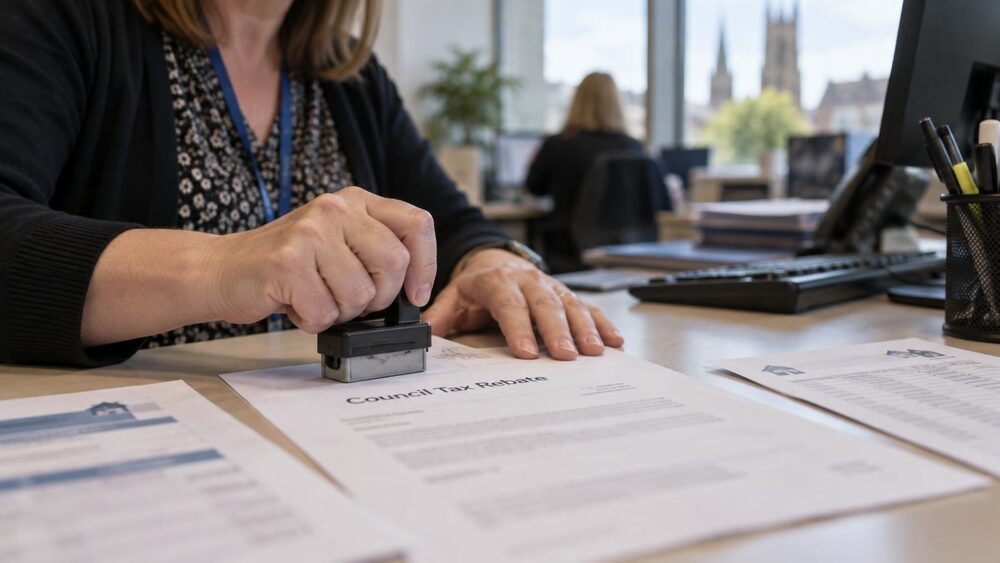
On 3 February 2022 the UK government announced it would fund a £150 rebate on council tax for homes in England in bands A to D, to help with the rising cost of living1. The rebate applies to around 80% of homes in England1. Alongside the plans for England, the UK government announced that about £565 million would go to the devolved governments, in what are called Barnett consequentials1. Council tax is a devolved area, so the devolved governments can institute similar policies, though they do not have to spend that money on the same things as in England1.
The Treasury said Wales would receive £175 million from the English council tax rebate plan1. Members of the Scottish and Welsh governments said they would not receive any new funding to match the £150 rebate1. Eluned Morgan said: "Just as we're finalising our plans to tackle the CostofLivingCrisis, we've learned there's no extra money for Wales"1. Scottish Finance Secretary Kate Forbes said: "Last week's announcement of funding for the cost of living crisis has changed the position again, not by increasing the expected consequentials but by decreasing the funding", and said the Scottish government would allocate £290 million to deal with the cost of living crisis in Scotland1.
The Treasury confirmed that, because the Omicron variant of Covid-19 had less impact than expected, health spending in England is expected to be lower than previously forecast this year1. This means the devolved administrations will receive less than they previously expected in Barnett consequentials arising from health spending in England1. ITV News reported that, for Wales, the downward revision in health-related Barnett consequentials amounts to £178 million, almost exactly what Wales will receive in addition as a result of the council tax rebate plans1.
Under the Barnett formula, funding for the devolved governments changes in proportion to their populations when UK government spending on devolved matters in England changes1. The Institute for Government gives this illustration1:
| Change in England health spending | Scottish government budget | Welsh government budget | Northern Ireland Executive budget |
|---|---|---|---|
| £100m increase | +£9.7m | +£5.6m | +£3.4m |
Scotland's population is 9.7% of England's1. A Treasury spokesperson said it regularly shares an estimate of the funding the devolved governments are due to receive, that these are estimates, and that final allocations are confirmed in February1.
Why it matters for households
The £150 rebate is a reduction on council tax bills for homes in England in bands A to D, covering around 80% of homes there1. Households in Scotland, Wales and Northern Ireland do not receive this rebate directly, because council tax and its equivalents are devolved; instead their governments receive funding through Barnett consequentials and decide how to use it1. The dispute reported here concerns whether that funding represents money over and above what the devolved governments had already expected for the year, not whether households in those nations receive a rebate1. The comparison is between what the devolved governments expected a few weeks earlier for this year and what they now expect, not between last year's funding and this year's1. On the argument that Scotland and Wales are not getting any more money because the rebate is funded from the previously assumed health budget, the same logic would apply to England, so Wales and Scotland are not relatively worse off than England as a result of these changes1.
What happens next
Final Barnett allocations were to be confirmed in February1. The Scottish government said details of its £290 million allocation to deal with the cost of living crisis in Scotland would be announced the day after Kate Forbes's statement of 9 February 20221.
 GOV.UKOfficial information on tax, benefits and government services
 MoneyHelperFree, impartial money and pensions guidance, set up by government
 Citizens AdviceFree advice on money, consumer and legal problems in England and Wales
 Turn2usFree benefits calculator and grants search from a charity
 Citizens Advice ScotlandFree advice across Scotland