
When you buy or sell units in an investment fund, the fund does not simply hand you the market value of its holdings. It sets a dealing price for that day, and under a method called swing pricing that price can be nudged up or down depending on whether more money is flowing into the fund or out of it. The nudge is known as a dilution adjustment, and its purpose is to make the investors whose trading generates the fund's costs bear those costs, rather than the investors who stay put.
The idea sits within a family of pricing approaches that funds use. With unit trusts, the price of the units you hold directly reflects the value of the assets held by the trust1. A fund may use a single price for everyone, two prices (one for buyers, one for sellers), or a single price that swings between the two depending on the day's money flows. Which method a fund uses is set out in its own documents, and the differences matter to what you pay when you buy and what you receive when you sell.
This page explains each method, how a dilution adjustment changes a dealing price, when funds swing and who decides, one fund manager's well-documented move to single swing pricing, where to find a fund's pricing policy, and what to do if you think a price has been applied wrongly.
Why funds adjust the price: protecting investors who stay
A fund holds a pool of assets. When investors put money in, the fund buys more of the underlying assets; when investors take money out, the fund sells some. Those purchases and sales are not free. The fund pays spreads, taxes and other dealing costs when it trades, and those costs, if left unmanaged, reduce the value of the fund for everyone who remains invested. That erosion is what the industry calls dilution.
Swing pricing and dilution adjustments exist to stop that happening. Instead of letting the costs of a large inflow or outflow leak into the fund's value, the fund moves its dealing price so that the people transacting that day pay or receive a price that reflects the costs their trading creates. An investor buying into a fund that is receiving large net inflows may pay a slightly higher price per unit; an investor selling out of a fund facing large net outflows may receive a slightly lower one. The investors who do nothing that day are insulated.
This is a consumer protection mechanism as much as an operational one. When the government changed the rules governing Individual Savings Accounts and Child Trust Funds, it did so in terms of providing "additional safeguards for investors"5. Swing pricing belongs to the same family of thinking: the fund's structure and rules are designed so that one group of investors does not quietly bear the costs generated by another group.
It is worth distinguishing swing pricing from the dynamic pricing people encounter elsewhere. Consumer Scotland defines dynamic pricing as occurring "when a business flexes the price of a product frequently and over short periods of time in response to changing market conditions", and notes it is used in markets such as flights, concert tickets and holiday lets2. Surge pricing, it says, is "a particular form of dynamic pricing, where prices increase rapidly in response to a surge in demand"2. Swing pricing shares the mechanical idea of a price that responds to flows, but its direction is set by the fund's stated policy and its purpose is cost allocation, not revenue management. Dynamic pricing of that consumer kind is, Consumer Scotland notes, "not unlawful in itself where transparent and gives consumers clear and correct information in good time"2, and the same transparency principle governs fund pricing.
Single swing pricing: one price that moves with money in and out
Under single swing pricing, a fund publishes one price each dealing day, and everyone buying or selling that day deals at that same price. What varies is whether the price sits above or below the fund's unadjusted valuation. If the fund is receiving net inflows, the price can swing up, so buyers bear the dealing costs of deploying their money. If the fund is facing net outflows, the price can swing down, so sellers bear the costs of raising cash to pay them.
The key feature is that the adjustment is symmetrical and rule-based. The fund's policy sets a threshold: only net flows beyond a certain size trigger a swing, and the size of the adjustment is typically capped. On quiet days, when flows are small, the price is simply the unadjusted valuation and no one pays an adjustment at all. On heavy days, the swing ensures the fund's own trading costs land on the transacting investors.
For a consumer, the practical effect is that the price quoted for a deal is not always the exact per-unit value of the fund's assets. With unit trusts, the price of the units you hold directly reflects the value of the assets held by the trust1, and a swing is a deliberate, disclosed departure from that valuation on the dealing day, made so the valuation itself is not eroded for the people who remain.
Dual pricing, single pricing and swing pricing compared
Funds can handle the cost of money flows in three broad ways, and the differences between them change what you pay and receive.
| Method | How it works | Who bears dealing costs |
|---|---|---|
| Dual pricing | Two prices every day: a higher offer price for buyers, a lower bid price for sellers | Buyers and sellers always, through a permanent spread |
| Single pricing | One price for everyone, set at the fund's valuation | Costs leak into the fund's value, borne by those who stay |
| Swing pricing | One price that can move up or down with the day's net flows | Only the investors dealing on days when the swing triggers |
Dual pricing is the traditional unit trust approach: the spread between the buying and selling prices exists every day, whether or not the fund is actually trading anything. Single pricing removes that permanent spread but leaves the fund exposed to dilution when flows are large. Swing pricing sits between the two: the spread appears only when it is needed, and only as wide as the flows justify.
The FCA's disclosure rules for consumer composite investments recognise the cost of getting out of an investment as a disclosure item in its own right, listing among one-off exit costs the "bid-mid spread to sell the product and any explicit costs, charges or other penalties for early exit"6, and defining a one-off exit cost as "a one-off cost incurred or paid upon or shortly after the retail investor selling or otherwise disposing of the investment"7. The spread you face when selling is therefore treated as a real cost of investing, not an accounting detail, and funds must show it in their cost disclosures.
Investment trusts, which are companies rather than pooled funds, behave differently again. Their share price is set on a stock exchange by supply and demand, and the level of discount or premium to the underlying assets "tends to vary by sector and changes with market sentiment"1. An investment trust investor bears that discount risk directly; a swing-priced fund investor bears only the fund's stated adjustment. The comparison between these structures is covered in more detail on investment trusts vs unit trusts and OEICs.
How a dilution adjustment changes what you pay or receive
A dilution adjustment is the amount by which the dealing price is moved away from the unadjusted valuation. When it applies, a buyer pays more per unit than the raw valuation, and a seller receives less. The money effectively absorbed by that difference covers the costs the fund incurs trading the underlying assets.
A related mechanism is the dilution levy: an explicit deduction taken from a dealing, rather than a movement in the price. UK legislation on stakeholder pension schemes lists "dilution levies" among the permitted deductions from a scheme member's rights, alongside dealing costs and market value adjustments3. So the law recognises dilution levies as a legitimate, disclosed charge in pooled investment structures, not an improper deduction.
What this means in cash terms depends on the direction of the flow:
- Buying on an upswing day: you pay a higher price per unit, so the same money buys fewer units. The extra amount funds the costs of investing your cash.
- Selling on a downswing day: you receive a lower price per unit, so the same holding pays out less. The reduction funds the costs of raising cash for your withdrawal.
- Dealing on a quiet day: no adjustment applies, and you deal at the unadjusted valuation.
- Doing nothing: the adjustment does not touch your holding. Its whole point is that the fund's value for remaining investors is not eroded by other people's trading.
The adjustment is not a profit centre for the fund manager. It is calibrated to the estimated dealing costs of the flow, within limits set out in the fund's policy, and any amounts collected are applied to the fund's costs rather than kept as a charge. That said, it is a real cost to the person dealing, which is why cost disclosure rules treat exit spreads as one-off exit costs6.
When a fund swings and who decides
Whether a price swings on any given day is decided by the fund's depositary or manager applying the fund's stated policy, not by an individual choosing case by case. The policy sets the parameters: the size of net flow that triggers a swing, the maximum adjustment permitted, and how the adjustment is calculated. Within those parameters, the swing follows automatically from the day's money flows.
The pattern of discretion and rules here echoes other financial institutions. The Pension Protection Fund's Board, for example, has a discretion that allows it to alter the rate of pre-97 and post-97 indexation for PPF members8, but to date the Board has decided not to exercise it9. A fund's swing works the other way round: the policy is set in advance in the fund's documents, and the daily application is mechanical, triggered by flows crossing the stated threshold.
Transparency obligations reinforce this. The Digital Markets, Competition and Consumers Act 2024 prohibits the "drip pricing" of unavoidable fees by requiring traders to set out in an invitation to purchase the total price of a product including any mandatory fees, taxes and charges4. A government response on consumer price transparency recorded that 203 respondents answered its consultation questions on hidden fees and drip pricing10. Fund pricing sits within this climate: the pricing method, and any adjustment that forms part of the cost of dealing, belongs in the information an investor can see before transacting, not discovered afterwards.
One limit on consumer rights is worth knowing. The Consumer Rights Act 2015 excludes from some of its protections "transactions in transferable securities, financial instruments and other products or services where the price is linked to fluctuations in a stock exchange quotation or index or a financial market rate that the trader does not control"11. A fund's price is linked to the value of market assets the fund manager does not control, so the Act's rules on such things as price reduction do not apply in the same way as they do to ordinary goods, where the amount of the reduction "may, where appropriate, be the full amount of the price"12. This is one reason a fund's own documents, and the regulator's rules, are the proper route for pricing questions.
Legal & General's move to single swing pricing
The clearest worked example of a fund manager changing its pricing method comes from Legal & General. On 1 December 2020, Legal & General moved most of its unit trust funds to single swing pricing. The change standardised the pricing method across most of the unit trust range and was described as further mitigating the impact of dilution. A small number of funds, including the UK Property, Feeder and Real Income Builder funds, retained their existing pricing methods.
For an investor holding Legal & General unit trusts, the change meant that from that date most funds dealt at a single daily price that could swing with net flows, rather than whatever method each fund had used before. Nothing about the underlying holdings changed, and no action was needed from investors: the change was to the pricing mechanics, not to the investments. Investors who wanted to check how their specific fund was priced after the change could look at the fund's published pricing information.
The move illustrates a broader point: pricing methods are not fixed features of the fund universe. A manager can change them, and when it does, the change is announced and reflected in the fund's documents. If you hold a fund long term, it is worth being aware that the pricing method described when you bought it may not be the one in force years later.
Where to find a fund's pricing policy
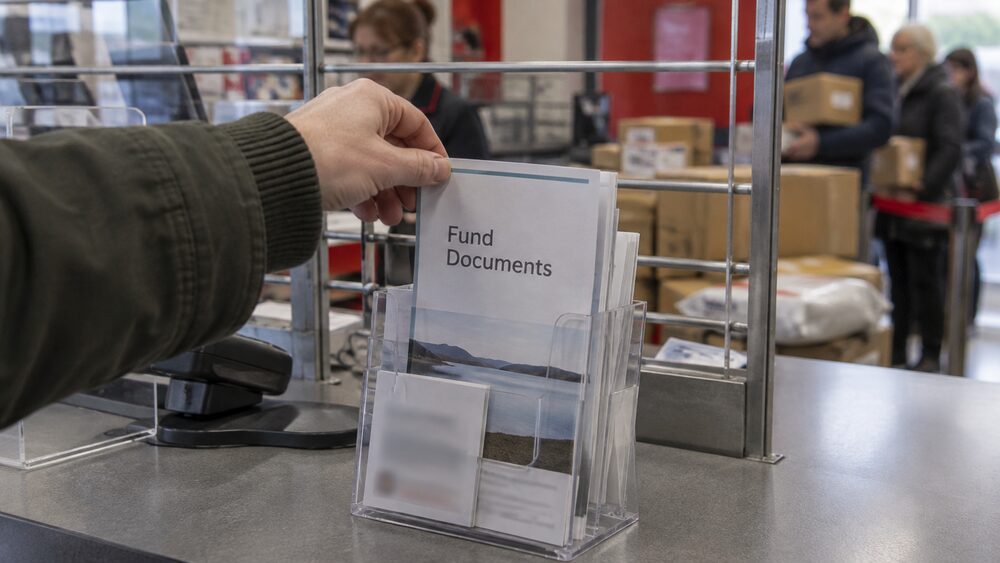
A fund's pricing policy is not a secret, but it is not usually on the front page either. It lives in the fund's formal documents, and the practical places to look are:
- the fund's prospectus, which sets out the pricing method, swing thresholds and adjustment limits
- the fund's annual and half-yearly reports, which include sections on pricing and any adjustments applied during the period
- the daily price information published by the fund manager or your platform
- the fund's costs and charges disclosure, which shows exit costs including the spread6
If you invest through a platform, the platform's dealing screens show the price you will transact at, and the fund documents page explains where each type of document is found. The guide to how funds are priced and dealt covers the mechanics of dealing times and valuation points, and fund charges and the ongoing charges figure covers the charges that appear in a fund's costs rather than in its price.
Pricing adjustments also appear in other corners of the investment world, which is why it helps to know the vocabulary. Money market funds held in ISAs are reported at market value across ISA portfolios in managers' statistical returns13, so the reported value of a holding reflects the market value of the underlying investments. And when money is switched between ISA products, a provider may charge a fee for a switching task not otherwise covered, provided the fee is reasonable and no more than the actual costs of carrying out the task14. These are different mechanisms from swing pricing, but they all affect the value that reaches you.
Questions or complaints about a fund's price
If a price looks wrong, the first step is to ask the fund manager or platform to explain it, citing the fund's own pricing policy. Ask for the unadjusted valuation for the dealing day, whether a swing or dilution levy was applied, and how the adjustment was calculated. A well-run firm can answer this from its records.
If the answer is not satisfactory, you can complain through the firm's formal complaints process, and then to the Financial Ombudsman Service if the firm does not resolve the matter. The ombudsman looks at complaints about financial services, including how investments have been handled, and its service covers areas from ongoing advice to how transfers and fund switches were carried out15. The Pensions Ombudsman handles pension-specific complaints, including fund switches, charges and fees, and the interpretation of scheme rules and policy terms16.
Free, impartial help is available at each stage. The Money and Pensions Service provides free advice to people unsure whether a personal pension is right for them17, and the FCA points consumers in persistent debt towards free debt advice18. Conciliation and mediation, where you explore what you and the trader each want and examine the problem itself, is usually free19. These services explain your position; they do not take over the complaint for you.
A few boundaries are worth knowing:
- Pricing is not mis-selling on its own. A swing applied in line with the fund's published policy is the method working as described. A complaint is more likely to succeed where a price was applied inconsistently with the policy, or the policy was not disclosed.
- Market falls are not covered. The ombudsman does not compensate for investment performance, and FSCS protection covers firm failure, not price movements. FSCS notes that some claims involve extra stages, including where it is not clear that a firm's activities will give rise to a protected claim20.
- The fund's documents govern. As with pension scheme rules, the written terms are what a complaints body will measure the firm's conduct against16.
For the wider picture on what is and is not protected when investing, see what happens if an investment platform or pension provider fails and consumer protection in UK financial services.
Sources20 cited
- Investment trusts explained Which?, 2025
- Dynamic pricing: a Consumer Scotland insight report Consumer Scotland, 2024
- The Occupational Pensions (Miscellaneous Amendments) Regulations (Northern Ireland) 2005 legislation.gov.uk, 2005
- Digital Markets, Competition and Consumers Act 2024 legislation.gov.uk, 2024
- Individual Savings Accounts and Child Trust Funds regulation changes HM Government, 2023
- DISC 6: Costs and charges disclosure FCA Handbook, 2026
- DISC 6.4: One-off costs FCA Handbook, 2026
- Will my payments increase: pre-97 Pension Protection Fund, 2026
- Will my payments increase Pension Protection Fund, 2026
- Government response: improving consumer transparency consultation HM Government, 2024
- Consumer Rights Act 2015, Schedule 2 Part 2 legislation.gov.uk, 2015
- Consumer Rights Act 2015, Part 1 legislation.gov.uk, 2015
- Tax-free savings newsletter 22, June 2026 HM Government, 2026
- Individual Savings Account Regulations 2015 legislation.gov.uk, 2015
- Ongoing financial advice services Financial Ombudsman Service, 2026
- Where to go for help with your pension complaint The Pensions Ombudsman, 2020
- Understanding personal pensions nidirect, 2025
- Help for consumers who are in persistent credit card debt FCA, 2020
- Thinking of suing in court Trading Standards Wales, 2025
- FSCS news: processing claims FSCS, 2023





 MoneyHelperFree, impartial money and pensions guidance, set up by government
 FSCSProtects your money if a bank, insurer or investment firm fails
 FCA Warning ListCheck whether a firm is authorised before you deal with it
 Financial Ombudsman ServiceFree, independent help when a complaint about a firm is not put right
 Citizens AdviceFree advice on money, consumer and legal problems in England and Wales