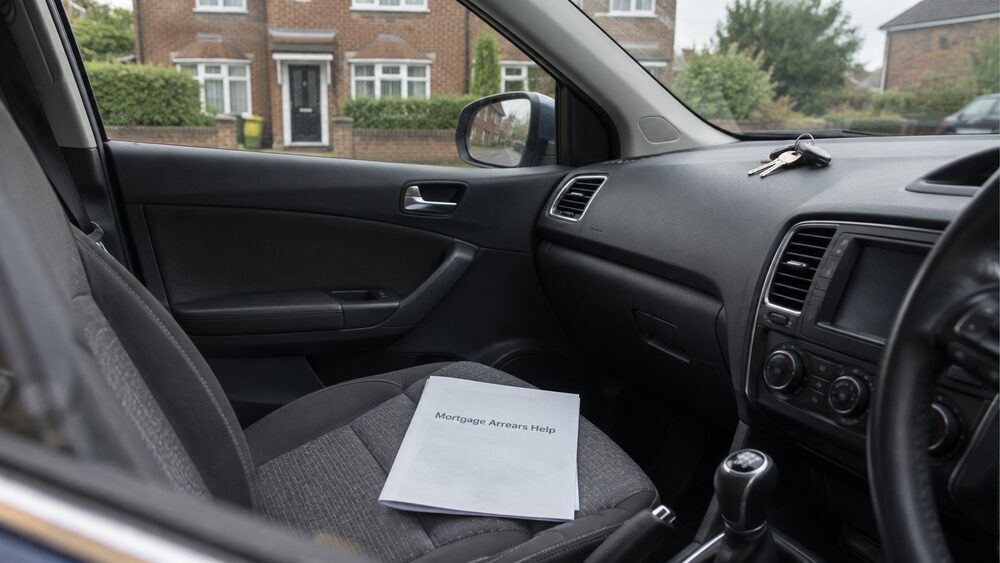
If you are struggling to pay your mortgage or a loan secured on your home, there are schemes that exist specifically to stop repossession. Which ones you can use depends mainly on where in the UK you live. Scotland runs the Home Owners Support Fund, a Scottish Government fund made up of two schemes: Mortgage to Rent, where a social landlord buys your home and you stay on as a tenant, and Mortgage to Shared Equity, where the government buys a stake in your property1. Wales has its own scheme, Help to Stay, Wales, which offers free financial advice and a shared equity loan to bring monthly mortgage payments down to an affordable level2. Across the whole of the UK, most major lenders have signed the Mortgage Charter, which since 2023 has provided additional flexibilities to help borrowers manage higher interest rates3.
None of these schemes is a handout that cancels your debt. Each one changes the terms of your situation in exchange for something: your ownership, a share of your home's value, or a longer and ultimately more expensive mortgage. This page sets out what each scheme offers, what it costs you, who qualifies and how to apply, so you can see the options side by side and take them to a money adviser or your lender.
The schemes side by side
The four schemes in this page answer different problems, and it helps to see at a glance which one matches your situation. Mortgage to Rent and Mortgage to Shared Equity are for Scottish homeowners at risk of repossession who cannot see a way to keep paying as things stand. Help to Stay, Wales is for Welsh homeowners who are struggling to pay or at risk of falling behind. The Mortgage Charter is not a government scheme at all but a set of commitments lenders have made themselves, and most of its options are for people who are still up to date with payments3.
| Scheme | Where | What it does | What you give up | Who runs it |
|---|---|---|---|---|
| Mortgage to Rent | Scotland | A social landlord buys your home; you stay as a tenant | Ownership of your home | Scottish Government1 |
| Mortgage to Shared Equity | Scotland | Government buys up to 30% of your property | A share of your home's value | Scottish Government1 |
| Help to Stay, Wales | Wales | Free financial advice plus a shared equity loan to cut monthly payments | A share of your home's value | Welsh Government2 |
| Mortgage Charter | UK-wide | Payment flexibilities and rate-switching help from your lender | Possibly higher long-term costs | Your lender, under Charter commitments3 |
The two Scottish schemes and the Welsh one are aimed at people whose mortgage problem has become serious enough that repossession is a live risk. The Mortgage Charter is broader: it covers anyone worried about higher rates, including borrowers who have not yet missed anything3. Many people will use more than one of these at the same time, and Help to Stay, Wales is explicitly designed to work alongside the support your lender offers under the Mortgage Charter2.
Mortgage to Rent: sell your home to a social landlord and stay on as a tenant
Mortgage to Rent allows a social landlord, such as a housing association or the local council, to buy your home1. The arrangement is arranged through the Home Owners Support Fund, and the effect on you is simple and stark: you will no longer own your home, and you will continue living there as a tenant1. For someone facing repossession, that trade can still be worth it, because it keeps a roof over your family's head in the same house, on the same street, without a forced sale or a move.
The rent is not a special discounted rate. You will be charged the same rent as your landlord charges other tenants for similar types of property in similar locations6. That means the affordability of the scheme depends on what social rents are like in your area. You also do not get a say in who your landlord becomes: the Scottish Government will try to identify a social landlord that is participating in the scheme and owns houses in your area, and there is no choice of landlord7.
The price paid for your property is its Open Market Value, identified through the Single Survey, and that valuation is updated every three months throughout your case8. The scheme is aimed at people in genuine difficulty: to be considered, you must have failed to reach agreement with your lender or lenders on how to manage your arrears, or have had a trustee appointed to your estate with the trustee looking to force the sale of your property7. One further group can use it: people who bought under shared ownership or shared equity schemes can be considered for Mortgage to Rent, but not for Mortgage to Shared Equity8.
What you keep under Mortgage to Rent: up to £17,040 of equity
Selling your home to a social landlord under Mortgage to Rent does not necessarily mean walking away with nothing. Once your secured debts are cleared from the sale proceeds, you may be allowed to keep a sum of money from the equity. The figures in the official documents differ, and it matters which document you read.
The scheme's own detailed guidance states that if you are aged 60 or over, you will be allowed to keep up to £17,0408. An earlier version of the guidance put the figures at up to £8,000 if you are under 60 years old and up to £12,000 if you are 60 or over, after any secured lenders and others with an interest in your home have been repaid9.
| Your age | Amount you may keep | Source document |
|---|---|---|
| Under 60 | up to £8,000 | Scheme guidance, 20109 |
| 60 or over | up to £12,000 | Scheme guidance, 20109 |
| 60 or over | up to £17,040 | Information booklet, 20158 |
The retention rules exist so that people who go through the scheme are not left with nothing when they become tenants. The money is what remains after the secured lenders have been paid, so in practice the amount you actually receive depends on how much equity is in the home after the mortgage and any secured loans are cleared9. If your debts are larger than the sale price, there may be nothing to retain.
Mortgage to Shared Equity: the other Home Owners Support Fund scheme
Mortgage to Shared Equity is the second of the two schemes that make up the Home Owners Support Fund1. Instead of buying your whole home, the Scottish Government buys a share of it: Mortgage to Shared Equity allows the Scottish Government to buy up to 30% of your property1. You stay the owner, but the government holds a stake, and the money it puts in reduces what you owe your lender, which in turn reduces your monthly payments to a level you can manage.
The scheme is not available to everyone who applies for the fund. Applications for both schemes are considered in the order they are received, and funding may not be available to meet demand; if it is not, the Scottish Government agrees and publishes a prioritisation process8. There is also a property value limit: the fund uses thresholds based on an assessment of current housing market conditions within each local authority area, aligned with the Open Market Shared Equity scheme, and Mortgage to Rent is among the schemes those thresholds cover11.
Two further rules shape who can use it. People who bought through shared ownership or shared equity schemes can be considered for Mortgage to Rent but not for Mortgage to Shared Equity8. And if you are separated from a joint owner, the Scottish Government cannot buy out your partner's share of the property, though your joint income will be considered when you apply12.
Who can apply to the Home Owners Support Fund in Scotland
The Home Owners Support Fund exists to help you keep your home if you are struggling to pay your mortgage or a secured loan, and it is aimed at people at risk of having their home repossessed1. Beyond that core test, the conditions reflect how far things have gone: the scheme guidance expects that you will have failed to reach agreement with your lender or lenders on managing your arrears, or that a trustee has been appointed to your estate and is looking to force the sale of your property7.
You cannot apply directly. To find out if you are eligible for the Home Owners Support Fund and to apply, you must visit an approved money adviser13. This is a deliberate design: the adviser checks your finances, works out whether the fund can help and prepares the application. Free debt advice is available across Scotland, and the free debt advice page explains where to find an adviser who does not charge fees.
The conditions in summary:
- You must be struggling to pay a mortgage or a secured loan on your home1
- You must be at risk of repossession1
- You will normally have been unable to agree an arrears plan with your lender, or have a trustee seeking to force a sale7
- Your property must fall within the value thresholds for your local authority area11
- Shared ownership and shared equity purchasers are considered for Mortgage to Rent only8
- Separated joint owners can apply, with joint income considered, but a partner's share cannot be bought out12
- You must apply through an approved money adviser13
Help to Stay, Wales: a shared equity loan to cut monthly payments
Help to Stay, Wales is the Welsh equivalent of a rescue scheme, but it works on a different principle from Scotland's Mortgage to Rent: you keep owning your home. The scheme provides financial support to eligible homeowners in Wales who are struggling to pay their existing mortgage or are at risk of falling behind with it2. Through the scheme, you may be able to access free financial advice and a shared equity loan to reduce your monthly mortgage payments to a more affordable level4.
The equity loan can be substantial. The scheme may provide you with an equity loan of up to 49% of your property's market value4. The loan is used to pay down your mortgage, and the combined total of your primary mortgage, any second charge debt and the equity loan must remain within the scheme's loan-to-value parameters, which set a maximum of 100% of the total value of your home4. The loan runs over a 15-year term4.
Help to Stay, Wales is designed to sit alongside, not instead of, what your lender does for you: the scheme aims to work alongside the support offered by your mortgage lender and in line with the UK Mortgage Charter2. The scheme is delivered with the support of the Development Bank of Wales, and it is delivered subject to the funding available2, which means an otherwise eligible application can be affected by the budget at the time you apply.
How to apply for Help to Stay, Wales
The application process is more straightforward than the Scottish fund's because you do not need to go through a money adviser, though free advice is still worth having. To apply, you must complete and submit the Help to Stay, Wales application form, after reading and following the guidance in the Help to Stay, Wales guidance for applicants, and you must ensure that all the registered owners of your home have signed the application form2.
In order, the steps are:
- Read the Help to Stay, Wales guidance for applicants2
- Complete the application form
- Make sure every registered owner of the home signs it2
- Submit the form and await the outcome, which is subject to the funding available2
Because the scheme is delivered subject to the funding available2, applying earlier rather than later matters if your arrears are building. The scheme also expects you to be engaging with your lender: it works alongside lender support and the Mortgage Charter rather than replacing them2. If your lender has already offered Charter options, tell the scheme when you apply.
Mortgage Charter options if you are still up to date with payments
The Mortgage Charter is the UK-wide set of commitments most mortgage lenders have signed, and it is the scheme most homeowners will touch first. Since 2023 it has provided additional flexibilities to help borrowers manage their transition to higher interest rates, and it has been signed by lenders representing approximately 90% of the mortgage market5. Its main options are aimed at customers who are still up to date with their payments3.
For borrowers who are up to date, the Charter's one-off options are:
- Extending the mortgage term to reduce monthly payments, with the option to revert to the original term within six months by contacting the lender3
- Switching to interest-only payments for six months3
- A temporary payment deferral, or a part interest and part repayment arrangement14
These options can be taken without a new affordability check and without affecting your credit score14. Customers who change their mortgage terms, for example moving to interest-only or extending the term, have the option to revert to their original mortgage deal within six months without affecting their credit score5. Affordability will need to be checked only if you wish to convert permanently to an interest-only mortgage, or where the mortgage term is proposed to be extended beyond your expected retirement date3.
Borrowers coming to the end of a fixed interest rate period who are worried about rising rates can get a new rate up to six months before the old one expires, and can change their mind if rates go down15. Six months is the maximum time lenders may offer for customers to sign up to a new deal under the Charter, and rates must be finalised two weeks before the new term starts3. Customers who are up to date with payments can also switch to a new mortgage deal with their lender at the end of their existing fixed-rate agreement without a new affordability check5.
Where the Mortgage Charter stops: arrears, Buy to Let and second charges
The Charter's headline options have a boundary, and it is important to know where it sits. The term extension and interest-only switch are for customers who are up to date with their payments, on a one-off basis3. The switching commitment, which applies to 97% of the mortgage market, covers customers who are up to date with payments and not seeking to borrow more or change their repayment type or term16. If you are already in arrears, the Charter's up-to-date options are not what you rely on: your lender still has to treat you fairly under the rules on how lenders must treat you when you fall behind, and the Scottish and Welsh schemes in this page exist for exactly that situation.
Buy to Let mortgages are outside the Charter altogether: its commitments do not apply to them17. The same boundary appears in the court rules, where the Pre-Action Protocol for possession claims based on mortgage arrears, which sets out what a lender must do before taking a homeowner to court, states that the protocol does not apply to Buy To Let mortgages18. Landlords with arrears on rental properties need debt advice rather than homeowner rescue schemes.
Anyone worried about their mortgage repayments can contact their lender for help and guidance, without any impact on their credit file3. That part of the Charter has no up-to-date condition attached, so it is open to borrowers who have already missed payments as well as those who have not.
12 months before repossession without consent
The single most valuable commitment in the Mortgage Charter for someone in serious arrears is the repossession guarantee. Lenders signed up to the Mortgage Charter have agreed not to repossess until at least 12 months after you first miss payments19. The same commitment appears in the Charter's own terms: a borrower will not be forced to leave their home without their consent, unless in exceptional circumstances, in less than a year from their first missed payment3. In the words of the official guidance, there will be a minimum 12-month period from the first missed payment before there is a repossession without consent5.
That 12 months is time, and time is what a rescue application needs. A Mortgage to Rent or Mortgage to Shared Equity case involves valuations, a landlord or government stake being arranged and a money adviser preparing papers; a Help to Stay application involves a form, signatures and a funding decision. None of that happens instantly, and the Charter's guarantee means a lender that has signed it cannot rush a repossession through while those processes run.
The exception is worth noting: the guarantee applies unless there are exceptional circumstances3. The Charter documents do not define those circumstances, so the safe assumption is that the 12-month period is a strong expectation rather than an absolute right, and that engaging with your lender early, and taking advice, is what makes the guarantee hold in practice.
Is there a Mortgage to Rent scheme in England?
No. Mortgage to Rent is part of the Scottish Government's Home Owners Support Fund and exists only in Scotland1. Wales has its own scheme for struggling homeowners, Help to Stay, Wales2. England has no equivalent government scheme that buys a home or a share of it to stop repossession, and there is no shared equity rescue loan for English homeowners comparable to the Welsh scheme.
What England does have is the Mortgage Charter, which applies across the UK through lenders rather than government3, and the same court protections, including the Pre-Action Protocol that a lender must follow before possession proceedings18. English homeowners in arrears also have access to Support for Mortgage Interest, the benefit-linked help with mortgage interest payments, which is available to homeowners including those in shared ownership properties, who could get it alongside help with their rent20.
One scheme with a similar-sounding name should not be confused with Mortgage to Rent. Rent to Buy helps tenants in England save for a deposit to buy a home by offering properties at a discount; it is available in England apart from London, where properties are covered by a separate scheme called London Living Rent21. It is a route into ownership for renters, not a rescue scheme for homeowners in arrears.
Where to get free help
Every scheme on this page starts with advice, and none of the help you need at this stage has to be paid for. In Scotland, you must apply to the Home Owners Support Fund through an approved money adviser13, so getting free advice is a requirement, not just a good idea. The free debt advice page lists the charities and services that do this without charging, and the debt solutions page shows the full range of formal and informal options if a rescue scheme is not right for you.
Beyond the schemes, other support can ease the pressure while an application is decided. The Scottish Welfare Fund is delivered by all Scottish local authorities and provides discretionary awards for those on a low income who are 16 or over and resident in the area22. The Scottish Government's cost of living support includes help with rent and mortgage problems under the Mortgage Charter23. In Wales, the Welsh Government publishes guidance on getting help with housing costs24. Homeowners receiving benefits may also qualify for Support for Mortgage Interest alongside other help20.
If you believe your lender has treated you unfairly, the Financial Financial Ombudsman Service can look at complaints about mortgages and financial difficulties, including how a lender has handled arrears19. Its guidance on interest rates applied to mortgages also covers the Charter's rate-switching commitments15. The emergency grants and loans page covers the hardship funds available when money runs out altogether, and the mortgages section explains how arrears and repossession work in detail.
Sources24 cited
- Home Owners Support Fund: if you're separated from your partner mygov.scot, 2026-07-14
- Get help paying your mortgage: Help to Stay shared equity loan Welsh Government, 2023-11-06
- Mortgage Charter 2026 HM Treasury, 2026-03-26
- Help to Stay, Wales: guidance for applicants Welsh Government, 2023-11-06
- Mortgage Charter: research briefing SN04769 House of Commons Library, 2026-07-08
- In danger of losing your home: Mortgage to Rent and Mortgage to Shared Equity, page 1 Scottish Government, 2010-06-23
- In danger of losing your home: a helping hand from the Mortgage to Rent scheme and Mortgage to Shared Equity Scottish Government, 2010-06-23
- Home Owners Support Fund information booklet Scottish Government, 2015-04
- In danger of losing your home: scheme guidance PDF Scottish Government, 2010-06
- Help with your mortgage payments (Scotland) National Debtline, 2026-09-25
- Home Owners Support Fund property thresholds guidance Scottish Government, 2024-10-31
- Home Owners Support Fund: who can apply mygov.scot, 2026-07-14
- Help after the death of a partner mygov.scot, 2022-05-13
- Mortgage Charter PDF, June 2023 HM Treasury, 2023-06
- Interest rates applied to mortgages Financial Ombudsman Service, 2026-09-26
- Mortgage Charter PDF HM Treasury, 2023-06
- Mortgage Charter PDF, June 2023 HM Treasury, 2023-06
- Pre-Action Protocol for Possession Claims based on Mortgage or Home Purchase Plan Arrears Ministry of Justice, 2017-01-30
- Financial difficulties with mortgages Financial Ombudsman Service, 2023-07-10
- Universal Credit payments and housing nidirect, 2026-09-01
- Rent to Buy GOV.UK, 2026-09-26
- Scottish Welfare Fund statutory guidance, April 2025 Scottish Government, 2025-04-01
- Rent and mortgage support Scottish Government, 2026-09-26
- Get help with housing costs Welsh Government, 2023-11-06






 StepChangeFree debt advice and solutions from a charity
 National DebtlineFree debt advice by phone, webchat and online
 MoneyHelperFree, impartial money and pensions guidance, set up by government
 Citizens AdviceFree advice on money, consumer and legal problems in England and Wales
 Citizens Advice ScotlandFree advice across Scotland