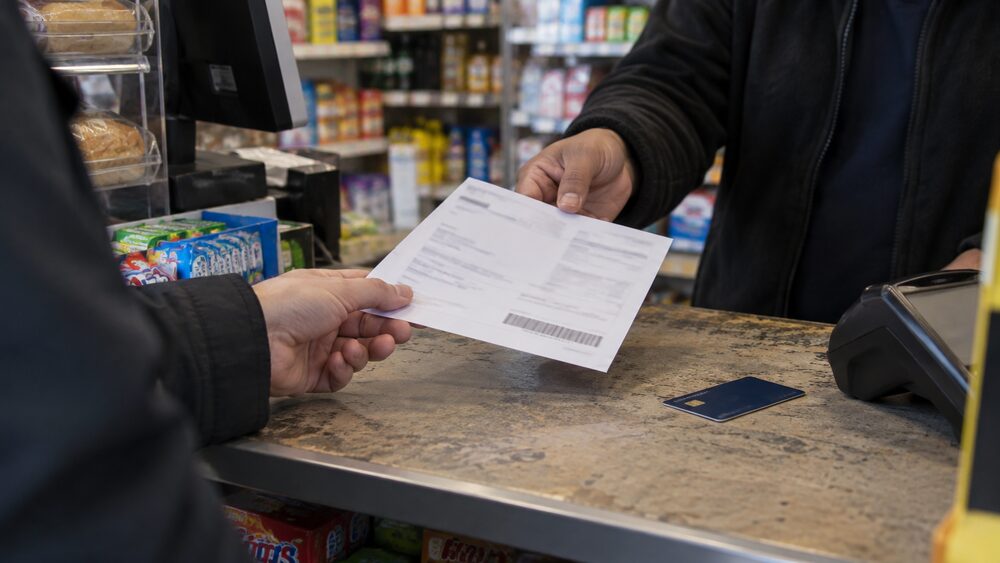
HMRC does not accept personal credit cards for tax bills, and you can no longer pay your tax bill at the Post Office1. That is the short answer for tax. Council tax is different: it is collected by your local council, not HMRC, and whether a credit card is accepted depends on the council. Most councils accept payment by cash, cheque or debit card, and most accept internet or telephone banking, Bacs or standing order, but only some accept credit card payments1.
Where a council does take a credit card, the card itself can make the payment expensive. A credit card payment that a provider treats as a cash advance can attract a cash advance fee and a higher rate of interest, and you may lose the interest-free period even if you clear the bill in full2. The rules on surcharges also matter: organisations are generally not allowed to add a surcharge for paying by consumer debit or credit card, although accepted payment methods vary by council1.
Council tax by credit card: it depends on your council
There is no single national rule on paying council tax by credit card. Each council sets its own payment methods, and the picture varies. You can pay your bill by cash, cheque or debit card, most councils accept payment via the internet, telephone banking, Bacs or standing order, and some accept credit card payments1. If your bill carries a barcode, payment at a Post Office or through PayPoint or Payzone may also be available1.
In Wales, the same pattern applies: you can usually check your balance and pay online, and you can also set up a Direct Debit or a standing order from your bank account4. Welsh council tax bills can be paid online, by Direct Debit, or by cash using PayPoint, Payzone or Quickcards5. Councils prefer payment by Direct Debit1, because it spreads the bill and reduces the cost of chasing payments.
Where a council does accept a credit card, it may do so only as a last resort. One council told a consumer publication it would continue to take payments by credit card only if there was no alternative way to pay6. That is a useful signal: a credit card is not the standard route, and a council that accepts one may still discourage it.
The practical step is to check your own council's website or your bill for the payment methods it lists. If credit card payment is not offered, the alternatives are debit card, Direct Debit, standing order, online or telephone banking, cash at a PayPoint or Payzone outlet, or cheque.
HMRC does not take personal credit cards
For tax, the position is settled. HMRC does not accept personal credit cards, and you can no longer pay your tax bill at the Post Office1. The same restriction appears across HMRC's guidance: you cannot pay by personal credit card7. For a self-assessment bill, HMRC does not take personal credit card payments for tax, and Post Office payment has ended3.
HMRC's own payment routes are the HMRC app, online or telephone banking, Chaps, debit card online, at your bank or building society, Bacs, Direct Debit, or cheque through the post8. To get a payment to its destination on the same or next day, use Faster Payment or Chaps, online, app and telephone banking services, a debit card or a business credit card3. Business credit cards are the exception: HMRC accepts them, and a non-refundable fee applies if you pay by corporate credit card or corporate debit card, while there is no fee for a personal debit card7.
The same rule runs through other HMRC collections. For Child Benefit overpayments, you cannot pay by personal credit card, and there is a non-refundable fee if you pay by corporate credit or corporate debit card9. For Simple Assessment, customers can pay using the free and secure HMRC app, online via GOV.UK, by bank transfer or by cheque10.
One boundary worth knowing: HMRC does not deal with council tax issues11. If your query is about council tax, it belongs with your local council, not HMRC.
Fees and charges when paying tax by card
The rules on card surcharges changed in 2018. From 13 January 2018, new rules meant companies as well as local authorities and other government agencies such as HMRC could no longer charge a fee to customers making payments by credit or debit card6. In general, organisations are not allowed to add surcharges for paying by consumer debit or credit card, although accepted payment methods can vary by council1.
There are exceptions. You can still be charged if you are using a business card13. That matches HMRC's own position: a non-refundable fee applies to corporate credit and corporate debit cards, but not to a personal debit card7. For voluntary repayments, credit card payments attract a surcharge14.
The legislation behind HMRC's card fees has its own history. The Fees for Payment of Taxes, etc. by Credit Card (Amendment) Regulations 2017 were revoked, and the Fees for Payment of Taxes, etc. by Card Regulations 2020 revoke and replace the 2016 and 2017 credit card fee regulations and increase the range of cards in respect of which a fee is payable to HMRC15. Under those 2020 Regulations, a person making a payment by a relevant credit card or a relevant debit card to the Commissioners, or a person authorised by them, must pay a fee together with the payment15.
For a consumer, the surcharge ban means a council cannot add its own fee for paying by consumer credit card. It does not stop your card provider charging you interest, a cash advance fee, or a higher rate on the borrowing.
Cash advance fees and interest: the hidden costs
The cost of paying a bill by credit card is usually not a surcharge at the counter. It is what your card provider charges you. A cash advance is money withdrawn from your credit card, such as at a branch or a cash machine16. If a payment is processed in a way your provider treats as a cash advance, the costs stack up.
Paying for foreign currency by credit card shows how this works: not only will your card provider charge you a cash advance fee, most will also charge you a higher APR and you will not get an interest-free period even if the bill is repaid in full and on time2. The same mechanics can apply to any transaction a provider classes as a cash advance.
Credit card fees generally can include annual fees, balance transfer fees, default fees, fees for cash withdrawals and foreign transaction fees17. Some cards charge a fee each year for use of the card, added to the amount due18. You will usually be charged for going over your credit limit, for using the card abroad and for late payments18.
Interest is the larger cost over time. Borrowing £5,000 at the lowest card rate and repaying it over three years would cost £709 in interest19. That figure is for a card at the lowest available rate; a cash advance rate is typically higher, and interest on a cash advance usually starts immediately with no interest-free period2.
Other ways to pay council tax and HMRC
For council tax, the alternatives are straightforward and usually free. Councils prefer payment by Direct Debit1, and you can pay by Direct Debit directly from your UK or Channel Islands bank or building society account20. You can usually check your balance and pay online, and you can also set up a Direct Debit or a standing order from your bank account4. Cash payment is available through PayPoint, Payzone or Quickcards where the bill supports it5.
For HMRC, the accepted routes are the HMRC app, online or telephone banking, Chaps, debit card online, at your bank or building society, Bacs, Direct Debit or cheque through the post8. You can no longer pay HMRC at the Post Office or via credit card21. The same list appears across HMRC's self-assessment guidance: HMRC app, online or telephone banking, Chaps, debit card online, at your bank or building society, Bacs, Direct Debit or cheque through the post, with no Post Office or credit card option22.
If you cannot pay in full, HMRC offers a payment plan. You can set one up online if you owe less than £30,00023. The plan is set up by direct debit, and you will need details of the tax you have missed or cannot pay23. For Simple Assessment, the free and secure HMRC app, online via GOV.UK, bank transfer or cheque remain the routes10.
Paying by credit card or debit card: how each one works
A debit card takes the money from your current account at the moment of payment. A credit card borrows the money from the card provider, and you repay it later. That difference drives everything else: fees, interest, and what protection applies if something goes wrong.
For HMRC, a debit card is accepted online, and a business credit card can be used, but a personal credit card cannot8. A non-refundable fee applies to corporate credit and corporate debit cards, while a personal debit card carries no fee7. For council tax, most councils accept debit cards, and some accept credit cards1.
The cost profile differs too. A debit card payment clears immediately and cannot generate interest, though it can leave your current account short. A credit card payment can generate interest from the day it is treated as a cash advance, at a higher rate than purchases2. Credit cards also carry their own charges: annual fees, balance transfer fees, default fees, cash withdrawal fees and foreign transaction fees17.
If you are weighing up which card to use for everyday spending, the differences between credit cards and debit cards are set out in more detail, and the way interest is charged on a credit card explains why a cash advance costs more than a purchase.
Where card payment protection does not apply
Section 75 of the Consumer Credit Act 1974 gives you a right to hold the credit card provider equally liable with the trader for a breach of contract or misrepresentation, for purchases over £100 and under £30,00024. The range is stated consistently: if you use a credit card to pay in full or partly for goods or services costing between £100 and £30,000, you get valuable protection2. If a consumer paid with a credit card, and the cost of the goods or services was between £100 and £30,000, they may be entitled to claim25.
The protection has firm edges. Section 75 does not include cases where the goods or services were bought with a debit card, charge card or prepaid card25. It does not apply to charge cards or debit cards26. If an item cost less than £100 and you paid by credit card, you cannot claim under Section 75, but you can claim under chargeback27. Chargeback is available if you paid by debit card28.
There is also a boundary around payment services. Customers who used a credit facility or credit card to buy goods and services may be able to complain about the quality of those goods and services under section 75, but section 75 might not apply if the customer used a credit card to put funds into a standard e-money account and then used that account to buy something29. That matters if you route a payment through a third party rather than paying the bill directly.
Council tax and tax bills are statutory payments to a public authority, not purchases of goods or services from a trader, so the Section 75 route does not fit the way it does for a purchase. The Section 75 limits and the exclusions are worth reading before assuming a card payment is protected.
If you cannot afford your council tax or tax bill
Contact HMRC as soon as possible if you cannot pay your tax bill; you may be able to pay in instalments depending on your circumstances and affordability30. Contact HMRC as soon as possible if you have missed a tax deadline or know you will not be able to pay a tax bill on time31. HMRC's online payment plan is available if you owe less than £30,000, and it is set up by direct debit23.
For council tax, the consequences of missing a payment escalate. If you miss one of your monthly payments, your council should send you a reminder notice giving you seven days to pay it1. If you do not pay within seven days, you may be asked to pay the whole year's council tax1. If you fail to pay your council tax for the third time, you will receive a final notice saying you must pay the whole year's council tax within seven days1. If you miss a payment, your local council could ask you to pay for the whole year at once, and if you still do not pay, they can take you to court32.
There is help with the bill itself. You might be able to get a Council Tax Discount as well as Council Tax Support33. You might be able to get Council Tax Support as well as a Council Tax Discount34. If you claim Universal Credit, this does not automatically entitle you to help with your Council Tax, so a separate claim may be needed32. You can contact your local authority's Council Tax department and apply over the phone, online through the local authority's website, or as part of a Universal Credit claim35.
Free, impartial help is available. City Advice covers everything from credit or store cards to council tax arrears, mortgage problems, court fines or bankruptcy36. TaxAid provides information on problems paying a tax debt23. If you are in serious financial difficulty, the rules on what creditors can and cannot do after bankruptcy are set out by debt charities37.
Sources37 cited
- Paying council tax Which?, 2026-04-17
- Should I get a credit card? Which?, 2026-09-18
- Should you pay your tax bill early? Which?, 2025-06-14
- Pay your council tax bill mygov.scot, 2026-04-01
- Consultation document easy read version Welsh Government, 2025-04
- Rip-off card surcharges to end Which?, 2018-01-13
- What will happen if you do not pay your tax bill GOV.UK, 2021-10-18
- Paying tax for the self-employed Which?, 2026-04-06
- Repay Child Benefit overpayments GOV.UK, 2026-09-26
- HMRC urges customers not to ignore Simple Assessment letters GOV.UK, 2026-07-28
- Dealing with fraud National Debtline, 2026-09-25
- HMRC issues Christmas warning about iTunes gift card scam GOV.UK, 2017-12-20
- The costs and charges of credit cards Citizens Advice, 2026-09-25
- Repaying student loans more quickly and getting refunds nidirect, 2026-06-04
- The Fees for Payment of Taxes, etc. by Card Regulations 2020 legislation.gov.uk, 2020-06-29
- Can you transfer money from a credit card? HSBC, 2026
- Key features of the credit card market FCA, 2015
- Choosing and applying for a credit card Citizens Advice, 2026-09-25
- How to pay for home improvements in 2026 Which?, 2026-02-14
- Guidance on social security abroad NI38 GOV.UK, 2026-07-07
- Self-employed tax return Which?, 2026-04-06
- 7 mistakes to avoid on your first Self Assessment tax return Which?, 2026-04-06
- Problems paying tax debt: time TaxAid, 2026-06-19
- Other problems Isle of Anglesey County Council, 2025-10
- Cancellations and refunds: helping consumers with rights and routes to refunds FCA, 2020-10
- Other problems Isle of Anglesey County Council, 2025-10
- Fraudulent payments FCA, 2016-04-16
- Wilko goes into administration: what you need to know Which?, 2023-08-10
- Electronic money services Financial Ombudsman Service, 2026-09-27
- Check what financial help you can get from HMRC GOV.UK, 2022-04-05
- Tax bill avoidance mygov.scot, 2024-08-02
- Help with council tax reduction discount Scope, 2026-08-11
- What is Council Tax Support Turn2us, 2026-06-19
- Council Tax Support reduction Turn2us, 2026-06-19
- Streamlining Welsh benefits review Welsh Government, 2026-04-02
- Help with debt problems Toynbee Hall, 2024-01-10
- Creditors still chasing you after you go bankrupt Citizens Advice, 2021-03-17

 MoneyHelperFree, impartial money and pensions guidance, set up by government
 StepChangeFree debt advice and solutions from a charity
 National DebtlineFree debt advice by phone, webchat and online
 Financial Ombudsman ServiceFree, independent help when a complaint about a firm is not put right
 Citizens AdviceFree advice on money, consumer and legal problems in England and Wales