Council Tax Reduction is the means-tested help that cuts your council tax bill if you are on a low income or getting benefits. It used to be called Council Tax Benefit, and it is also widely known as Council Tax Support1. In the words of the Scottish legislation that created the scheme north of the border, it is "a reduction in liability for council tax calculated in accordance with these Regulations"2: the council reduces what you owe rather than paying you money, so the help shows up as a smaller bill.
The size of that help can be substantial. If you are on a low income or claim benefits, you might be able to get your bill reduced by up to 100%, which means paying no council tax at all3. The scheme replaced Council Tax Benefit from April 20134, and since then it has been run by councils rather than as a single national benefit, which is why the rules differ depending on where you live5.
There are three ways a council tax bill can be reduced: an exemption, a discount, or Council Tax Reduction6. This page focuses on the third, but it also covers the discounts and exemptions that can stack alongside it, what happens in Northern Ireland where there is no council tax, and what to do if you cannot pay.
What Council Tax Reduction is and how it lowers your bill
Council tax is a tax paid on homes in a council's area, and most people aged 18 or over who own, rent or live in a home must pay it10. It has existed since 1993 under the Local Government Finance Act 1992, and it is not a contract: there is nothing to sign up to, and it must be paid in Pound Sterling10. The money pays for local services such as rubbish collection, roads and maintenance of the local area11.
Council Tax Reduction is the means-tested route to lowering that bill. It helps people on low incomes or certain welfare benefits by reducing what they have to pay, in part or in full6. Unlike a payment into your bank account, it works as a discount on the bill itself, so the council either charges you less each month or nothing at all.
To work out your bill you need three things: the valuation band for your home, how much your local council charges for that band, and whether you can get a discount, reduction or exemption from the full bill1. Council Tax Reduction sits in that third step. It is assessed on your circumstances rather than your property, so two identical houses in the same street can carry very different bills if one household qualifies and the other does not.
The scheme is separate from the one-off discounts councils can give, and separate from the disability reduction scheme, which reduces Council Tax to the band below, or by one-sixth if the home is in the lowest band, for properties adapted for a disabled resident12. All of these can matter to the same household at different times.
Who qualifies: low income, benefits and savings under £16,000
The basic test is income. If you are on a low income, you may be entitled to Council Tax Reduction13, and the same applies whether you are working, claiming benefits or both. The amount you get depends on many factors, including your age, your income including any benefits you receive, your savings, who you live with, and how much council tax you pay7.
Savings have a hard limit. You will not be eligible if you have over £16,000 in savings14, and the same £16,000 threshold applies if you do not get Guarantee Credit but have a low income7. If your savings sit below that line, the council looks at your income and household to work out what, if anything, you get.
In Wales the treatment of savings is set out in the national scheme's rules: an applicant with capital of £6,000 or less, or £10,000 or less for pension age applicants, has that capital ignored when the council works out whether they are entitled to a reduction15. Above those figures, savings begin to count against the award.
The underlying legislation sets out classes of person entitled to a reduction, distinguishing pensioners who fall within certain classes from people who are not pensioners in others16. In Scotland, the rules go further for people on qualifying income-related benefits: where a person is a qualifying income-related benefit claimant, the eligibility conditions are deemed satisfied and the amount is the appropriate maximum council tax reduction17. In practice that means someone on those benefits in Scotland is treated as entitled to the maximum help without a separate means test.
Pension age or working age: why the rules differ
The single biggest split in the scheme is age. All local councils use the same Council Tax Reduction scheme for people over State Pension age, but the scheme for people below State Pension age can vary between councils7. If you are not over State Pension age, your entitlement is worked out using working age scheme rules, which tend to be less generous7.
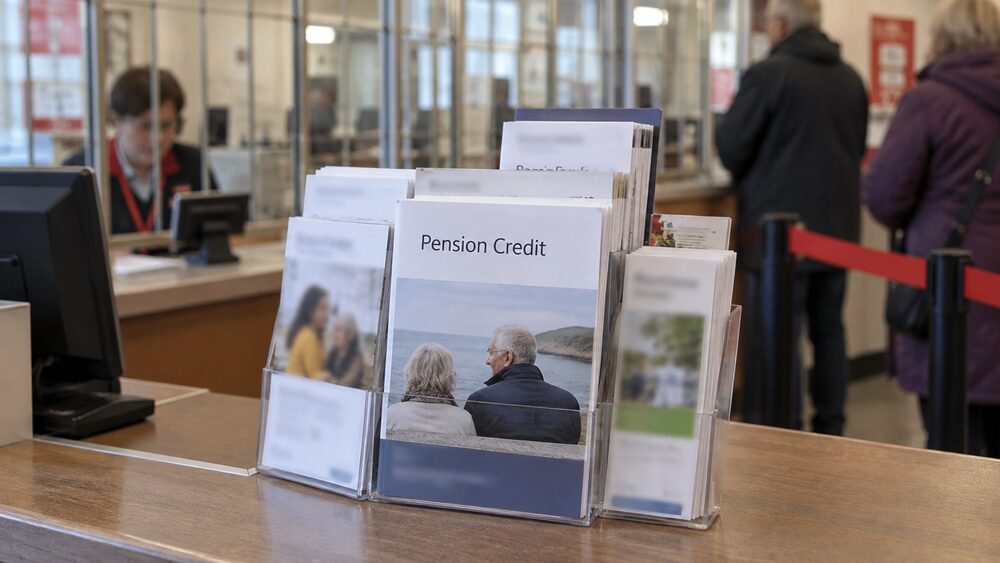
For pensioners there is a powerful route in. If you get the guarantee credit part of Pension Credit, you automatically get the maximum available reduction from your council tax regardless of your savings and income6. Independent Age puts the same point plainly: you may get your council tax paid in full if you get Guarantee Pension Credit8. This is why pensioners are urged to check Pension Credit first, because it unlocks the full reduction and other passported help.
For working age people in England, the picture is different. Many councils have reduced the amount of support available for working age people, so some may have to pay some council tax under their council's rules18. That means a working age household on a very low income can still be asked to find part of the bill, where a pensioner household in identical circumstances would have it met in full.
Backdating also differs by age. If you are over State Pension age, you can ask your local council to backdate the reduction up to 3 months without providing a reason why you could not apply as soon as you were eligible7. The same three month limit for pensioners applies in England and Wales, while in Scotland pension age claims can be backdated by six months8.
How much you could get: up to 100% of the bill
The headline is simple: the reduction can be worth up to 100% of your bill3. The Welsh Government's own description of its scheme is "a reduction in their Council Tax liability of up to 100%"19. Whether you get the maximum, something less, or nothing depends on your income, savings, household and, in England, which council bills you.
The reduction may cover some or all of your council tax bill, but this will depend on your household income20. Councils work down from the full bill: a household with no income above benefits may get everything covered, while a household with modest earnings gets a proportionate slice of help. Receiving a disability or carer's benefit can increase the amount, so tell the council about those payments when you apply7.
Two figures worth knowing sit alongside the reduction itself. If you live alone, you are normally entitled to a 25% reduction on your council tax bill12, and if the council disregards everyone living in your home, including you, you can get a 50% discount8. These are discounts rather than Council Tax Reduction, but they interact: the reduction is worked out on the bill after discounts, so a single person's 25% comes off first and the reduction applies to what is left.
Each council runs its own scheme in England and Wales
In England and Wales each council or authority has a different scheme21. In England, each council has its own Council Tax Reduction scheme, so the amount of help varies depending on the council area where you live22. Each council has different schemes and different rules for who qualifies, so the practical answer is always to check with the council that bills you23.
Wales is different. The Welsh Government set up a national Council Tax Reduction scheme, so all local authorities in Wales offer the same reductions and administer the scheme in their areas24. Welsh councils will generally offer the same reductions, though there may be a few slight differences in administration6. The Welsh Government protects vulnerable and low-income households by maintaining full entitlements to support with their council tax bills25, and its annual report for 2025-26 showed over 257,000 Welsh households received a council tax reduction25. All eligible applicants were automatically transferred from Council Tax Benefit onto the Welsh schemes from 1 April 201315, and current regulations require each billing authority in Wales to make a scheme26.
Scotland also has a national scheme, delivered by local authorities, so the rules are the same across the country but you still apply to your own council8. The Scottish and Welsh national schemes mean the postcode lottery that affects working age people in England does not apply there.
Where Council Tax Reduction does not apply, including Northern Ireland
Northern Ireland has no council tax at all. Households there pay rates instead23, and Northern Ireland operates a system of domestic rates rather than council tax20. Council Tax Reduction does not exist within Northern Ireland: those renting receive help with their rates through Housing Benefit5, and the equivalent support is the Domestic Rate Relief scheme administered by the NI Housing Executive27.
Council tax discounts and exemptions do not apply in Northern Ireland either, but rate relief may be available instead, and applications are made through the Applying for Rate Rebate pages on the nidirect.gov.uk website18. The practical point is the same everywhere: if your income is low, there is a means-tested route to reducing your local tax bill, but in Northern Ireland it is called something else and claimed differently.
One further territorial point: changes to support schemes announced for England do not affect Wales, Scotland or Northern Ireland, where the devolved governments made no changes18. In Wales, Scotland and Northern Ireland the amount of support has not changed and you can still receive help up to the amount of your full council tax or rates charge28.
How to apply to your council and what evidence to give
You apply to the council that issues your council tax bill6. In practice you can usually apply for help on your local council's website, or contact the council and ask for an application form to be sent to you29. Councils offer several routes: contacting the local authority's Council Tax department, applying over the phone, applying online through the local authority's website, or as part of a Universal Credit claim, and some provide a hard copy form on request19.
Your local council's website will tell you what evidence you need to provide, for example details of your income and savings7. If your council does not have a form, you can send the council tax team a letter with your name, the eligible person's name if it is not you, your council tax account number, your address and contact details, and an explanation of your circumstances12.
Claiming Universal Credit does not automatically entitle you to help with your council tax, so a separate application is needed14. In Wales, a recent change means a Universal Credit application can be treated as an intention to claim Council Tax Reduction where the applicant agrees, by ticking a box, to share information with the local authority19, which smooths the route but does not remove the need for the council to assess you.
Backdating a claim and reporting changes
If you are eligible for Council Tax Reduction, it may be possible to get it backdated from the time you apply to when you first met the eligibility criteria7. For pensioners, the limits are fixed: up to three months in England and Wales, and six months in Scotland, and in England and Wales you do not have to give a reason for the delay8. Discounts work similarly: if you have been entitled to a discount for a while, ask to have it backdated, and you may get some money back from the council12.
Some backdating limits are longer. For the council tax discount linked to severe mental impairment, your council tax can be backdated to the date you first claimed a qualifying benefit, with no time limit20. For the disability reduction scheme, backdating may be limited to six years21.
Reporting changes is part of keeping the award right. A change of circumstances may be reported in writing to the office that took your claim, or to any other gateway office that was notified to you on or with your claim form32. The kinds of changes that matter are the ones the award is built on: income, savings, who lives with you, and your liability for the bill. If you first become liable to pay council tax and notify the council within 4 weeks of the change, the claim date can be the date the change took place32.
Discounts and exemptions you can get alongside it
Council Tax Reduction may be available even if your bill is already reduced33, so it is worth checking all three routes: exemption, discount and reduction6. The main discounts are based on who counts as a liable adult in the home.
- Single person discount: if you live alone, you are normally entitled to a 25% reduction on your bill12, and the same 25% applies if you are the only adult over 18 living in your home34.
- Disregarded residents: you can have your council tax reduced by 25% if you are the only person liable for council tax in your home but share it with people who are not liable, such as full-time students, apprentices, and people with certain learning disabilities or mental impairments12.
- Everyone disregarded: if you and all the other residents are disregarded, you can get a 50% discount off your bill21, and the same 50% applies where the council disregards everyone living in your home8.
- Disability reduction: Council Tax is reduced to the band below, or by one-sixth if you are in the lowest band, where the home qualifies12.
Full-time students are not counted for council tax purposes at all22, which is why a household of students can end up with no bill, and why one liable adult living with students gets the 25% discount. In Wales, the government has concluded a review of the 53 categories of council tax discounts and exemptions, with improvements planned by regulation by April 202635.
A discount can also be available if you live alone or someone in your home is disabled36, and crisis support may exist alongside: councils can help with emergency grants and money help when you have no income36. If you separate from a partner, your household changes and so may your entitlement to both the discount and the reduction34.
If you cannot pay: arrears, enforcement and where to get help
Council tax arrears are treated more seriously than most debts, so the first step is always to check entitlement: see whether you can get a discount, a reduction or an exemption37. Applying for Council Tax Reduction is often the single most effective response to a bill you cannot pay.
If you miss a payment, the consequences escalate quickly. If you do not pay within 7 days of a reminder notice, you will have to pay the whole year's council tax instead38. Your local council could ask you to pay for the whole year at once, and if you still do not pay, they can take you to court14. In England and Wales the council makes a complaint to the Magistrates' Court, which then issues a summons10. Council tax owed can also be taken directly from Employment and Support Allowance, Income Support, Jobseeker's Allowance, Pension Credit and Universal Credit3.
In Scotland the process runs through sheriff officers: the council can ask a sheriff officer to make a payment agreement with you37. The Scottish Government's cost of living advice is to contact your local council as soon as possible if you have problems paying your council tax39.
Help exists beyond the reduction itself. Your council may give you a one-off discount if you still cannot pay what you owe38. Free debt advice is available from charities such as Stepchange, which notes that each council has different schemes and advises checking with your council about discounts23. In Scotland, the Scottish Welfare Fund provides Crisis Grants and Community Care Grants for households in an emergency.
Special situations: hospital, partners and immigration status
Going into hospital or a care home changes both your liability and your entitlement, so it counts as a change of circumstances to report. Care homes and hostels providing care or treatment generally qualify for a 50% discount, because the majority of residents are not counted for the purposes of Council Tax33. If you receive a disability or carer's benefit, you may get more Council Tax Reduction7, so payments such as Attendance Allowance or Carer's Allowance should be declared.
For households that include someone with no recourse to public funds, the position needs care. Council Tax Reduction is classed as a benefit14, and it appears on the official list of public funds27. There is a separate option: Second Adult Rebate, which you can get if you live with someone on a low income who is not your partner. You cannot get it at the same time as Council Tax Reduction, but your local council should automatically consider which is worth more12. Because a claim by a person subject to the condition can affect their immigration status, immigration advice should be sought first.
Some payments are deliberately kept out of the means test. Payments through the Infected Blood Payment Scheme Northern Ireland should be disregarded by local authorities when calculating council tax40. More generally, your income and savings should not affect whether you can get a council tax discount, but they will affect a Council Tax Reduction application20, which is why the two routes are assessed separately.
Finally, Pension Credit is worth checking before anything else for pensioners, because the government lists a Council Tax Reduction among the help that follows it41. A pensioner who qualifies for guarantee credit gets the maximum reduction automatically, regardless of savings and income6, and couples where one partner is over State Pension age should check the rules for mixed age couples before deciding which benefit to claim.
Sources41 cited
- Council Tax GOV.UK, 2026-09-26
- Council Tax Reduction (Scotland) Regulations 2012 legislation.gov.uk, 2012-11-21
- Paying council tax Which?, 2026-04-17
- Family Resources Survey quality and methodology report NISRA, 2026-05-28
- Help with council tax Shelter Cymru, 2026-08-28
- Help with council tax Carers UK, 2026-09-26
- Council Tax Reduction Age UK, 2026-08-26
- Help with your council tax Independent Age, 2026-09-26
- Council tax arrears Business Debtline, 2026-09-26
- Council tax and the law Carmarthenshire County Council, 2026-01-19
- Information about other Scottish taxes Revenue Scotland, 2025-09-12
- Council tax reduction, discounts and exemptions Shelter Scotland, 2025-04-16
- Help to pay council tax One Parent Families Scotland, 2025-04-03
- Help with Council Tax Reduction and discounts Scope, 2026-08-11
- Council Tax Reduction Schemes (Wales) explanatory memorandum Senedd Cymru, 2025-12-09
- Council Tax Reduction Scheme (Default Scheme) Regulations 2012 legislation.gov.uk, 2012-11-16
- Council Tax Reduction (Scotland) Amendment Regulations 2021, regulation 13 legislation.gov.uk, 2021
- Council Tax Reduction entitledto, 2026-09-26
- Streamlining Welsh benefits review Welsh Government, 2026-04-02
- Council tax exemptions and support to pay Mental Health and Money Advice, 2026-01-06
- Help with council tax Disability Rights UK, 2026-04-14
- Help with council tax rates Contact, 2025-10-02
- Paying council tax bills StepChange, 2026-09-25
- Council Tax Support in Wales Turn2us, 2026-06-19
- Council Tax Reduction Scheme annual report 2025-26 Welsh Government, 2026-08-14
- Council Tax Reduction Schemes (Miscellaneous Amendments) (Wales) Regulations 2026 legislation.gov.uk, 2026
- Public funds accessible GOV.UK, 2025-04-09
- Council Tax Support entitledto, 2026-09-26
- Help with housing mygov.scot, 2023-11-20
- Payment of benefits and tax credits Citizens Advice
- Benefits, hospital and care homes Independent Age
- Council Tax Benefit Regulations 1992, amendment 1999 legislation.gov.uk, 1999-06-28
- Council tax discounts, disregards, exemptions and reductions Welsh Government, 2026-03-17
- Benefits and help with council tax when you separate Citizens Advice, 2026-09-25
- Tax policy report October 2025 Welsh Government, 2025-10
- Emergency grants, loans and money help Shelter England, 2026-07-03
- What to do if you cannot pay your council tax mygov.scot, 2026-04-01
- Council tax arrears GOV.UK, 2026-09-26
- Debt and money Scottish Government, 2026-09-25
- Infected Blood Payment Scheme NI: financial advice and support nidirect, 2026-09-01
- Pension Credit GOV.UK, 2026-09-26



 Turn2usFree benefits calculator and grants search from a charity
 Citizens AdviceFree advice on money, consumer and legal problems in England and Wales
 GOV.UKOfficial information on tax, benefits and government services
 MoneyHelperFree, impartial money and pensions guidance, set up by government