
Yes, the State Pension is taxable income. It counts towards your total income for the tax year, alongside any private or workplace pension, wages, savings interest and other taxable income. But there is a twist that catches many people out: the State Pension is paid in full, with no tax taken off any of the payments. As the charity TaxAid puts it, "You have to pay tax on your State Pension, but nobody takes tax from it"1.
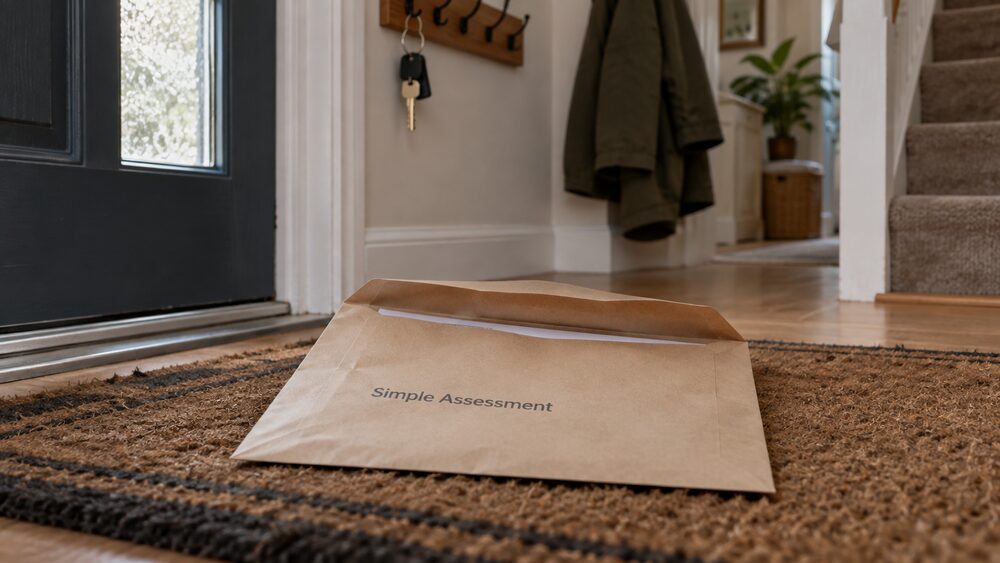
The Department for Work and Pensions (DWP) pays the State Pension, usually every four weeks, and does not deduct income tax from it2. Instead, HMRC collects the tax due by another route: usually by adjusting the tax code on your other pension or wages, sometimes by sending you a Simple Assessment bill after the tax year, or through a Self Assessment tax return if you already file one3.
Whether you actually pay anything depends on your total income. You only pay tax if your total taxable income, including your State Pension, is higher than your Personal Allowance3. The full new State Pension is £241.30 a week in 2026/27, around £12,548 a year, which is below the standard Personal Allowance, so many people whose State Pension is their only income pay no tax at all2.
The State Pension is taxable but paid without tax taken off
The State Pension is paid to you from the Department for Work and Pensions, but the DWP does not take the tax when it pays you1. This is different from a workplace or private pension paid through PAYE, where the provider deducts tax before the money reaches you. The result is that your State Pension payments look larger than a taxed pension of the same headline amount, and the tax has to be found somewhere else.
HMRC's approach is to look at all of your income together. The amount of tax you pay depends on the payments you receive in the tax year plus any other taxable income5. Because the State Pension arrives untaxed, HMRC usually changes your tax code so the tax due on it is collected from your wages or another pension3. If you have no other source that tax can be collected from, HMRC may instead send you a Simple Assessment tax calculation after the end of the tax year3.
This arrangement matters most in the first year of retirement, when income often changes part way through the year. It also matters if you have several small income sources, none of which on its own looks big enough to tax. The tax system adds them all up, and the State Pension is part of that sum.
When you pay no tax: State Pension below the Personal Allowance
You pay income tax only if your total annual income, including any pensions, adds up to more than your Personal Allowance6. When you get money from a pension, you pay tax on any income above that tax-free allowance7.
The full new State Pension in 2026/27 is £241.30 a week, or around £12,548 a year for most people2. That is below the standard Personal Allowance, so a person whose State Pension is their only income generally has no income tax to pay. HMRC's guidance is explicit: you'll only pay tax if your total taxable income, including your State Pension, is higher than your personal allowances3.
This is worth knowing because it means the answer to "is the State Pension taxable?" is yes, but "do I pay tax on it?" is often no. The distinction matters when other income is added: a small private pension, part-time wages, or savings interest can push total income over the allowance, and then the State Pension is part of what is being taxed.
If the State Pension is your only income
If the State Pension is your only source of income, and it comes to less than your Personal Allowance, no income tax is due and nothing needs to be collected3. You do not need to do anything: there is no tax code to adjust, because there is no other income to collect from, and no bill follows.
If your State Pension alone exceeds your Personal Allowance, HMRC cannot collect the tax through a tax code, because there is no employer or pension provider paying you through PAYE to take it from. In that situation HMRC sends a Simple Assessment tax calculation after the end of the tax year, setting out what you owe and how to pay it3. You'll get a Simple Assessment if your State Pension is your only income and it's more than your Personal Allowance8.
The government's position on the years ahead is that people whose State Pension is their only income will continue to pay no Income Tax even once the maximum State Pension passes the standard Personal Allowance in April 20272. That commitment covers the State Pension alone; any other income, such as a private pension or earnings, still counts towards the total.
How HMRC collects the tax through your tax code
The usual route is your tax code. HMRC changes the code on your other income, most often a private or workplace pension, so that the tax owed on the State Pension is collected from those payments3. TaxAid describes the same mechanism: HMRC takes the tax from other sources, like payments from occupational pensions or wages1.
In practice this means the tax-free allowance built into your pension provider's tax code is reduced by the amount of your annual State Pension. Your pension payments then have more tax taken off them than they would on their own. HMRC will tell your employer or pension provider if your tax code changes, so the adjustment happens without you needing to arrange anything9.
The three routes HMRC uses to collect tax on a State Pension that is paid without tax deducted.
This often produces a K tax code. A K code is used when income that has not had tax taken off, such as the State Pension or taxable state benefits, is more than your tax-free allowance, so the code adds extra tax to your wages or pension instead of giving you allowance10. The same mechanism is used for collecting tax on savings interest through your tax code if you are employed or get a pension11.
The system relies on HMRC knowing about your income. If you start receiving a new pension, take a job after retirement, or your circumstances change, telling HMRC promptly helps avoid the wrong code being operated for months and a larger correction later9.
Simple Assessment when tax cannot come through a tax code
When tax cannot be collected through a tax code, HMRC may send you a Simple Assessment tax calculation after the end of the tax year3. A Simple Assessment bill, also known as a PA302, is sent when you did not pay enough tax and HMRC could not collect it through your tax code12.
You'll get a Simple Assessment if you owe more than £3,000, or if your State Pension is your only income and it's more than your Personal Allowance8. HMRC may also send one where you go over your Personal Allowance and have tax to pay on your State Pension, or where you owe Income Tax that cannot be automatically deducted6.
HMRC has publicly urged people not to ignore these letters, because tax is due on pension income in many of the cases where they are issued13. The letter sets out your income, the tax due and how to pay. HMRC's worked example shows the shape of it: a taxpayer with £16,000 of State Pension and £1,500 of private pension income, where £750 of tax was paid through the private pension during the year, ends up with a total tax bill of £98612.
The same route is used for tax on savings interest when you do not have a tax code or it cannot be changed: HMRC may send a Simple Assessment letter11. If you receive one, the figures on it can be checked against your own records, and there is a process for querying it if something looks wrong. The dedicated page on Simple Assessment covers how the bill works and the deadlines for paying it.
Self Assessment: reporting the State Pension on a tax return
If you already submit Self Assessment tax returns, you include your annual State Pension entitlement amount on the return3. This is not optional: the State Pension is taxable income and belongs in the return alongside everything else.
The figure to use is your entitlement for the year, taken from the amounts shown on your State Pension letter from the DWP3. When you submit your tax return you must check that the State Pension entitlement amount is included3. If you use Making Tax Digital for Income Tax software, the same check applies before submission3.
Where Self Assessment debts arise, HMRC's policy is that where possible it will update your tax code, so that Self Assessment tax is collected through your PAYE income alongside the existing tax on your employment or pension14. This spreads the bill rather than requiring a single payment, and it is the same collection mechanism used for the State Pension itself.
If you are unsure how much State Pension you are entitled to, a State Pension statement gives an estimate based on your National Insurance contribution record so far15. The pages on Self Assessment and registering for Self Assessment cover who must file and how to start.
How your taxable State Pension is worked out for the year
HMRC works out your taxable State Pension using the amounts you were entitled to get over the tax year, rather than the payments you actually received3. This distinction matters because the State Pension is usually paid every four weeks rather than on the same date each month2, so the number of payments landing in your bank account in a tax year does not line up exactly with the entitlement for that year.
For a full year, if you started receiving your State Pension on or after 6 April 2010, HMRC bases the calculation on one week at the weekly rate before the April change plus 51 weeks at the weekly rate after the change3. In HMRC's example, one week at £160 plus 51 weeks at £170 gives a total taxable State Pension of £8,8303.
If your entitlement started part way through the year, HMRC works out the number of weeks left in the tax year from your entitlement start date and multiplies this by your weekly State Pension amount3. An entitlement that started on 4 January at £170 a week gives £170 multiplied by 13 weeks, or £2,210 of taxable State Pension for that year3.
The same principle applies to arrears. A National Audit Office investigation into State Pension underpayments found that income tax is calculated on arrears of State Pension for the tax year in which the pensioner was entitled to receive it, and not in the year in which a lump sum is paid16. So a back-payment covering several years does not all land in one year's tax bill.
Your State Pension amount itself depends on your National Insurance record and when you reach State Pension age17. A qualifying year is a tax year in which you have enough earnings on which you have paid National Insurance contributions17. The calculation is different for people who reached State Pension age before 6 April 2016, who claim the old State Pension with two parts2.
Full new State Pension: £241.30 a week and how much of it is taxable
The full rate of the new State Pension in 2026/27 is £241.30 a week18, confirmed in the uprating regulations that substituted £241.30 for the previous £230.25 in the State Pension Regulations 201519. The House of Commons Library puts the annual figure at £12,547.60 a year18, and Pension Wise rounds this to around £12,548 a year for most people2.
The whole amount is taxable. There is no part of the State Pension that is exempt: what determines whether tax is actually paid is the Personal Allowance, not any special relief on the pension itself3. At March 2026 the mean weekly payment of new State Pension was £216.42, including any Protected Payments, so most people receive less than the full rate20.
To get any new State Pension you need 10 qualifying years on your National Insurance record, and 35 years of qualifying contributions to get the full amount21. The new State Pension applies to men born on or after 6 April 1951 and women born on or after 6 April 1953, and to everyone who reaches State Pension age on or after 6 April 201621. At March 2026 there were 5.4 million people receiving it, an increase of 780,000 compared with February 202520.
| New State Pension, 2026/27 | Amount |
|---|---|
| Full weekly rate | £241.3019 |
| Full annual amount | £12,547.6018 |
| Mean weekly payment at March 2026 | £216.4220 |
| Qualifying years for any pension | 1021 |
| Qualifying years for the full amount | 352 |
Deferring your State Pension and the tax on the extra
You can put off claiming your State Pension when you reach State Pension age, and delaying can increase what you get22. Any extra payments you get from deferring could be taxed23, so the extra amount joins your taxable income in the same way as the rest of the pension.
For people who reached State Pension age on or after 6 April 2016, deferring builds up extra State Pension. If you defer for 52 weeks, you get an extra £13.99 a week, which is 5.8% of £241.3024. If you defer for 104 weeks, you get an extra £27.99 a week, which is 11.6% of £241.3024. For every year you delay claiming, your weekly payments increase by just under 5.8%22. You can take the deferred pension as a one-off arrears payment, as increased regular payments known as extra State Pension, or both24.
The extra weekly amounts built up by deferring the new State Pension at the full rate.
After you claim, the extra regular amount you get because you deferred will usually increase each year, based on the Consumer Price Index23. Pension Wise notes that any extra amount from delaying your claim increases in line with CPI rather than the triple lock used for the main pension2.
There are limits. You cannot get extra State Pension if you get certain benefits, and deferring can also affect how much you can get in benefits23. If you move abroad to a country outside the list in the deferral rules, your extra payment will be based on the State Pension you are owed at whichever is later of the date you reach State Pension age or the date you move abroad23.
Working after State Pension age: National Insurance stops, income tax does not
If you keep working after State Pension age, you stop paying National Insurance22. The rule is that you do not pay National Insurance after you reach State Pension age, unless you are self-employed and pay Class 4 contributions4.
Income tax is a different matter. Income you receive from part-time work in retirement counts as taxable income, along with income from your State Pension25. So someone who draws the State Pension and earns wages will have both sources added together, and tax is due on whatever exceeds the Personal Allowance. The tax on the State Pension part is still collected through the tax code on the wages, which is one of the situations where a K code commonly appears10.
This combination, a State Pension paid gross plus wages through PAYE, is exactly what the tax code mechanism is designed for. HMRC reduces the allowance in the wages tax code by the annual State Pension amount, so the right total tax is taken from the wages across the year3.
Living abroad or receiving other benefits: where the rules differ
You can claim the UK State Pension abroad if you have paid enough National Insurance contributions to qualify26. While abroad, you may be able to claim your UK State Pension27, and there is a different way to claim from abroad, including from the Channel Islands28.
Two rules affect the amount rather than the tax. You must choose which country you want your pension paid in: it cannot be paid in one country for part of the year and another for the rest29. And although benefits such as the State Pension are payable anywhere abroad, they are not normally increased when pension rates go up in the UK, depending on the country you live in30. Working abroad before State Pension age can also affect the qualifying years built up towards the pension, depending on circumstances such as whether you work for a UK or a foreign company30.
On the tax side, the position depends on residence. You may have to pay UK tax on some payments from an overseas pension scheme, depending on when you were a UK resident, and transferring pension savings overseas can have tax implications depending on your circumstances and the type of scheme you transfer to31. The pages on moving abroad and your residence status and money abroad cover the wider picture.
For other benefits, the State Pension counts as income. Pension Credit counts your State Pension as income, and if you have deferred it, the amount you would get is counted as income32. The Pension Age Winter Heating Payment in Scotland looks at personal income including state pension, private pension, self-employment, employment, taxable state benefits and non-ISA savings interest and investments33.
Getting it checked and where to complain
If you think the tax on your State Pension is wrong, the first step is to check the figures. Your State Pension letter from the DWP shows the amounts HMRC uses3, and a State Pension statement gives an estimate of your entitlement based on your National Insurance record15. HMRC has reported that almost 7 million adults are in the dark about their State Pension, so checking the record before retirement is worthwhile34. State Pension age itself is worked out from your gender and date of birth, and is regularly reviewed35.
Errors do happen. The National Audit Office investigated underpayments of State Pension, which arose from entitlements not being calculated correctly, and its findings on how arrears are taxed followed from that investigation16. If arrears are paid, the tax falls in the years you were entitled to the money, not the year of the lump sum.
Complaints about the State Pension itself, including the contracted-out deduction, go to the Department for Work and Pensions rather than to the Pensions Ombudsman, whose remit excludes them36. Complaints about how HMRC has handled your tax, by contrast, follow the HMRC complaints route, which can be escalated to the independent Adjudicator: the page on complaining about HMRC sets out the process. Free, impartial help is available from TaxAid on tax matters in retirement1, and nidirect signposts further sources of pension information and help15.
Sources36 cited
- Understanding tax and retirement TaxAid
- State Pension Pension Wise
- How your State Pension is taxed GOV.UK
- National Insurance and after State Pension age nidirect
- Pension flexibility: new options from 6 April 2015 GOV.UK
- Understanding tax and your pension GOV.UK
- Tax and allowances in retirement nidirect
- Common letters from HMRC Tax Confident
- Tell HMRC if you have a new job or more than one job GOV.UK
- K in your tax code GOV.UK
- How you pay tax on savings interest GOV.UK
- Understand Simple Assessment GOV.UK
- HMRC urges customers not to ignore Simple Assessment letters GOV.UK
- Timely payments in Income Tax Self Assessment factsheet GOV.UK
- Getting information and help about pensions nidirect
- Investigation into underpayments of State Pension National Audit Office
- Early retirement and the effect on your pension nidirect
- State Pension uprating 2026/27 briefing House of Commons Library
- The State Pension Uprating Regulations 2026 legislation.gov.uk
- Annual DWP Benefits Statistics Compendium 2026 GOV.UK
- The new State Pension GOV.UK
- Increase your retirement income GOV.UK
- Deferring your State Pension and what you will get nidirect
- Deferring if you reach State Pension age on or after 6 April 2016 GOV.UK
- Working past State Pension age nidirect
- State Pension GOV.UK
- Moving, living or retiring abroad GOV.UK
- Get your State Pension GOV.UK
- State Pension if you retire abroad GOV.UK
- Guidance on Social Security abroad (NI38) GOV.UK
- Transferring your pension nidirect
- Income, benefits and Pension Credit nidirect
- Pension Age Winter Heating Payment factsheet Social Security Scotland
- Almost 7 million adults in the dark about their State Pension GOV.UK
- Check your State Pension age nidirect
- What the Pensions Ombudsman can and cannot do The Pensions Ombudsman



 GOV.UKOfficial information on tax, benefits and government services
 MoneyHelperFree, impartial money and pensions guidance, set up by government
 Citizens AdviceFree advice on money, consumer and legal problems in England and Wales
 Turn2usFree benefits calculator and grants search from a charity
 Citizens Advice ScotlandFree advice across Scotland