Payments on account are advance payments towards your next Self Assessment tax bill. Instead of paying everything you owe in one lump after your tax return is filed, you spread part of the cost across the year: two payments, one due on 31 January and one on 31 July. Around 3 million Self Assessment taxpayers already need to make two payments on account each tax year towards their tax bill1.
The system exists because of how Self Assessment works. Under the self-assessment scheme, you have to keep proper financial records, fill in a tax return, and may need to make payments during the year, known as payments on account2. Self Assessment is used mainly by self-employed people and people who get money from things other than a job, such as investments or renting out property3. Without payments on account, tax on this kind of income could sit unpaid for a long time: as the rules stand, tax on any Self Assessment income is paid by individuals up to 22 months after it is received1.
What payments on account are and how they work
A payment on account is a payment made during the year, in advance, against a tax bill that has not yet been finalised. The self-assessment scheme requires you to keep proper financial records, fill in a tax return, and make these payments during the year where they apply2. The idea is that by the time your return is filed and your actual bill is known, most of it has already been paid.
The mechanics follow the tax year. The first payment on account happens in January, during the tax year it relates to. The second payment on account happens in July in arrears, which means it is paid 4 months after the tax year ends1. When you then file your return and the final figure is worked out, anything the two payments did not cover becomes a balancing payment, and anything you overpaid comes back to you.
This is different from how most employed people experience tax. Under Pay As You Earn (PAYE), your employer works out the tax and National Insurance you owe, takes it from your wages before you are paid, and sends the money to HMRC3. Payments on account are the Self Assessment equivalent of paying as you go, except that you make the payments yourself, in two instalments, based on what your tax bill was last time rather than on what you are earning month by month.
Who has to make them: the £1,000 and 80% PAYE tests
Not everyone in Self Assessment has to make payments on account. The notes to the Self Assessment return set out two tests that decide. First, if you owe £1,000 or less, you can just make a single tax payment instead. Second, if more than 80% of your tax bill for 2025 to 2026 is met from tax taken off at source, no payments on account are needed4. Tax taken off at source means tax already collected before you see the money, such as PAYE on wages or a pension, or tax deducted from bank interest before it is paid to you.
The 80% test matters most to people with both employment and other income. Around 7 million Self Assessment taxpayers also have PAYE income, because they are employed or receive a pension1. Someone whose salary covers most of their tax, with a small amount of extra income pushing them into Self Assessment, may find that more than 80% of their bill was already collected at source, and so no payments on account are required. Someone whose income is almost all self-employed profits, rent or investment income will usually fail both tests and will be drawn into the system.
The £1,000 test works the other way round: it protects people with small bills. If your total Self Assessment bill comes to £1,000 or less, a single payment settles it and there is nothing to spread. Both tests are applied to the tax bill for the year, so a bill that creeps just over £1,000, or a year in which less of your tax is collected at source, can move you into making payments on account for the first time.
How much you pay: half of last year's bill each time
Each payment on account is half of your previous year's Self Assessment bill4. The two payments together therefore add up to roughly what you paid last time, and they are set against the bill for the year they relate to. If your income is steady, the two payments will land close to the final figure and the balancing payment at the end will be small.
Because the amounts are based on the past, they can be out of step with the present. A year of higher profits does not increase the payments on account as you go: the extra tax arrives later, as a balancing payment. A year of lower profits does not reduce them automatically either, which is why the rules allow you to ask for a reduction, covered below. The notes to the return explain how the previous bill is used and how the payments are entered when your final position is worked out4.
What counts as "the bill" for this purpose is your Self Assessment liability itself. For self-employed people, that bill can include Class 4 National Insurance contributions, which are for self-employed people whose net profits are over a certain amount5: you must pay Class 4 contributions if your profits are more than £12,570 a year6. Employees pay Class 1 National Insurance contributions based on their level of earnings instead7, and employers may also owe Class 1A on some other lump sum payments, for example redundancy payments8. Tax reliefs can reduce the tax you pay if you qualify for them, which in turn feeds into the bill the payments are based on9.
Payment dates: 31 January and 31 July
The two dates are fixed by the system. The first payment on account happens in January, during the tax year it relates to. The second payment on account happens in July in arrears, which means this is paid 4 months after the tax year ends1.
The rhythm is worth getting used to, because 31 January is a heavier date than it first appears. It is the deadline for filing the return, the deadline for paying any balancing payment on last year's bill, and the due date for the first payment on account for the year ahead, all on the same day. 31 July, by contrast, carries only the second payment on account. People who budget for these dates often find it easier to cope with paying bills if they open a separate bank account, paying regular amounts into it to plan ahead, with direct debits or standing orders taking the payments out automatically2.
The balancing payment when your bill turns out higher
Payments on account are estimates, and the return settles the difference. If the two payments do not fully cover the tax liability, a balancing payment is also due by 31 January the following year1. That 31 January is the one after the tax year the payments relate to, and it is the same date the return is due.
The balancing payment is where the cost of a good year shows up. Because each instalment was half of the previous, lower bill, the extra tax from higher profits has not been collected during the year and arrives in one amount. The reverse also happens: if your bill comes in lower than the two payments, you have overpaid and the difference comes back, as covered in the section on overpayments.
Planning for the balancing payment is a budgeting exercise rather than a tax one. Keeping proper financial records through the year, as the self-assessment scheme requires2, gives you the raw material to see whether your income is running ahead of last year. Some people keep a separate account for tax money and pay into it regularly, so that a larger than expected balancing payment does not have to come out of one month's income2.
Your first year of payments on account: why January can cost more
The first year in the system is the one that catches people out. The first payment on account happens in January, during the tax year it relates to1, which means that in your first year you are paying the whole of last year's bill and the first instalment of next year's at the same time.
Worked through as amounts, the 31 January that follows your first return can carry three things: the balancing payment that clears the bill for the year just filed, the first payment on account for the current tax year, and, if you file on paper rather than earlier online, the pressure of the filing deadline itself. In cash terms, that 31 January means settling the whole of the bill you have just filed plus half of it again as the first instalment, and then the second half follows on 31 July.
The reason the system works this way is timing. Tax on any Self Assessment income is paid by individuals up to 22 months after it is received1. Payments on account pull some of that forward, but the first year has nothing to pull forward from, so the whole weight lands together. After the first year the pattern evens out: each January and July carries one instalment, and the balancing payment reflects only the difference between estimate and reality.
Reducing payments on account if your income falls
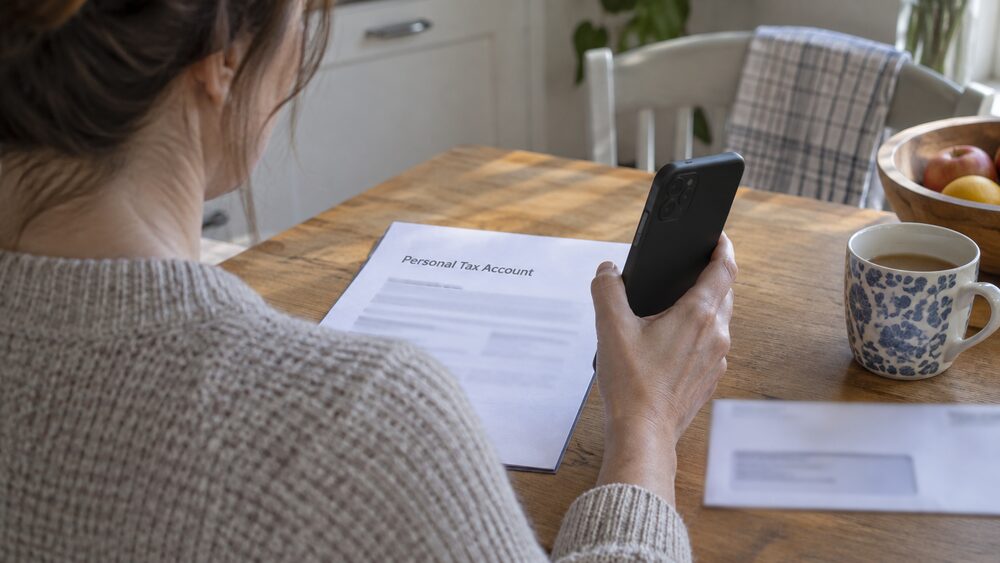
If your income has fallen, the payments based on last year's bill can be too high. The rules allow you to ask HMRC to reduce them. You can do this by logging in to your online Personal Tax Account and using the reduce payments on account section, or by filling out form SA303 and sending it to your local tax office10. Once a reduction is in place, you pay the reduced instalments on 31 January and 31 July instead.
A reduction is a claim about the future, so it rests on your own estimate. Income that varies is recognised elsewhere in the tax system: if your income varies or falls during the tax year, it is possible that your total for the year will fall below a repayment threshold even if your earnings exceed the weekly or monthly threshold at points during the year11. The same logic applies here: a year that starts well can still end below last year's figure, and the payments can be cut to match.
Two things support a reduction being realistic rather than optimistic. First, the self-assessment scheme requires you to keep proper financial records2, so the evidence of a falling income, such as fewer invoices or a lost contract, should exist in your own paperwork. Second, tax reliefs you qualify for can reduce the tax you pay9, and a bill reduced by reliefs feeds into lower payments on account in the normal course, without a separate claim.
Reduce too far and HMRC charges interest
A reduction is not a discount. It changes when and how much you pay during the year, but it does not change the tax you actually owe. If you reduce the payments below what your final bill turns out to be, the shortfall becomes a balancing payment on 31 January, and interest is charged on tax not paid by its due date.
HMRC charges interest when tax is not paid on time across the taxes it administers: it will charge interest if you do not pay all of the tax by the due date15, and late submission or payment of a tax return can attract both penalties and interest16. The same principle applies to Self Assessment: cutting the payments too far leaves a gap, and interest runs on that gap. Where HMRC finds a person using a tax avoidance scheme, the consequence is paying the tax due, plus interest and penalties17, which shows how the charges stack when HMRC believes the position taken was not honest. A good-faith reduction that turns out to be too low is treated differently from avoidance, but the interest still applies to the unpaid amount.
The practical protection is proportion. A reduction should reflect what you genuinely expect to earn, not the lowest figure you would like to pay. If your estimate was reasonable and your income recovered unexpectedly, the interest is on a small balancing payment. If the reduction was aggressive, the interest is on a large one.
Missed or late payments: interest and tax debt
Missing 31 January or 31 July has consequences that build in stages. Interest is charged on tax not paid by the due date15, and penalties can follow: you may be charged penalties and interest if you do not submit or pay your tax return on time16. The later instalments of a tax paid in instalments can also carry interest on both the outstanding balance and the instalment itself when paid late18, which shows how arrears compound when a debt is left standing.
If the debt persists, HMRC can collect it from your wages. Deductions can be taken from your pay under an attachment of earnings order, and if you cannot afford the deduction amount, you can apply to get it changed19. That route exists for tax debt as much as for other debts recovered through earnings, and it is better to engage with it than to let the deductions land at a level you cannot sustain.
Missing a tax payment can also damage your wider finances. If a direct debit or standing order set up for the payment bounces, there are usually fees or interest if you spend more than you have in your account, including if there is not enough to cover a direct debit or standing order20. Unarranged overdrafts can bring a penalty charge and a high rate of interest, charges for reminder letters and for direct debits or cheques put through the account, and the bank may freeze the account until the overdraft is paid off21. If you are using your overdraft, you will have to pay it back before you can close your account22. Keeping a separate account for tax money, funded by regular payments through the year, is the standard defence against all of this2.
What happens if you overpay through payments on account
Overpayment is the benign failure mode, but it still needs action. If you pay too much, you will need to contact HMRC for a refund23. HMRC also sends a tax calculation letter, known as a P800, or a Simple Assessment letter if you have paid too much or too little tax by the end of the tax year on 5 April10, so an overpayment may surface through that letter rather than through your own arithmetic.
The refund is not automatic in every case. The Simple Assessment system, under which HMRC works out your bill for you, requires you to contact HMRC for a refund if you have paid too much23. In practice, an overpayment created by payments on account is usually set against your next balancing figure or repaid once the return is processed, but checking your position after filing, rather than assuming, is what the guidance points to.
Interest can work in your favour here in one corner of the system: on refunds of overpaid student loan amounts, interest is paid at the same rate as it is charged to your account and is tax free11. That is a student loan rule rather than a payments on account rule, but it shows the direction of travel when a body has held your money: the refund can carry interest. For tax overpayments, the P800 or Simple Assessment letter is the document that tells you where you stand10.
Changes coming: Making Tax Digital and paying through PAYE
Two reforms are changing how Self Assessment tax is paid, and they are separate but complementary. Making Tax Digital for Income Tax launched in April 2026, and HMRC describes it as the most significant change to how many customers interact with the tax system in 30 years24. The timely payments reform, which is what affects payments on account, is separate from Making Tax Digital, which is focussed on helping taxpayers manage their tax affairs1.
The confirmed change is this: from April 2029, Self Assessment taxpayers with PAYE income, such as from employment or a pension, will need to pay towards their Self Assessment tax bill through their PAYE income, where they have enough income to do so1. Where possible, HMRC will update your tax code, which will determine how much Self Assessment tax is collected through your PAYE income alongside your existing tax on your employment or pension1. The government's stated position on the effect is plain: no one will pay more tax than they currently do, the timing will just change1.
For people whose income is entirely outside PAYE, nothing is decided. No decisions have yet been made about potential changes to payments for this group of Self Assessment taxpayers1. The shape of the future system can already be seen in a narrower case: for the High Income Child Benefit Charge, if you previously completed a Self Assessment tax return only to pay the charge, you can choose to pay it through PAYE instead by contacting HMRC by phone to leave Self Assessment and register for PAYE payment25. That is the model the 2029 reform extends: tax collected through the wage or pension stream rather than through separate instalments.
Sources25 cited
- Timely payments in Income Tax Self Assessment factsheet HM Treasury / HMRC, 2026-06-23
- Your business and household budget Business Debtline, 2026-09-26
- Tax in your first job HMRC Tax Confident campaign, 2026-08-05
- Notes on the Self Assessment return (SA110), 2026 HMRC, 2026
- Guidance on social security abroad (NI38) HMRC, 2026-07-07
- Maternity Allowance nidirect, 2026-07-15
- National Insurance and after State Pension age nidirect, 2026-04-28
- National Insurance rates and letters HMRC, 2026-09-26
- Income Tax HMRC, 2026-09-26
- Reduce payments on account (form SA303 and online account) HMRC, 2026-04-06
- Repaying your student loan more quickly and getting refunds nidirect, 2026-06-04
- Problems paying Self Assessment tax TaxAid
- Tax advice Independent Age, 2026-09-26
- Self-employed tax deadline: how to avoid an interest charge Which?, 2024-07-20
- Applying for a grant on credit for Inheritance Tax HMRC, 2024-04-01
- Land and Buildings Transaction Tax: residential property Revenue Scotland, 2026-09-26
- Tax bill avoidance mygov.scot, 2024-08-02
- Inheritance Tax yearly instalments HMRC, 2026-09-28
- Debt payments from your wages HMRC, 2026-09-26
- Choosing a bank account for your Universal Credit payment MoneyHelper, 2026-09-25
- Overdrafts and other bank debts nidirect, 2025-11-07
- How to open, switch or close your bank account MoneyHelper, 2026-09-25
- Understand Simple Assessment HMRC, 2026-09-25
- 56 million taxpayers check their pay in the HMRC app an average of 18 times a year HMRC, 2026-04
- Child Benefit tax charge HMRC, 2026-09-26


 GOV.UKOfficial information on tax, benefits and government services
 MoneyHelperFree, impartial money and pensions guidance, set up by government
 Citizens AdviceFree advice on money, consumer and legal problems in England and Wales
 Turn2usFree benefits calculator and grants search from a charity
 Citizens Advice ScotlandFree advice across Scotland