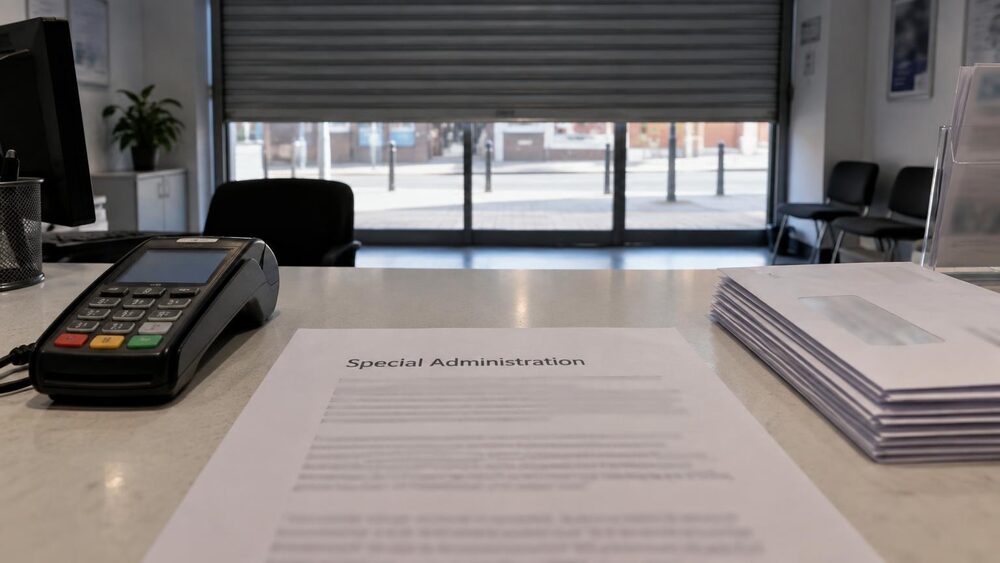
Duncan Perring and James Bennett of Teneo Financial Advisory Limited were appointed special administrators over Euro Exchange Securities UK Ltd (EES) by the High Court on 11 June 2026, under the Payment and Electronic Money Institution Insolvency Regulations 20211. The Financial Conduct Authority said the administrators had taken control of the firm and had secured a significant amount of material and frozen funds1.
The appointment followed action by the regulator. On 4 June 2026 the FCA said it had required EES to cease carrying on any regulated electronic money or payment services and had successfully applied to the court for the appointment of interim managers, citing serious concerns about the way EES had operated its business indicating significant risks of financial crime1. A First Supervisory Notice published on 2 August 2026 confirmed that EES could not carry on electronic money services or payments services, and placed an assets requirement on the firm requiring it, among other things, not to return, transfer or deal in electronic money and to ensure all relevant funds were appropriately ringfenced in a designated safeguarding account1.
On 18 September 2026 the FCA said it was investigating potential offences by EES1. It said that between 1 February 2020 and 4 June 2026 the firm may have committed offences under the Money Laundering, Terrorist Financing and Transfer of Funds (Information on the Payer) Regulations 20171. The possible failures set out by the regulator concern identifying and assessing money laundering risks, including in relation to customers, the countries or geographic areas where it operated, its services, its transactions and delivery channels, and documenting and updating that assessment1. The FCA also cited possible failures to establish and maintain policies, controls and procedures to mitigate and manage those risks, including in customer due diligence, ongoing monitoring controls, internal governance and oversight, resourcing and allocation of responsibilities, and record-keeping and escalation and reporting mechanisms1.
"We have not yet reached any conclusions in this investigation as to what has happened or as to whether EES has breached any relevant requirements."
Why it matters for households
EES is no longer able to carry on electronic money services or payments services, so customers cannot use it to hold or move money1. The assets requirement placed on the firm means it must not return, transfer or deal in electronic money, and relevant funds must be ringfenced in a designated safeguarding account1. The special administrators have taken control of the firm and secured material and frozen funds1. The FCA has not reported a timetable for returning money to customers, and no outcome for customers has been reported.
The investigation covers conduct alleged to have occurred between 1 February 2020 and 4 June 20261. The FCA has not reached conclusions on whether EES breached any relevant requirements1. No findings have been made against the firm.
What happens next
The FCA's investigation into potential offences by EES is open, with no conclusions reached1. The special administrators appointed on 11 June 2026 remain in control of the firm1. The First Supervisory Notice was published on 2 August 20261. No further dates have been reported.
Consumers with a complaint about a financial firm can read about the Financial Ombudsman or court: which route for a complaint, and more on how firms are supervised in the regulation and policy hub.

 Financial Ombudsman ServiceFree, independent help when a complaint about a firm is not put right
 FSCSProtects your money if a bank, insurer or investment firm fails
 FCA Warning ListCheck whether a firm is authorised before you deal with it
 MoneyHelperFree, impartial money and pensions guidance, set up by government
 Citizens AdviceFree advice on money, consumer and legal problems in England and Wales