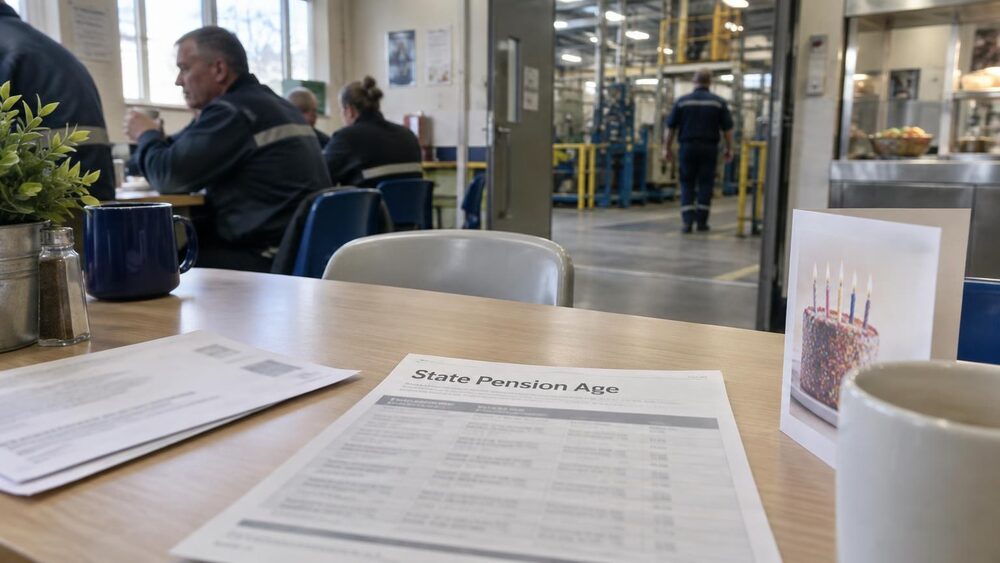
The State Pension age is rising from 66 to 67 between April 2026 and March 2028, on a phased basis determined by date of birth1. The Department for Work and Pensions set out the change in guidance published for the 2026/27 tax year, and the Government Actuary's Department confirmed the timetable in its report on the 2026 up-rating order, published on 13 January 20262.
Under the Pensions Act 2007, State Pension age is 67 for people born after 5 April 1969 but before 6 April 19771. The House of Commons Library records that the State Pension age is due to rise for both men and women to 67 between 2026 and 2028, and to 68 between 2044 and 20463. The Department for Work and Pensions states that the increase is taking place gradually between 6 April 2026 and 5 April 20284.
"Between April 2026 and March 2028, the State Pension age is rising from 66 to 67."
The full rate of the new State Pension in 2026/27 is £241.30 a week, or £12,547.60 a year1. The Government Actuary's Department reports that this is an increase from £230.25 a week, and that the full rate of the basic State Pension rises from £176.45 to £184.90 a week2. The basic State Pension applies to people who reached State Pension age before 6 April 20161.
| State Pension rate | 2025/26 | 2026/27 |
|---|---|---|
| Full new State Pension | £230.25 a week | £241.30 a week2 |
| Full basic State Pension | £176.45 a week | £184.90 a week2 |
The House of Commons Library estimates there were 13.2 million state pensioners in Great Britain in 2025/26, of whom around two thirds (8.2 million) were claiming the pre-2016 State Pension and 5.0 million were new State Pension claimants3. The Government Actuary's Department projects that the up-rating order will increase National Insurance Fund expenditure by £6.9 billion in 2026/27, and that the increase in State Pension age from 66 to 67 between 2026 and 2028 partly offsets the rising number of people reaching State Pension age2.
Why it matters for households
Anyone born after 5 April 1969 but before 6 April 1977 has a State Pension age of 671. For people approaching 66, the date on which State Pension and pensioner benefits begin depends on their date of birth rather than a single cut-off, so two people born months apart can reach State Pension age at different times1. The State Pension cannot be claimed automatically: about four months before reaching State Pension age, the Department for Work and Pensions sends a letter explaining how to claim1.
The State Pension is taxable and counts towards the Personal Allowance, though it is paid without tax deducted1. The full new State Pension of £241.30 a week is £12,547.60 a year, below the standard Personal Allowance of £12,5701. National Insurance contributions stop once State Pension age is reached, even for people who carry on working1.
Entitlement depends on the National Insurance record. Normally 10 qualifying years are needed to receive any new State Pension, and gaps may be filled by credits or, for gaps in the past six complete tax years, by voluntary contributions1. The amount received also depends on when State Pension age is reached1.
What happens next
The rise continues on a phased basis until March 20281. The Government Actuary's Department notes that the third State Pension age review and the Pensions Commission, launched in July 2025, are both considering aspects of the pensions system, and that outcomes from the State Pension age review may significantly affect future projections2. No further changes to State Pension age beyond the rise to 68 between 2044 and 2046 have been reported3.
Sources4 cited
- How the State Pension works - Tax Confident taxconfident.campaign.gov.uk
- Report by the Government Actuary on: The draft Social Security Benefits Up-rating Order 2026; and the draft Social Security (Contributions) Regulations 2026 - GOV.UK gov.uk
- Pensions in the UK - House of Commons Library commonslibrary.parliament.uk
- Universal Credit quarterly statistics, 29 April 2013 to 14 May 2026 - GOV.UK gov.uk

 Pension WiseFree guidance on your options for a defined contribution pension, from age 50
 FSCSProtects your money if a bank, insurer or investment firm fails
 GOV.UKOfficial information on tax, benefits and government services