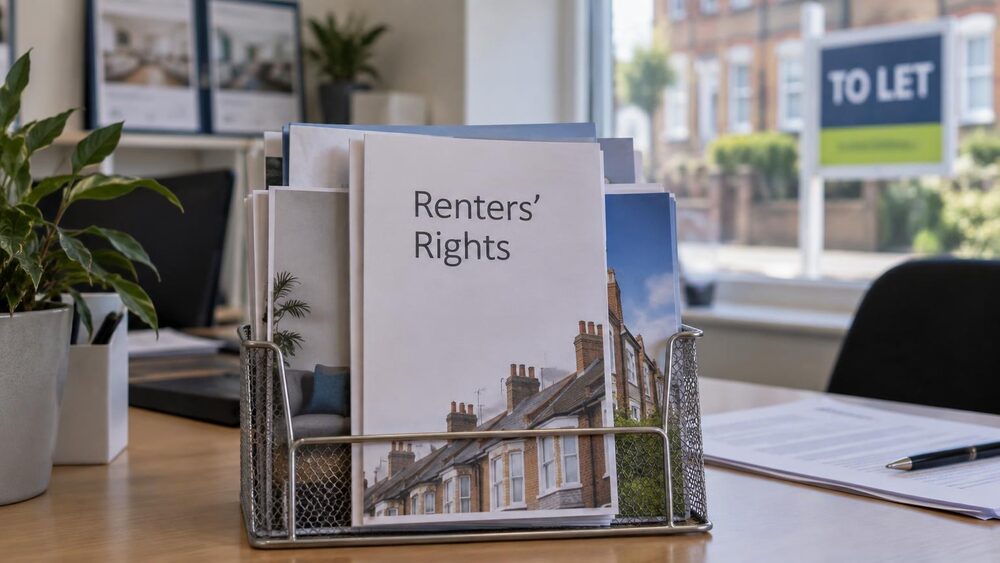
The Renters' Rights Act came into force on 1 May 2026, the Ministry of Justice said in its mortgage and landlord possession statistics for April to June 2026, published on 19 August 2026. The quarter covers two months of activity following the Act's implementation1. The Act received Royal Assent on 27th October 2025, and the majority of its provisions took effect on 1 May 2026, with the Private Rented Sector Database and the Private Landlord Ombudsman due from late 20262.
The Ministry of Justice said it is not clear whether the overall fall in landlord possession claims or changes in other types of claims can be attributed to commencement of the Act, and that it will continue to monitor trends over the next quarters1.
"The Renters Right Act came into force on 1st May 2026 and this quarter's data, which covers from April to June, reflects two months of activity following the Act's implementation."
Landlord possession claims rose 6% to 23,635 in April to June 2026 compared with the same quarter in 2025, while orders were stable, warrants fell 6% to 9,715 and repossessions fell 3% to 6,5601. Within claims, accelerated claims were up 16%, private landlord claims up 5% and social landlord claims down 3%1. Of all landlord claims, 32% (7,449) were social landlord claims, 32% (7,617) private landlord claims and 36% (8,569) accelerated claims1. London courts accounted for 7,793 landlord claims and 5,440 landlord orders, 33% and 31% of the respective totals1. The median time from landlord claim to repossession fell to 27.1 weeks from 27.9 weeks a year earlier1.
Mortgage possession claims fell 20% to 5,232, orders fell 17% to 3,651, warrants fell 18% to 3,101 and repossessions by county court bailiffs fell 14% to 1,0081. The median time from mortgage claim to repossession rose to 49.1 weeks from 42.9 weeks, which the Ministry said is the highest since the fourth quarter of 20231.
On tenancy terms, the Ministry of Housing, Communities and Local Government said that from 1 May 2026 a landlord cannot ask a tenant to pay rent before the tenancy agreement is signed, and can ask for a maximum of one month's rent in advance after signing and before the start date3. Deposits are capped at five weeks' rent where annual rent is below £50,000, and six weeks where it is between £50,000 and £100,0003. The guidance applies in England only and does not cover social housing assured tenancies, shared ownership leases, short term holiday lets, excluded licences or properties with annual rent above £100,0003.
Shelter said that from 1 May 2026 landlords can only increase a periodic assured tenant's rent by serving a valid section 13 notice, which a tenant can challenge through the First-tier Tribunal, and that the notice period becomes two months4. It said the tribunal cannot set rent above the landlord's proposal, cannot backdate an increase, and can delay one by up to two months where it would cause undue hardship4. Rent review clauses can no longer be used, and all fixed-term tenancies become periodic4. Between 2024 and 2025, 1,532 tenants applied to the tribunal for a rental determination, and in 2023-2024 tenants waited an average of 24 weeks for a hearing4.
Shelter also said landlords had to issue a government factsheet to tenants moving from assured shorthold to assured tenancies by 31 May 2026, and a statement of terms by the same date where no written agreement existed, with local authority fines of up to £7,000 for non-compliance5. Tenants ending a periodic tenancy must give two months' notice to quit, or no less than four weeks if the landlord agrees in writing5. There are no changes to tenancy deposit protection rules5.
Why it matters for households
Private renters in England moved onto periodic assured tenancies on 1 May 2026, meaning tenancies roll on rather than running to a fixed end date, and landlords can only end them using grounds set in law2. Section 21 no-fault evictions were abolished, and the 'sell' and 'move in' grounds cannot be used in the first 12 months of a tenancy2. The mandatory rent arrears threshold for eviction rose from two to three months' arrears, with notice extended from two weeks to four2.
For renters facing a rent increase, the route changed: increases must come through a section 13 notice with two months' notice, and a challenge at the tribunal no longer carries the risk of a higher award or backdated arrears4. Renters who signed agreements before 1 May 2026 with genuine rent-in-advance clauses can still have those enforced, and a landlord can still ask for rent in advance after a tenancy starts, though cannot force payment if the tenant refuses5.
Landlords and letting agents face penalties for prohibited payments: up to £5,000 for a first breach, up to £30,000 for a second or subsequent breach within five years, and an unlimited fine on prosecution3. Rental bidding is banned, with landlords and agents required to publish an asking rent and barred from accepting offers above it, and discrimination against prospective tenants on benefits or with children is prohibited2.
What happens next
The Ministry of Justice said it will monitor possession trends over the next quarters, and that it is not yet known whether the fall in mortgage claims will continue1. The Private Rented Sector Database and the Private Landlord Ombudsman are due to come into effect from late 2026, with the database rolled out gradually by area2.
Sources5 cited
- Mortgage and landlord possession statistics: April to June 2026 - GOV.UK gov.uk
- Renters’ Rights Act: What It Means For Landlords - HomeOwners Alliance hoa.org.uk
- Fees you can charge as part of a tenancy - GOV.UK gov.uk
- Rent increases: the rules and what's changing - Shelter England england.shelter.org.uk
- Renters' Rights: tenancy reform Q&A - Shelter England england.shelter.org.uk

 Financial Ombudsman ServiceFree, independent help when a complaint about a firm is not put right
 FSCSProtects your money if a bank, insurer or investment firm fails
 FCA Warning ListCheck whether a firm is authorised before you deal with it
 MoneyHelperFree, impartial money and pensions guidance, set up by government
 Citizens AdviceFree advice on money, consumer and legal problems in England and Wales