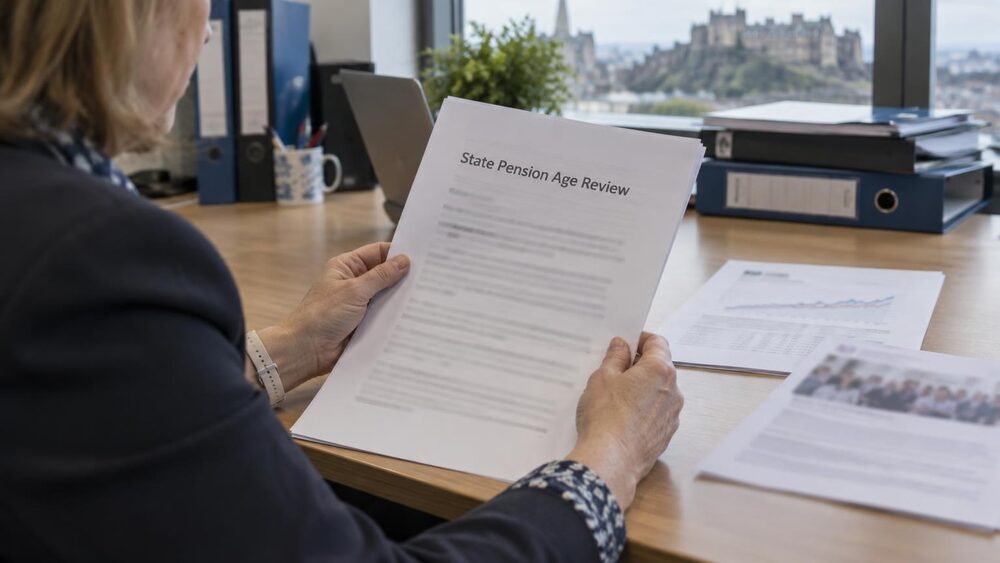
The Cabinet Secretary for Social Justice, Shirley-Anne Somerville, wrote to Dr Suzy Morrissey, who leads the independent review of the State Pension age, on 27 October 2025. The letter was published by the Scottish Government as evidence submitted to the review, which is being conducted on behalf of the Secretary of State for Work and Pensions1.
The letter states that men and women in Scotland have lower average life expectancy at the current State Pension age of 66 than their counterparts elsewhere in the UK. It says 66 year old men in Scotland are expected to live around one year less, and 66 year old women almost one and a half years less, than in England and, to a slightly lesser extent, Wales and Northern Ireland1. The Scottish Government also cites its estimate that around 160,000 people over pension age in Scotland live in relative poverty, after housing costs1.
On demographics, the letter says Scotland's population of pensionable age citizens is projected to rise by almost 34% between 2022 and 2047, from 1 million to 1.4 million, after accounting for current scheduled State Pension age increases, while the number of children is projected to fall by around 9% over the same period1. It notes that Pension Age Disability Payment and Pension Age Winter Heating Payment are delivered by Social Security Scotland, and that any change to the State Pension age could affect people receiving that support1.
The letter also raises the position of women born in the 1950s, stating that no compensation has been paid to the WASPI women despite pressure from stakeholders and the Scottish Government1. It says the review must ensure any changes are communicated clearly and fairly so that similar distress is not repeated1.
"Here in Scotland, both men and women have a lower average life expectancy at the current State Pension age of 66."
The letter sets out the Scottish Government's position on the review's scope, noting its focus on intergenerational fairness, sustainability and long-term affordability alongside wider considerations such as impacts on different groups across regions and nations1. It says the Scottish Government does not want to see changes that do not fundamentally consider Scotland's unique challenges1.
Why it matters for households
The State Pension age determines when people can claim their State Pension, so any change affects retirement timing and income for everyone below that age. The letter's central point is that equal contribution records do not produce equal time in retirement: it states that 66 year olds in Scotland can expect fewer years of pension receipt than those in England, and that inequalities in life expectancy and healthy life expectancy within Scotland are significant1. For women born in the 1950s, who were affected by earlier increases to the State Pension age, the letter records that no compensation has been paid1; the background to those changes is set out in our guide to State Pension age changes for women born in the 1950s. The letter also flags that around 160,000 pensioners in Scotland live in relative poverty after housing costs, and that women, people with multiple low paid jobs, disabled people, minority ethnic communities and self-employed people face lower pension incomes in retirement1. Any change to the State Pension age could also affect people receiving Pension Age Disability Payment and Pension Age Winter Heating Payment, which are delivered by Social Security Scotland1.
What happens next
The letter says the Cabinet Secretary looks forward to meeting Dr Morrissey to discuss the evidence further on 18 November, the same day Scottish stakeholders are due to meet her1. The review is being conducted for the Secretary of State for Work and Pensions; no outcome or timetable for the review's conclusions is given in the letter1.
 Pension WiseFree guidance on your options for a defined contribution pension, from age 50
 FSCSProtects your money if a bank, insurer or investment firm fails
 GOV.UKOfficial information on tax, benefits and government services