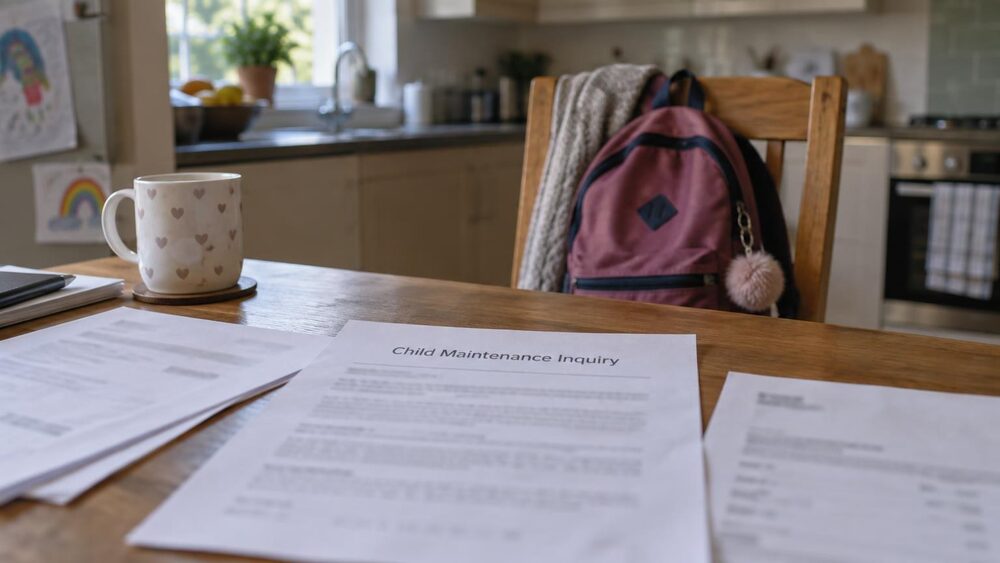
The cross-party Work and Pensions Committee has launched an inquiry into the Child Maintenance Service (CMS), the body that calculates, collects and enforces child maintenance payments between separated parents. The inquiry was announced on 31 July 20251.
The committee says the inquiry will examine how to increase payment compliance rates, improve how the service deals with families, how maintenance payment levels should be set, and the impact of the government's proposed changes to Direct Pay and Collect and Pay1.
Over 1 million children are in the CMS system, of which 760,000 are managed by the service in cases where parents have been unable to agree payments between themselves1. A Department for Work and Pensions survey published in June found that around 2 in 5 receiving parents report non-compliance with payments, while in 31% of Collect and Pay cases, affecting 70,000 receiving parents, no payments were made at all between January and March1.
Direct Pay is the current default arrangement, under which the CMS sets payment levels and schedules but parents organise payments privately, and the service has no enforcement powers1. Under the government's proposals, cases would move to Collect and Pay, where the CMS acts as an intermediary, with a fee restructuring to come into force in 2027-281. Compliant paying parents and receiving parents would be charged 2% of their child maintenance to use the service, against charges currently set at 20% for paying parents and 4% for receiving parents. The 20% rate would remain for paying parents who fail to comply with their payment plans1.
| Charge | Currently | Proposed from 2027-28 |
|---|---|---|
| Paying parent, compliant | 20% | 2% |
| Paying parent, non-compliant | 20% | 20% |
| Receiving parent | 4% | 2% |
Source: Work and Pensions Committee1
Committee Chair Debbie Abrahams said:
"However, there are concerns over how it calculates payments, how it handles people who have sometimes been through long ordeals, and over its enforcement. Increasingly, we're hearing as MPs from people about how unhappy they are with how they have been treated by the service. This applies to both paying and receiving parents."
Why it matters for households
The CMS handles maintenance for more than a million children, and 760,000 of those cases are ones the service manages directly because parents could not agree payments between themselves1. The compliance figures cited by the committee indicate that a substantial share of receiving parents report payments not being made as required, and that in nearly a third of Collect and Pay cases no payment at all was made between January and March1.
The proposed fee changes would alter what both sides pay to use the service. On the figures given, a compliant paying parent would move from a 20% charge to 2%, and a receiving parent from 4% to 2%, from 2027-28, while the 20% rate would stay for paying parents who do not comply1. The committee is also examining how payment levels are calculated and whether the current approach is appropriate1.
The inquiry covers how the service supports paying parents, receiving parents and victims of domestic abuse, how quickly it responds to queries from parents and MPs, and how it handles complaints1. The committee has not reported findings or recommendations; its call for evidence is open.
What happens next
Written evidence can be submitted through the inquiry's evidence submission page until 16:00 on 6 October1. The committee has not reported a date for hearings or for publishing conclusions.
Households wanting background on how arrangements and the service work can read the guide to Child Maintenance: Arrangements and the Child Maintenance Service. Related support for families is covered in the benefits hub, including Child Disability Payment and Scottish Child Payment.
Sources1 cited
- MPs open Child Maintenance Service inquiry - Committees - UK Parliament committees.parliament.uk
 Turn2usFree benefits calculator and grants search from a charity
 Citizens AdviceFree advice on money, consumer and legal problems in England and Wales
 GOV.UKOfficial information on tax, benefits and government services
 MoneyHelperFree, impartial money and pensions guidance, set up by government