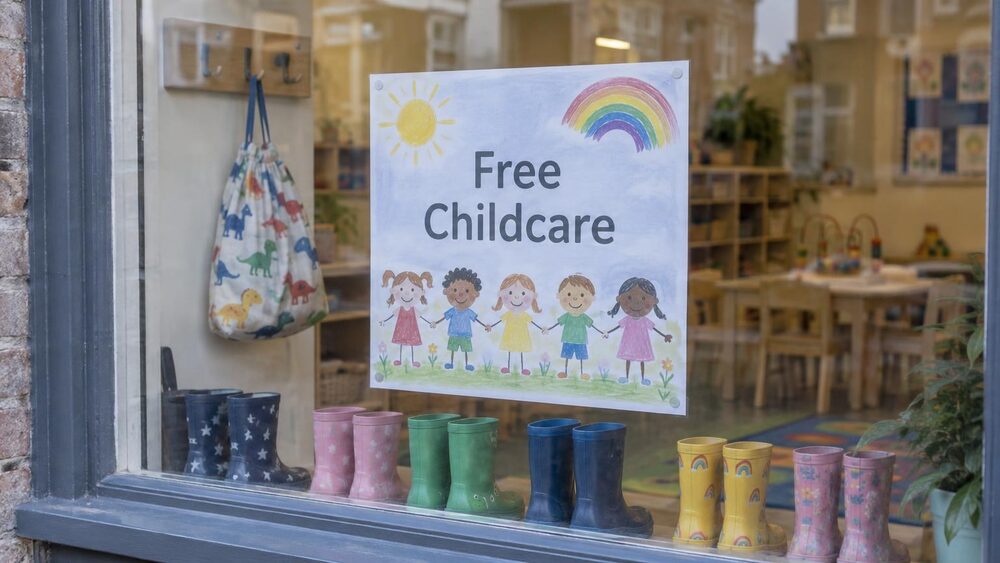
The 15 hours a week free childcare entitlement was extended in September 2024 to eligible working parents of children aged from nine months to two years1. The extension is the second stage of a phased expansion of free childcare announced in the Spring Budget in March 2023, which set out a timetable running to September 20252.
Under the plan, working parents of two-year-olds became able to access 15 hours a week from April 2024, and from September 2024 the 15 hours were extended to children aged nine months up to three years old2. From September 2025, all eligible working parents of children aged nine months to three years are due to be able to access 30 free hours a week2. The help is offered only to households where all adults are working at least 16 hours a week, and in a couple both parents must meet that test3. The Chancellor said the package was worth an average £6,500 saving for a family with a two-year-old child using 35 hours of childcare a week3.
The existing offer for three and four-year-olds remains up to 30 hours of free childcare for 38 weeks a year3. Separately, the childcare element of Universal Credit covers 85% of childcare costs, and the maximum amounts were raised from July 2023 to £951 a month for one child and £1,630 a month for two or more children, up from £646 and £1,1082. The monthly amounts are also to be increased by CPI inflation each year until 2027/282.
"From September 2024, all working parents of children aged 9 months up to 3 years old can access 15 hours childcare a week"
| Stage | Date | Entitlement |
|---|---|---|
| Working parents of two-year-olds | April 2024 | 15 hours a week2 |
| Working parents of children aged 9 months to 2 years | September 2024 | 15 hours a week1 |
| Eligible working parents of children aged 9 months to 3 years | September 2025 | 30 hours a week2 |
The extension applies in England3. One source describes the plans as covering England, Scotland and Wales4, while another sets out the April 2024 and September 2024 stages without naming a nation2; the sources do not agree on the territorial scope of the later stages.
Why it matters for households
The change affects working parents in England with a child aged between nine months and two years who meet the work condition of at least 16 hours a week for all adults in the household3. From September 2024 those families can access 15 hours a week of funded childcare rather than paying for those hours themselves1. The hours are funded for 38 weeks a year under the existing three and four-year-old offer3. Families claiming Universal Credit have a separate route to help with childcare costs, with the maximum monthly amounts set at £951 for one child and £1,630 for two or more children from July 20232. The benefits hub sets out how means-tested support is structured, and the Tax-Free Childcare vs Universal Credit Childcare Element guide compares the two childcare support routes. Parents moving into work or increasing their hours can claim help with their first month's childcare costs before paying for it, under a change announced for summer 20232.
What happens next
From September 2025, all eligible working parents of children aged nine months to three years are due to be able to access 30 free hours a week2. The government has also said it plans to make 30 hours a week free for all children under school age from September 20255. The sources do not set out how the September 2025 stage will be delivered or funded beyond the original announcement.
Sources5 cited
- Family Resources Survey: Quality and Methodology Information Report 2024/25 datavis.nisra.gov.uk
- Spring Budget update March 2023 entitledto.co.uk
- Spring Budget childcare changes explained - Which? which.co.uk
- The impact on mothers and families of low maternity payments and the cost of living crisis: a literature review - Maternity Action maternityaction.org.uk
- Child benefit goes digital for more parents: can you make a claim? - Which? which.co.uk
 Turn2usFree benefits calculator and grants search from a charity
 Citizens AdviceFree advice on money, consumer and legal problems in England and Wales
 GOV.UKOfficial information on tax, benefits and government services
 MoneyHelperFree, impartial money and pensions guidance, set up by government