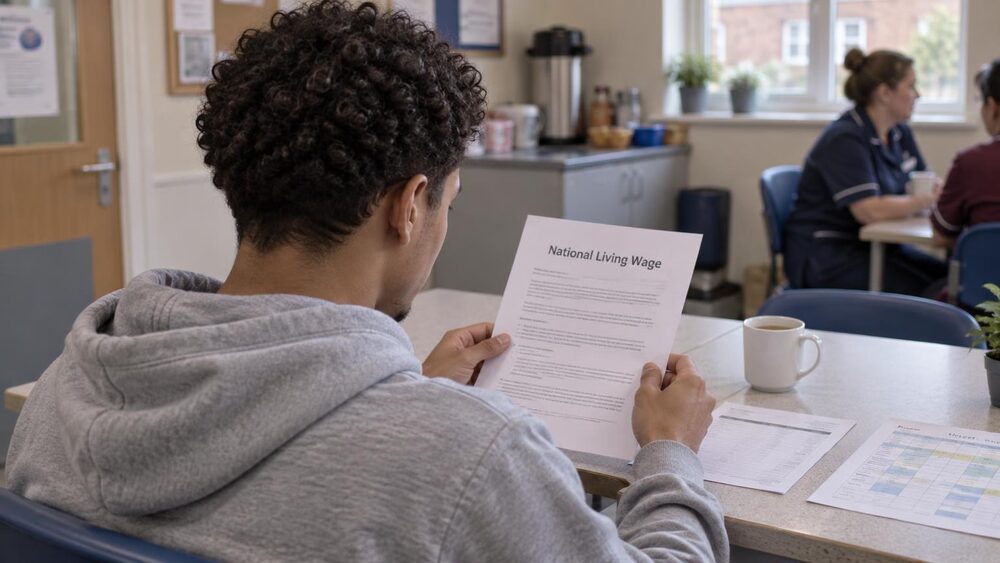
The age at which workers qualify for the National Living Wage (NLW) was lowered from 23 to 21 in April 2024, according to the Low Pay Commission1. The same threshold had already come down from 25 to 23 in April 20211. The NLW is the statutory minimum wage for workers aged 21 and over1.
The change took effect alongside the April 2024 uprating, when the NLW rose from £10.42 to £11.44 an hour for those aged 23 and over and from £10.18 to £11.44 for 21 and 22 year olds4. Separate rates continued to apply to younger workers: the National Minimum Wage rose from £7.49 to £8.60 for 18 to 20 year olds and from £5.28 to £6.40 for 16 and 17 year olds and apprentices4. The National Living Wage and National Minimum Wage are distinct from the voluntary UK Living Wage and London Living Wage set by the Living Wage Foundation, which apply to workers aged 18 and over and are not legally binding1.
The Low Pay Commission, an independent body of employers, trade unions and experts that advises the government on the minimum wage, has since set out a path to extend the NLW further down the age range1. It proposes extending the rate to 20 year olds in 2027 and to 18 and 19 year olds in 2028 or 2029, subject to economic conditions and government policy towards young people at the time3. The government has stated its ambition to reduce the threshold from 21 to 181.
"This age threshold came down from 25 to 23 in April 2021 and from 23 to 21 in April 2024."
Rates for workers under 21 and apprentices are set lower than the NLW to reflect lower average earnings and higher unemployment rates, and because international evidence suggests younger workers are more exposed to employment risks from a pay floor1. Unlike the NLW, where the possibility of some consequences for employment has been accepted by the government, the commission's remit requires younger workers' rates to be set as high as possible without damaging jobs and hours1.
| Rate from 1 April 2024 | Hourly rate |
|---|---|
| National Living Wage (21 and over) | £11.44 |
| 18-20 Year Old Rate | £8.60 |
| 16-17 Year Old Rate | £6.40 |
| Apprentice Rate | £6.40 |
Source: entitledto, Autumn statement update November 20234
Why it matters for households
Lowering the threshold brought 21 and 22 year old workers onto the higher adult rate from April 2024, rather than the lower 18 to 20 Year Old Rate that had applied to them before4. For someone working full time on the NLW, the Low Pay Commission has published estimates of the effect of later upratings on gross pay: a worker on 37.5 hours a week gained £1,505.54 a year, or £125.46 a month, from the April 2025 increase1, and £977 a year, or £81.47 a month, from the April 2026 increase3. Those figures relate to the rate rises, not to the age threshold change itself, and no equivalent estimate for the April 2024 threshold change appears in the published material.
The change sits alongside other April 2024 measures affecting household incomes, including the uprating of working age benefits by September 2023's Consumer Prices Index inflation of 6.7 per cent and the state pension by 8.5 per cent under the triple lock4, and the temporary unfreezing of Local Housing Allowance to the 30th percentile of local market rents4. The Household incomes across England, Scotland, Wales and Northern Ireland statistics are produced separately.
The Institute for Fiscal Studies has not commented in the published material. The Office for Budget Responsibility's assessment of the threshold change has not been reported in these sources.
What happens next
The Low Pay Commission said it would consult next year on the pathway to extending the NLW to younger age groups1. Its advice sets out extending the rate to 20 year olds in 2027 and to 18 and 19 year olds in 2028 or 2029, subject to economic conditions and government policy at the time3. The commission also said it would launch a call for evidence and hold in-person meetings across the country as it builds its evidence base for future recommendations2.
Sources5 cited
- National Living Wage to increase to £12.21 in April 2025 - GOV.UK gov.uk
- National Living Wage increases to £12.21 - GOV.UK gov.uk
- LPC recommendations take the National Living Wage to £12.71 - GOV.UK gov.uk
- Autumn statement update November 2023 entitledto.co.uk
- abrdn Financial Fairness Tracker (Oct 2023): Turning a corner? bristol.ac.uk

 Financial Ombudsman ServiceFree, independent help when a complaint about a firm is not put right
 FSCSProtects your money if a bank, insurer or investment firm fails
 FCA Warning ListCheck whether a firm is authorised before you deal with it
 MoneyHelperFree, impartial money and pensions guidance, set up by government
 Citizens AdviceFree advice on money, consumer and legal problems in England and Wales