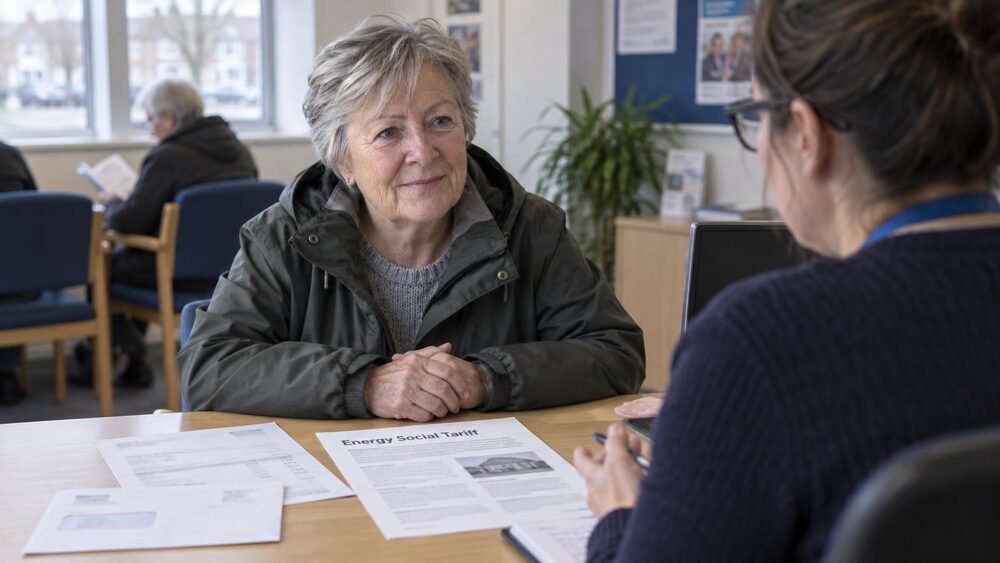
New analysis by Age UK has found that 2.2 million households would not have been in fuel poverty this winter, a reduction of around 65%, had the Government implemented an energy social tariff1. The figures were published on 2 February 2024 by Fair By Design, which is part of a coalition of charities also including Age UK, Scope, Mencap, MND Association and Sense1.
Around one in eight (12%) UK households, or 3.4 million, are experiencing fuel poverty this winter, according to the analysis1. Among the lowest fifth of equivalised after-tax household income, around two in five (38%), or 2.2 million households, are in fuel poverty; a social tariff would have lifted 1.3 million of them out, a reduction of around 60%1. Around one in six (16%) older households, or 1.9 million, are in fuel poverty, and a social tariff would have lifted 1.3 million of them out, a reduction of around 65%1. Around one in seven (15%) households with someone with a disability or long-term health condition, or 2.1 million, are in fuel poverty, and a social tariff would have lifted 1.4 million of them out, a reduction of around 66%1.
An energy social tariff is described as a discounted energy deal for those on lower incomes and with specific needs1. The charities say it must automatically enrol eligible households, be mandatory for all suppliers, and complement existing consumer protections1. Eligibility should include recipients of income-related means-tested benefits, disability benefits and Carer's Allowance, with households in relative poverty or just above the poverty line identified through new data matching or proxy criteria also eligible1. The coalition calls for implementation from 2024/25 and for the tariff to be directly funded through Government spending, so that households missing out do not bear its costs1.
"New analysis by Age UK has revealed that 2.2 million households would not be living in fuel poverty this winter, a reduction of around 65%, if the Government had implemented an energy social tariff"
Social tariffs have previously existed in the energy sector but were phased out from 2011, when the Government introduced the Warm Home Discount1. The charities say the Government has repeatedly promised to consult on an energy social tariff but has not followed through1. Caroline Abrahams CBE, Charity Director at Age UK, said that in January 2024 about 3.4 million over 60s reported their home was too cold for most, or all, of the time1.
Why it matters for households
The analysis puts a figure on what a discounted energy deal would have meant for households on the lowest incomes, older households and households with someone with a disability or long-term health condition this winter1. It also sets out who the charities say should qualify, which would extend beyond the current Warm Home Discount arrangements to recipients of income-related means-tested benefits, disability benefits and Carer's Allowance1. The coalition says the tariff would need to be funded through Government spending rather than recovered from other billpayers1. No social tariff is in place for 2024/25; the proposal is a call on the Government, not a confirmed policy1.
What happens next
The charities call for a discounted energy social tariff to be implemented from 2024/251. Marion Fellows MP was due to introduce a 10-Minute Rule Motion in Parliament requiring the Government to consult on an energy social tariff1. The Government's response to the analysis has not been reported1.

 Financial Ombudsman ServiceFree, independent help when a complaint about a firm is not put right
 FSCSProtects your money if a bank, insurer or investment firm fails
 FCA Warning ListCheck whether a firm is authorised before you deal with it
 MoneyHelperFree, impartial money and pensions guidance, set up by government
 Citizens AdviceFree advice on money, consumer and legal problems in England and Wales