The Department for Business and Trade launched its consultation on "Smarter Regulation: Improving consumer price transparency and product information for consumers" on 4 September 2023, and it concluded on 15 October 20231. The consultation covered five policy areas: the display of pricing information, hidden fees and drip pricing, fake and misleading reviews, online platforms, and online interface orders, plus a question on further changes to the list of commercial practices considered unfair in all circumstances and private redress in the Digital Markets, Competition and Consumers (DMCC) Bill1.
Response numbers varied by topic. 214 individuals or organisations responded on the display of pricing information, 203 on hidden fees and drip pricing, 177 on fake reviews, 143 on online platforms, 85 on online interface orders, 50 on extending rights of private redress, and 33 on the statutory banned practices list, of which 16 wanted additional measures added1. Alongside the consultation, a nationally representative survey asked 2,007 consumers about their perceptions, behaviour and preferences on the display of pricing information1.
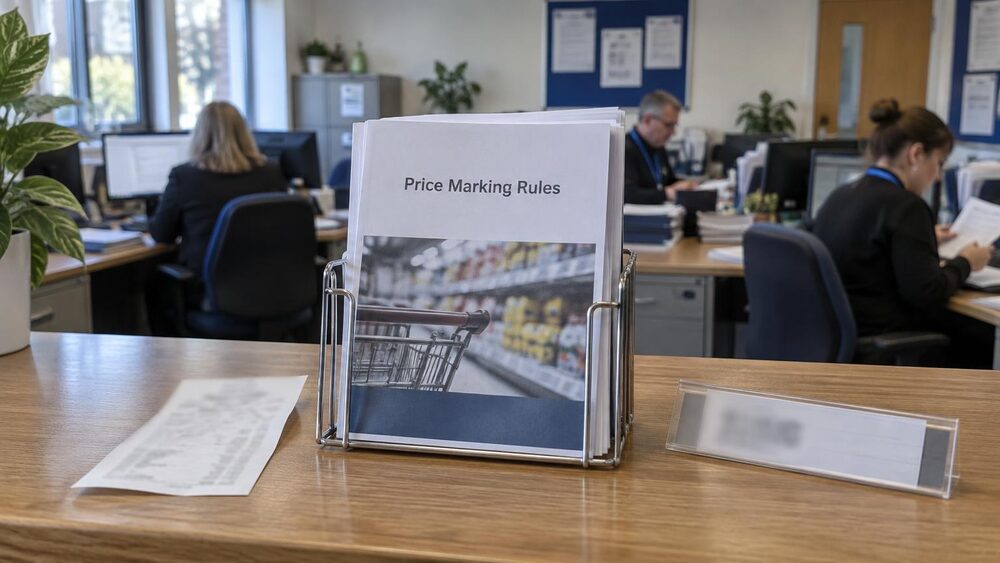
How retailers display prices is governed in particular by the Price Marking Order 2004, which is retained EU law and requires traders to display the final selling price and, where appropriate, the final unit price, such as per litre or kilogram, clearly and upfront, with the selling price including any taxes1. Article 7 of the order requires the selling price and unit price to be "unambiguous, easily identifiable, and clearly legible"1.
On unit pricing, 94% of respondents agreed with the proposal to mandate consistent use of units, so that products sold by weight would be priced per kilogram and products sold by volume per litre; 75% of individuals and 68% of businesses said exceptions should not be made or continue to apply1. In the consumer survey, 46% said they considered unit price when making a purchasing decision, 80% agreed unit pricing helps consumers get greater value for money and that consumers would use it more if it were easier to read and understand, 84% agreed comparability and consistency of unit pricing of similar items was important, and 92% favoured larger displays of unit pricing information1.
The government's proposals substantially reflect the recommendations in the Competition and Markets Authority report of 20 July 2023 on unit pricing1. The government says it will amend the Price Marking Order and associated guidance on consistent measures for unit pricing, clear legibility criteria for in-store price labels, defining which promotional or loyalty scheme offers fall within scope, and making provision for the Deposit Return Scheme so the deposit cost is displayed separately on price labels1. It also plans to prohibit commercial practices related to fake reviews by adding them to the list of practices considered unfair in all circumstances, making them subject to civil liability, and to clarify the law on drip pricing through new requirements in the DMCC Bill that unavoidable mandatory fees be included in the headline price or indicated at the start of the purchasing process1.
"The Government's proposals substantially reflect the recommendations in the Competition and Markets Authority (CMA) report of 20 July 2023 on unit pricing."
Why it matters for households
The changes under consideration concern the price labels shoppers see in stores and online, and the point at which fees and reviews are presented. The government intends to publish this information in spring 20241. On the Deposit Return Scheme, DEFRA, the Welsh Government and the Department of Agriculture, Environment and Rural Affairs in Northern Ireland plan to introduce a scheme applying to England, Northern Ireland and Wales in October 20251. The government says it will work with DEFRA, the Scottish Government and the Welsh Government on the technical detail of displaying the deposit separately on price labels1. The consultation also covered the exemption from unit pricing rules for small shops; the majority of respondents supported retaining it, while a minority suggested reviewing its content and a small number called for it to be removed entirely1. The government says it will work with stakeholders on whether any exceptions should remain, for example for low weight or volume products, and will consider the interaction with weights and measures law1.
What happens next
The government says it will work with retailers and enforcement bodies to improve the legibility of price labels, which could include agreeing minimum font sizes for selling price and unit price, and will consider whether this is achieved through legislation, guidance, or both1. It also plans further stakeholder engagement on what obligations platforms should be subject to under consumer law and how that should be publicly set out, and will extend the power to apply to the court for online interface and interim online orders to all public designated enforcers listed in Part 3 of the DMCC Bill1. It says it will continue to explore the case for extending private redress rights to further unfair commercial practices1.
Sources1 cited
- Government_response_improving_consumer_transparency_consultation.pdf data.parliament.uk

 Financial Ombudsman ServiceFree, independent help when a complaint about a firm is not put right
 FSCSProtects your money if a bank, insurer or investment firm fails
 FCA Warning ListCheck whether a firm is authorised before you deal with it
 MoneyHelperFree, impartial money and pensions guidance, set up by government
 Citizens AdviceFree advice on money, consumer and legal problems in England and Wales