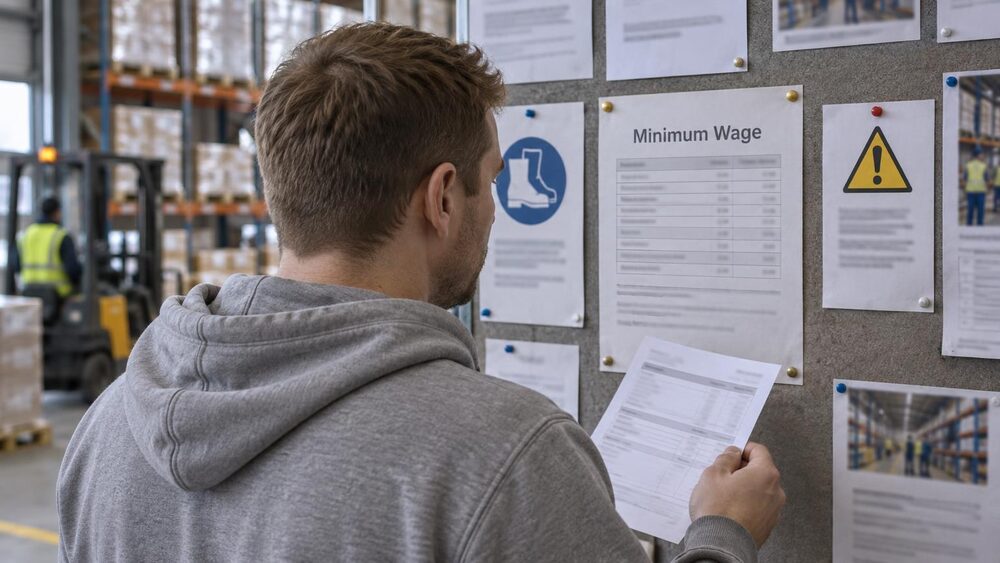
The minimum wage rose by almost 10 per cent on 1 April 2023, with 1.7 million workers gaining directly, the Resolution Foundation said1. The foundation, an independent think tank, published its comments on 31 March 2023, the day before the increase took effect1.
The foundation set the rise in the context of longer-run pay trends. It said that in the pre-minimum wage era of 1980 to 1998, typical pay grew by 2 per cent a year, but growth for the top fifth of hourly earners was 3.4 per cent, more than twice the 1.4 per cent seen at the bottom1. Between 1998 and 2015, it said, hourly pay growth at the bottom was around 50 per cent stronger than at the top, at 1.4 per cent against 0.6 per cent1. From 2015 to 2022, it added, real pay fell at the top while growing at the bottom by around 2.5 per cent1.
The foundation said the share of employees on low pay, defined as earning below two-thirds of typical hourly wages, halved from 22 per cent in 1998 to 10.5 per cent in 20221. It noted that these falls in hourly pay inequality have not fed through into similarly large falls in weekly pay or income inequality, which it said is what matters for living standards1.
"The minimum wage goes up almost 10 per cent tomorrow and 1.7 million workers will gain directly"
The same commentary covered other policy areas. It said Scotland has had a 50p minimum unit pricing for alcohol since 2018, with Wales following in 2020, and that a new Lancet article found this cut deaths and hospitalisations directly attributable to alcohol by 13 per cent and 4 per cent respectively, with the effect most pronounced in more deprived parts of Scotland1. It said England does not plan to introduce minimum unit pricing1. It also said the government had recently announced plans to ban energy firms from charging pre-payment meter customers more than other customers, and cited a paper finding that those on a pre-payment meter have 2.7 fewer fruit and vegetable portions a week after taking household income into account1.
Why it matters for households
The increase applies to workers paid at or near the statutory pay floor from 1 April 2023, and the foundation estimates 1.7 million workers gain directly1. For those households, the change is to gross hourly pay; what reaches a payslip depends on tax, National Insurance and hours worked, none of which the commentary addresses. The foundation's figures on low pay describe a long-run shift: the proportion of employees earning below two-thirds of typical hourly wages fell from 22 per cent in 1998 to 10.5 per cent in 20221. It cautions that falls in hourly pay inequality have not been matched by similar falls in weekly pay or income inequality1. The commentary does not report the new rate itself, nor rates by age band or nation, and those have not been reported here.
What happens next
The foundation said its "Top of the Charts" commentary would return after a two-week break1. No further changes to the minimum wage are set out in the commentary.
The National Living Wage and National Minimum Wage guide explains how the pay floors rise, and the difference between the National Living Wage and the real Living Wage is set out separately.

 MoneyHelperFree, impartial money and pensions guidance, set up by government
 Citizens AdviceFree advice on money, consumer and legal problems in England and Wales
 GOV.UKOfficial information on tax, benefits and government services
 StepChangeFree debt advice and solutions from a charity
 FSCSProtects your money if a bank, insurer or investment firm fails