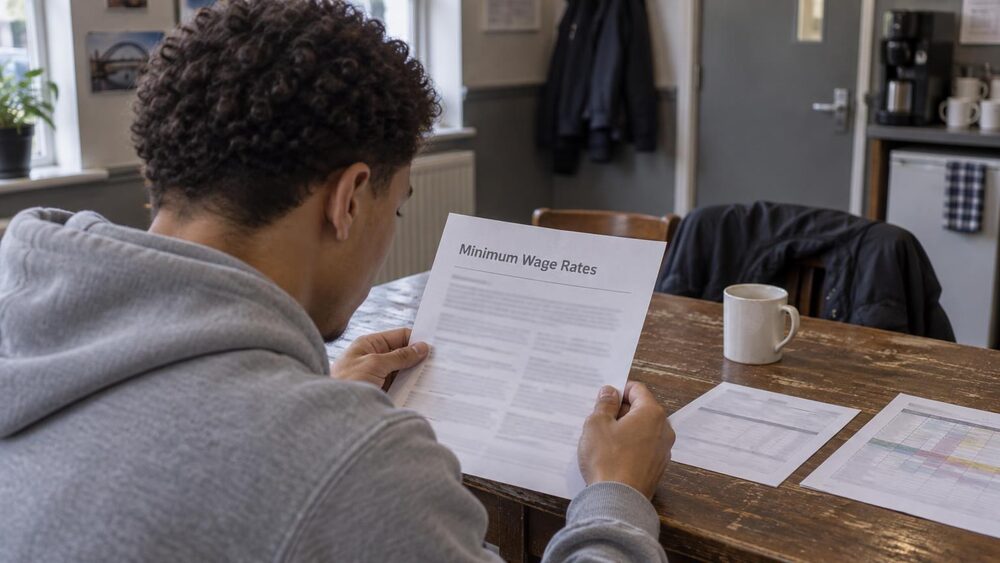
The Low Pay Commission (LPC) is consulting on National Minimum Wage rates for April 2024 and beyond, with the consultation running from 23 March to 9 June 2023 and recommendations to the Government due in October1. The announcement came alongside confirmation that the National Living Wage (NLW) rises on Saturday 1 April 2023 by 9.7 per cent to £10.42, a rate that applies to workers aged 23 and over1.
All other minimum wage rates rise on the same date. The table below sets out the new hourly rates and the annual increases as published1.
| Rate | From 1 April 2023 | Annual increase | Annual increase (per cent) |
|---|---|---|---|
| National Living Wage (23+) | £10.42 | 0.92 | 9.7 |
| 21-22 Year Old Rate | £10.18 | 1.00 | 10.9 |
| 18-20 Year Old Rate | £7.49 | 0.66 | 9.7 |
| 16-17 Year Old Rate | £5.28 | 0.47 | 9.7 |
| Apprentice Rate | £5.28 | 0.47 | 9.7 |
| Accommodation Offset | £9.10 | 0.40 | 4.6 |
The Accommodation Offset, an allowable deduction from wages for employer-provided accommodation applicable for each day of the week, increases to £9.10 per day in April 20231. The LPC notes that the NLW is the statutory minimum wage for workers aged 23 and over, and that different rates apply to 21-22 year olds, 18-20 year olds, 16-17 year olds and apprentices aged under 19 or in the first year of an apprenticeship1.
The LPC's central estimate of the on-course NLW rate for 2024 is £11.16, within a range of £10.90 to £11.431. Since 2020 the Government has had a target for the NLW to reach two-thirds of median earnings by 2024, and the LPC says it remains committed to lowering the NLW age threshold to 21 in 20241. The consultation also invites evidence on the future of minimum wage policy once the two-thirds target is achieved1.
"In our consultation this year we are also looking beyond 2024, and inviting evidence and views on the future of minimum wage policy once the two-thirds target is achieved. The NMW is a central feature of the UK labour market and workers and employers alike will want to contribute to the debate about its future."
The LPC originally submitted its recommendations in October 2022, and the Government announced its acceptance of those recommendations on 17 November 20221. The Government is yet to publish its remit to the LPC for 20231.
Why it matters for households
The April 2023 rates set the legal pay floor for workers across the UK from 1 April 2023, and the consultation now under way concerns the rates that will apply from April 20241. The LPC estimates the NLW will need to rise next year to between £10.90 and £11.43 to meet the two-thirds of median earnings target, with a central estimate of £11.161. It also says it remains committed to lowering the NLW age threshold to 21 in 2024, which would move 21 and 22 year olds onto the higher adult rate1.
On real value, the LPC says the NLW's real value has fallen since April 2021, when a 2.2 per cent increase during the pandemic took the rate to its highest ever real value, and that this was eroded sharply by inflation in the year that followed1. The 6.6 per cent increase to £9.50 in April 2022 restored some of that lost value, which was also soon eroded1. The LPC expects the rise to £10.42 to mean the real value of the NLW is higher in April 2023 than April 2022, recovering much of its lost real value but remaining slightly lower than its all-time high in April 20211.
The LPC notes that increases in the minimum wage rates are not directly influenced by the level of inflation, and that this year's increases reflect the ambition of the two-thirds target, strong pay growth and the relative strength of the labour market1. It also notes that the Government has recommended that, if the economic evidence warrants it, the LPC should advise reviewing the target or its timeframe, described as an emergency brake1.
The National Living Wage is different from the UK Living Wage and the London Living Wage calculated by the Living Wage Foundation, which are voluntary pay benchmarks rather than legally binding requirements, apply to workers aged 18 and over, and are based on an attempt to measure need1. The LPC has no role in recommending those rates1.
What happens next
The consultation runs from 23 March to 9 June 20231. The LPC will make its recommendations to the Government in October1. The Government is yet to publish its remit to the LPC for 20231.
 Financial Ombudsman ServiceFree, independent help when a complaint about a firm is not put right
 FSCSProtects your money if a bank, insurer or investment firm fails
 FCA Warning ListCheck whether a firm is authorised before you deal with it
 MoneyHelperFree, impartial money and pensions guidance, set up by government
 Citizens AdviceFree advice on money, consumer and legal problems in England and Wales