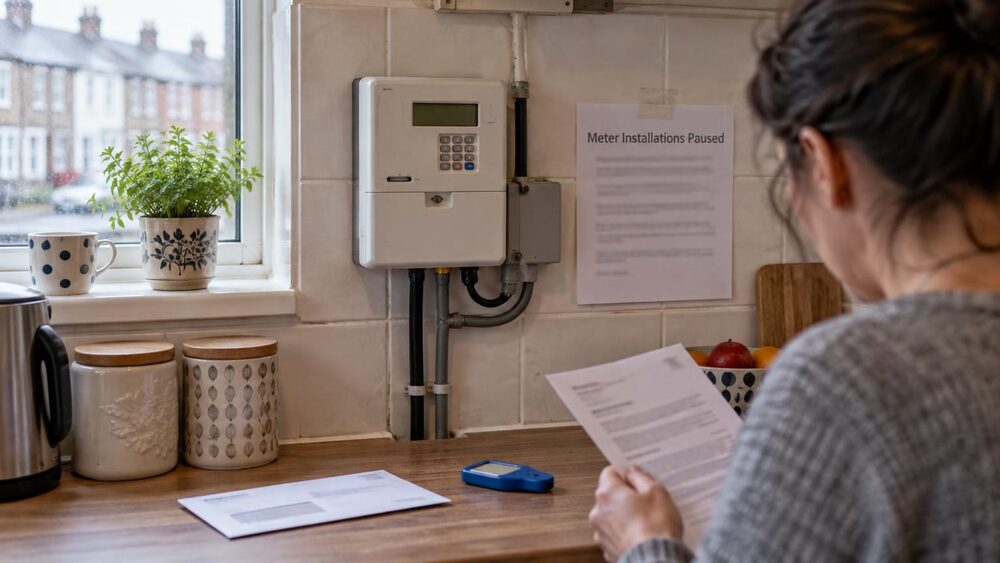
Ofgem, the energy regulator, asked every energy supplier in February 2023 to pause the installation of forced prepayment meters and of meters switched remotely, until suppliers had agreed a new set of guidelines1. The request was reported by Shelter Cymru in guidance on avoiding gas and electricity disconnection1.
Prepayment meters are used to buy fuel in advance, and can be installed to recover fuel debts as well as to pay for the gas or electricity used1. Shelter Cymru states that a prepayment meter is usually the most expensive way to pay for energy1. Credit is added to a payment card or key in a shop and transferred to the meter, and gas or electricity can only be used once credit has been added1.
Where a household is behind on payments, a supplier may insist on a prepayment meter instead of disconnection1. Shelter Cymru advises complaining to the supplier if it tries to force prepayment1. The guidance also states that energy bills are often based on estimated meter readings, and that a customer can take a new reading and ask for the bill to be recalculated1.
"Ym mis Chwefror 2023, gofynnodd rheoleiddiwr y cwmni ynni, Ofgem, i bob cyflenwr oedi gosodiadau rhagdalu gorfodol a rhai a newidiwyd o bell nes eu bod wedi cytuno ar set newydd o ganllawiau"
The guidance sets out other arrangements that can apply where bills are unpaid. A supplier may agree a weekly, fortnightly or monthly payment plan, with the amount covering an estimated sum for the fuel used and a sum towards the arrears1. Shelter Cymru states that a supplier should not seek to have arrears cleared faster than the customer can afford1. Fuel bills and arrears can also be paid directly from certain benefits, sometimes called Fuel Direct, with an amount deducted from the regular benefit payment and paid to the fuel supplier every three months1. The benefits listed are universal credit, income support, income-based jobseeker's allowance (JSA), income-related employment and support allowance (ESA) and pension credit1.
| Arrangement | How it works |
|---|---|
| Payment plan | Weekly, fortnightly or monthly; covers estimated fuel use plus a sum towards arrears1 |
| Fuel Direct | Deduction from a regular benefit payment, paid to the fuel supplier every three months1 |
| Prepayment meter | Fuel bought in advance; can also recover fuel debt1 |
Why it matters for households
The pause applied to installations made on a forced basis and to meters switched to prepayment remotely, and it ran until suppliers had agreed new guidelines1. Households already on a prepayment meter, including those who had one installed to recover debt, were not covered by the pause as described1. Shelter Cymru notes that prepayment is usually the most expensive way to pay for energy, and that a meter can be set to recover fuel debt as well as to charge for fuel used1.
The guidance states that a supplier may require a prepayment meter instead of disconnection where payments are behind, and that a customer can complain to the supplier if it tries to force prepayment1. It also states that bills are often based on estimated readings, so the amount owed may change once a new reading is taken and the bill recalculated1.
What happens next
The guidance does not set out a date for the new guidelines or say what they will contain; that has not been reported1. The page carrying the update was last updated on 17 September 2026 and states that it gives only general guidance on the law in Wales1. Further detail on the regulation of energy suppliers is covered in our guide pages.
Sources1 cited
- Sut i osgoi datgysylltu nwy a thrydan - Shelter Cymru sheltercymru.org.uk
 Financial Ombudsman ServiceFree, independent help when a complaint about a firm is not put right
 FSCSProtects your money if a bank, insurer or investment firm fails
 FCA Warning ListCheck whether a firm is authorised before you deal with it
 MoneyHelperFree, impartial money and pensions guidance, set up by government
 Citizens AdviceFree advice on money, consumer and legal problems in England and Wales