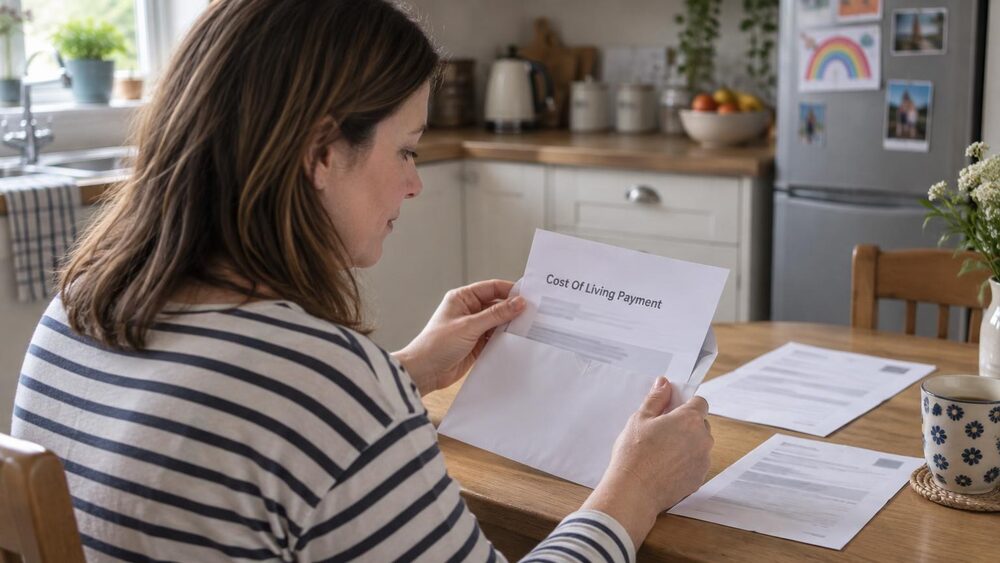
The Social Security (Additional Payments) (No. 2) Bill 2022-23 was introduced to the House of Commons on 7 February 20231. It provides for two Cost of Living Payments announced as part of a wider package of support for households in 2023/24 announced in the 17 November 2022 Autumn Statement1.
The payments are a £900 Cost of Living Payment, referred to in the Bill as "means-tested additional payments", paid in three instalments to recipients of certain means-tested benefits including Universal Credit, most of the legacy benefits and tax credits it is replacing (except Housing Benefit), and Pension Credit1. The second is a £150 Disability Cost of Living Payment, referred to in the Bill as "disability additional payments", for recipients of certain non-means-tested disability benefits, including Personal Independence Payment (PIP), Disability Living Allowance (DLA), Attendance Allowance (AA), and corresponding devolved Scottish disability benefits1.
The Government also announced £300 Pensioner Cost of Living Payments and further funding for discretionary support through the Household Support Fund; these do not require new primary legislation1. The Bill also allows the Secretary of State, through regulations, to set qualifying dates for the payments1. Its territorial extent and application covers England and Wales, Scotland, and Northern Ireland1.
"It provides for two Cost of Living Payments announced as part of a wider package of support for households in 2023/24 announced in the 17 November 2022 Autumn Statement."
Cost of Living Payments were estimated to cost £8.8 billion in 2022/23 and are expected to total over £11 billion in 2023/241. In 2023/24, over 8 million households are expected to receive a means-tested benefit Cost of Living Payment, 6.7 million disabled people will receive a Disability Cost of Living Payment, and 11.7 million pensioners will receive an uplift to their Winter Fuel Payment; these groups overlap1. The further £1 billion for the Household Support Fund and for the devolved administrations for 2023/24 is the same in cash terms as the amount allocated in 2022/231.
| Measure | Amount | Recipients |
|---|---|---|
| Means-tested additional payment | £900, in three instalments | Recipients of certain means-tested benefits including Universal Credit, most legacy benefits and tax credits it replaces (except Housing Benefit), and Pension Credit1 |
| Disability additional payment | £150 | Recipients of certain non-means-tested disability benefits including PIP, DLA, Attendance Allowance and corresponding devolved Scottish disability benefits1 |
| Pensioner Cost of Living Payment | £300 | Pensioners receiving an uplift to their Winter Fuel Payment1 |
Why it matters for households
The Bill puts the 2023/24 means-tested and disability payments on a legislative footing, and lets the Secretary of State set qualifying dates by regulations1. The payments sit alongside a scaling back of universal support: the Energy Price Guarantee is being scaled back from April, capping typical household energy bills at £3,000, rather than £2,5001.
The Library notes concern that certain groups may miss out on means-tested benefit Cost of Living Payments, including low-income households not receiving means-tested benefits, those getting Housing Benefit and no other qualifying benefit, and claimants who get a nil award of Universal Credit during the qualifying period1. It adds that larger families on means-tested benefits receive the same level of support as a single person, despite often facing significantly greater costs1.
On benefit uprating, the Library says current practice is to "uprate" benefits based on year-to-September inflation figures, with increases implemented the following April1. It says that in both the 2022/23 and 2023/24 financial years, the uprating process has left the level of benefits, excluding Cost of Living Payments, lower in real terms than before the inflationary spike, a situation it says will last at least until April 20241. The annual rate of Consumer Price Inflation reached a peak of 11.1% in October 2022, a 41-year high, and CPI inflation was 10.1% in January 20231.
What happens next
The Bill's progress through Parliament, including the dates of its remaining stages, has not been reported in the material available. The Library briefing sets out detailed commentary on the provisions of the Bill in section 6 of its report and in the Explanatory Notes accompanying the Bill1.
Sources1 cited
- Social Security (Additional Payments) (No. 2) Bill 2022-23 - House of Commons Library commonslibrary.parliament.uk
 Turn2usFree benefits calculator and grants search from a charity
 Citizens AdviceFree advice on money, consumer and legal problems in England and Wales
 GOV.UKOfficial information on tax, benefits and government services
 MoneyHelperFree, impartial money and pensions guidance, set up by government