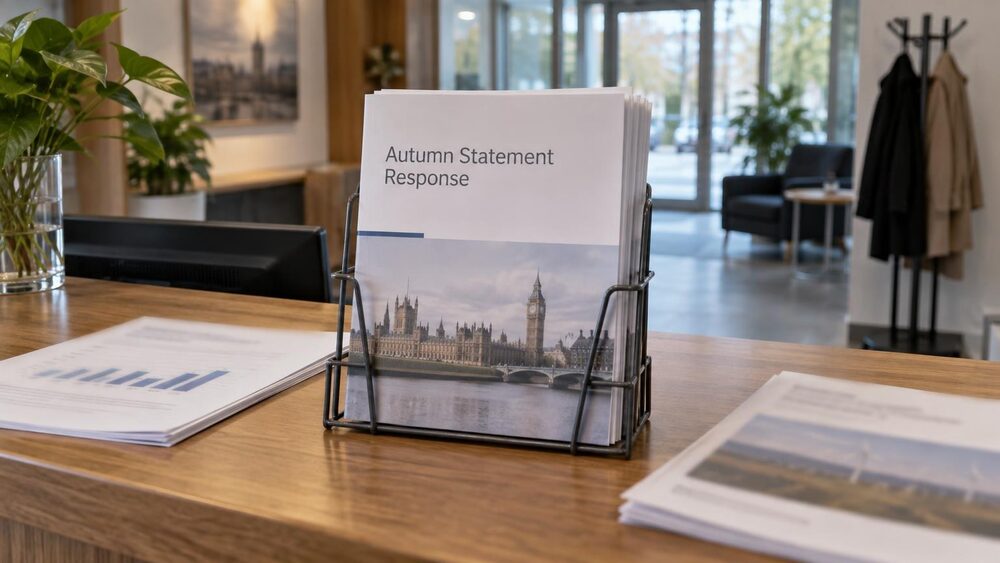
The National Institute of Economic and Social Research (NIESR) published its response to the 2022 Autumn Statement on 17 November 2022, arguing that the Chancellor should have provided more support to households1.
NIESR said the Chancellor had tightened fiscal policy by around £60 billion over five years, and had delayed meeting the fiscal target of a falling debt to GDP ratio by two years, which it said gave him more flexibility to hit his fiscal targets1. To put debt on what it called a sustainable trajectory within the new five-year fiscal target, the Chancellor announced a cumulative £30 billion in tax rises and £30 billion in spending cuts, according to NIESR1. The institute said the UK had gone from £48 billion in tax cuts announced in September to raising taxes for all working people over the next few years, and that this, combined with an expanded windfall tax on energy company profits, presented significant uncertainty to businesses and households1.
On energy, NIESR described the switch to more targeted support for energy bills as a step in the right direction, but said the overall rise in energy prices and a lack of support for low-income households would mean many are worse off1. It said the government's policy still involves an expensive universal subsidy that will disproportionately benefit high-income earners, as they use a much greater amount of energy1. The Energy Price Guarantee was the bill support scheme in place over 2022 to 2023.
NIESR said increases in the living wage, along with Universal Credit and pensions rising with inflation, presented a positive direction of travel for the households hardest hit by inflation1. It added, however, that tax rises, further increases in energy bills for those not on Universal Credit and wages not keeping up with inflation would mean households are likely still far worse off than they were last year1.
"The Chancellor should have provided more support to UK households at a time when they are suffering the largest fall in their real incomes since records began in 1956."
NIESR also said that, given fiscal targets are arbitrary, they could have been set to enable the Chancellor to bring forward more spending while still committing to sustainable public finances in the medium run1. It said maintaining previous spending commitments for public infrastructure projects and increased expenditure for key social institutions was appreciated, but that the Chancellor should have gone further to prevent systematic vulnerability and encourage sustainable growth, especially beyond the next two years1.
Why it matters for households
The measures NIESR assessed affect household budgets through tax, benefits, wages and energy bills. The £30 billion in tax rises and £30 billion in spending cuts it identified1 sit alongside the September 2022 package of £48 billion in tax cuts that was subsequently reversed1. On the income side, the living wage, Universal Credit and pensions were set to rise with inflation1, which NIESR called a positive direction of travel for the households hardest hit by inflation, while warning that households are likely still far worse off than a year earlier1.
Energy support changed shape: NIESR said the move to more targeted help was a step in the right direction, but that the universal subsidy remained in place and would disproportionately benefit high-income earners because they use more energy1. It said the overall rise in energy prices and the lack of support for low-income households would leave many worse off1. The practical effect is that the level of help with bills depends on which scheme applies to a household and whether it receives Universal Credit1. How such announcements reach household finances is set out in our guide to budgets and fiscal statements.
What happens next
NIESR's assessment covers a five-year fiscal target, with the target for a falling debt to GDP ratio delayed by two years1. The institute said the cost of servicing government debt remains high against a background of persistent higher interest rates, leaving the UK's public finances vulnerable to economic uncertainty1. No further dates for specific measures are given in the response.

 Financial Ombudsman ServiceFree, independent help when a complaint about a firm is not put right
 FSCSProtects your money if a bank, insurer or investment firm fails
 FCA Warning ListCheck whether a firm is authorised before you deal with it
 MoneyHelperFree, impartial money and pensions guidance, set up by government
 Citizens AdviceFree advice on money, consumer and legal problems in England and Wales