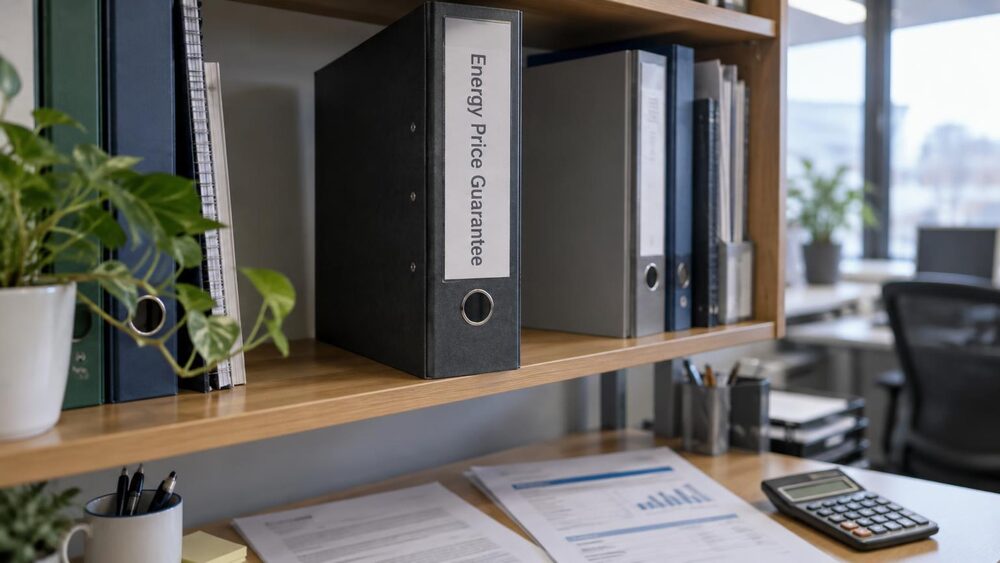
The Energy Price Guarantee (EPG) was introduced on 1 October 2022, capping typical domestic consumption at £2,500 a year1. The then Prime Minister announced the scheme on 8 September 20221. It was the government's main measure to reduce the impact of the energy crisis on consumers, and was originally intended to last two years2.
Under the scheme, the government set maximum prices for gas and electricity below those under the existing price cap, and compensated energy suppliers for selling at below cap prices2. Maximum prices for customers on standard variable tariffs were set by the lower of the EPG or the energy price cap, and the EPG was lower from October 2022 to June 20232. The EPG limited the increase in typical bills to 27% in October 2022, where record wholesale prices would otherwise have led to an 80% increase in the energy price cap2. The first major impact on domestic customers in Great Britain had already come in April 2022, with a 54% increase in the price cap2.
The EPG became less generous in July 2023, increasing to £3,000 a year1. However, a fall in the price cap in July 2023 meant the EPG no longer set maximum prices and consumer bills fell1. The price cap for July to September 2023 was £1,766, with unit prices 27% lower than under the EPG for gas and 9% lower for electricity, so customers on standard variable tariffs saw prices fall for the first time since October 20202. The cap fell further to £1,641 in October 2023 and rose to £1,723 in the first quarter of 2024, all below the EPG level2. The falls in the price cap since July 2023 meant the EPG was not needed again and it ended in March 20242.
"The Energy Price Guarantee (EPG) limited the increase to 27% in October 2022 and meant that domestic consumers paid less than they would have under the price cap until July 2023."
Annual bills under the EPG and price cap are expressed for dual fuel direct debit customers with typical consumption levels, and annual bills are not themselves capped: households using more energy pay more, and those using less pay less2. Prices vary by region and are higher for customers paying by quarterly bills2. Energy prices in Northern Ireland are not controlled by the price cap, and only a minority of households there use mains gas for heating; the government provided support said to be equivalent to the EPG, which resulted in the largest electricity supplier in Northern Ireland cutting prices in November 2022 to below those in the rest of the UK2.
The EPG sat within a wider period of high inflation. The annual rate of inflation peaked at 11.1% in October 2022, a 41-year high1. The Bank of England raised interest rates at 14 consecutive policy meetings from 0.1% in December 2021 to 5.25% in August 20231. In April 2024, Department for Work and Pensions benefits linked to inflation were uprated by 6.7%1. The Household Support Fund received an extra £500 million so it could be extended until September 20241.
Why it matters for households
The EPG applied to domestic customers on standard variable tariffs in Great Britain from 1 October 2022, setting maximum prices below the price cap until June 20232. It limited the October 2022 increase in typical bills to 27%, against an 80% increase in the price cap that the Library says record prices would otherwise have produced2. The scheme became less generous from July 2023, when its level rose to £3,000 a year, but by then the price cap had fallen below it, so the cap rather than the EPG set maximum prices and bills fell1. The EPG ended in March 20242.
Scottish Government analysis published on 10 November 2022 estimated that, with the price cap for the average dual fuel direct debit customer frozen at £2,500 under the EPG, around 860,000 households (35% of all households in Scotland) would be in fuel poverty, of which around 600,000 (24%) would be in extreme fuel poverty3. Those estimates accounted for UK Government support announced at the end of May 2022 and the Scottish Government's £150 Council Tax rebate for households in bands A to D or in receipt of Council Tax Reduction3. By tenure, estimated fuel poverty rates under the EPG were 57% for housing association households, 52% for local authority households, 48% for private rented households, 28% for owner occupiers outright and 19% for mortgaged households3.
What happens next
The EPG ended in March 20242. Ofgem introduced new lower Typical Domestic Consumption Values for its publications from October 2023, reducing assumed annual gas consumption from 12,000 kWh to 11,500 kWh and electricity from 2,900 kWh to 2,700 kWh2. The Library notes that this change makes an average bill for typical consumption look lower even if unit prices are unchanged, and does not affect trends in prices or bills2.
Sources3 cited
- Rising cost of living in the UK - House of Commons Library commonslibrary.parliament.uk
- Gas and electricity prices during the 'energy crisis' and beyond - House of Commons Library commonslibrary.parliament.uk
- Cost of Living Bill - Key Statistics - gov.scot gov.scot

 Financial Ombudsman ServiceFree, independent help when a complaint about a firm is not put right
 FSCSProtects your money if a bank, insurer or investment firm fails
 FCA Warning ListCheck whether a firm is authorised before you deal with it
 MoneyHelperFree, impartial money and pensions guidance, set up by government
 Citizens AdviceFree advice on money, consumer and legal problems in England and Wales