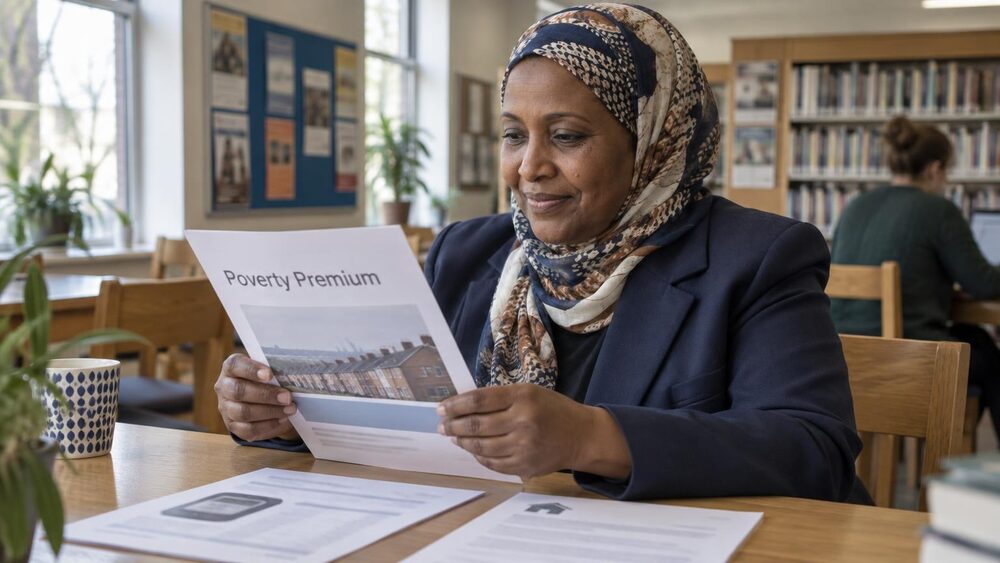
New research from Fair By Design and the University of Bristol has quantified the economic impact of the poverty premium at a local level across Britain for the first time, the charity said on 22 June 20221. The poverty premium is the extra cost people on low incomes and in poverty pay for essential products and services, including pre-payment meters for gas and electricity, higher home and car insurance premiums because of where they live, and high interest loans and credit cards1.
The research found that one in eight households in Britain experience at least one type of poverty premium, at an average cost of £430 a year for a low-income household1. Each British constituency loses £4.5 million a year to the poverty premium, which the charity said equates to a total loss of £2.8 billion from the national economy1.
The North East of England has the highest proportion of households incurring the poverty premium, at 14.7 per cent, followed by the North West and Yorkshire and the Humber at 13.4 per cent each, then London and Wales at 13.1 per cent each1. The South East of England has the lowest proportion, at 11 per cent1.
| Nation or region | Households incurring the poverty premium |
|---|---|
| North East of England | 14.7% |
| North West | 13.4% |
| Yorkshire and the Humber | 13.4% |
| London | 13.1% |
| Wales | 13.1% |
| South East of England | 11% |
Martin Coppack, director of Fair By Design, said government intervention to eliminate the poverty premium would return money to households without new Treasury funding1.
"Government intervention to eliminate the poverty premium would put on average £430 back into the pockets of over 3.5 million low-income households without requiring any additional funding from the Treasury."
Sara Davies, senior research fellow at the University of Bristol Personal Finance Research Centre, said the research made it easy to identify where local efforts to eliminate the poverty premium should focus, and that addressing the issue could keep millions of pounds within local economies, either through local spending that creates jobs and grows businesses, or by easing financial difficulties for low-income households and reducing the burden on local services1.
Why it matters for households
The figures describe costs already being paid by households on low incomes, rather than a new charge. One in eight households in Britain pay at least one type of poverty premium, and for a low-income household the average cost is £430 a year1. The research puts the combined cost to the national economy at £2.8 billion a year, or £4.5 million per constituency1. The charity said eliminating the poverty premium would return an average of £430 to more than 3.5 million low-income households without additional funding from the Treasury, though it did not set out in the announcement how that would be achieved1. The research covers Britain, and the proportions vary by nation and region, from 14.7 per cent of households in the North East of England to 11 per cent in the South East1.
What happens next
No next steps, timetable or response from government or regulators is set out in the announcement1. The full report is published by Fair By Design1.
 Financial Ombudsman ServiceFree, independent help when a complaint about a firm is not put right
 FSCSProtects your money if a bank, insurer or investment firm fails
 FCA Warning ListCheck whether a firm is authorised before you deal with it
 MoneyHelperFree, impartial money and pensions guidance, set up by government
 Citizens AdviceFree advice on money, consumer and legal problems in England and Wales