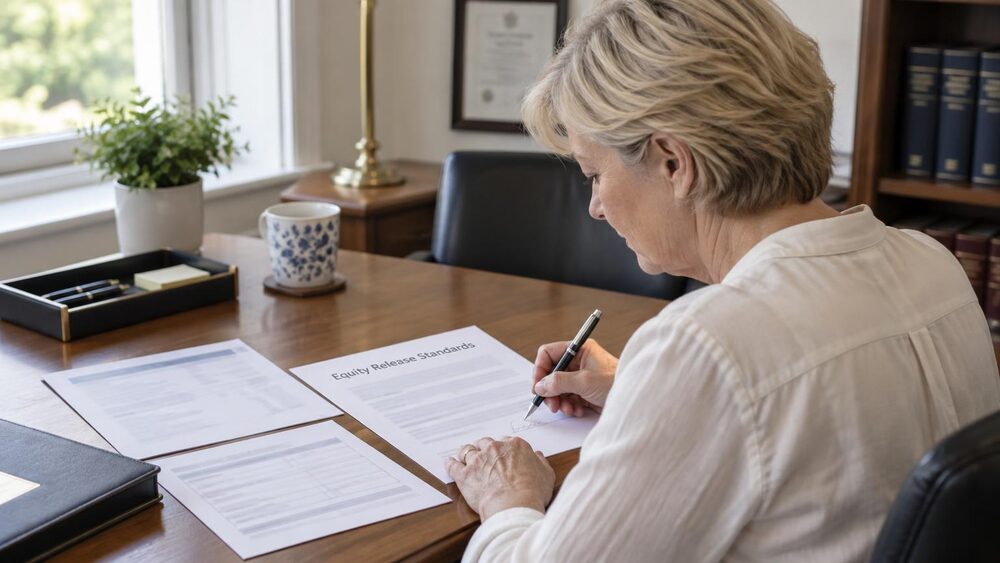
Lifetime mortgages that meet Equity Release Council standards must give customers the right to make voluntary, penalty-free partial repayments, a requirement in place since March 20221. The rule applies to equity release and lifetime mortgages products that fully meet the Council's standards, rather than to every plan on the market.
Equity release is a way for over-55s to borrow money by unlocking cash from the value of their home while continuing to live there1. On a lifetime mortgage, the most popular type of equity release, there is no obligation to make interest repayments, but borrowers have the option to do so1. Where partial repayments are made, there will usually be a limit on how much can be repaid each year, typically 10% of the loan1.
The penalty-free right covers partial repayments only. Fully repaying a lifetime mortgage early will often trigger an early repayment charge, with the amount depending on how long the loan has been held. Which? gives the example of a 5% charge after five years or 3% after 10 years, equal to £5,000 or £3,000 on a debt of £100,000, and notes that in some cases early repayment charges can be as high as 25%1.
Not making repayments means the debt grows through compound interest. On an initial lifetime mortgage of £100,000 at a rate of 4.5%, the debt would be £125,180 after five years and £156,699 after 10 years, reaching £196,156 after 15 years, nearly double the original amount1.
"Since March 2022, lifetime mortgages that meet Equity Release Council standards must give customers the right to make voluntary, penalty-free partial repayments."
Separately, products that fully meet the Council's Product Standards must include a no negative equity guarantee, meaning the borrower or their estate will never owe more than the value of the property when it is sold1. A lifetime mortgage can also be transferred to a new property, subject to the lender agreeing the new house is suitable; properties that would restrict the lender's ability to sell on the open market, such as homes within retirement complexes, are likely to be treated as unsuitable1.
Why it matters for households
For anyone with a lifetime mortgage taken out under the standards since March 2022, the penalty-free partial repayment right is a term of the plan, not a discretionary concession. It allows the debt to be reduced without an early repayment charge, within the annual limit, which is typically 10% of the loan1. Because interest on a lifetime mortgage compounds, repayments made earlier reduce the balance that interest is charged on, though the sources do not set out figures for how much a given partial repayment would save.
The distinction between partial and full repayment matters for households weighing up repaying equity release early. Clearing the whole loan can attract a charge of 5% after five years or 3% after 10 years on the examples given, and up to 25% in some cases1. The no negative equity guarantee, where it applies, caps what a borrower or their estate can owe at the sale value of the property1.
Before signing up for a lifetime mortgage, regulated advice from a qualified equity release adviser is required, a requirement of the Financial Conduct Authority, and providers selling equity release must therefore offer advice1.
What happens next
No further changes to the standards are reported. The requirement has applied since March 20221.
Sources1 cited
- 5 common equity release myths - Which? which.co.uk

 MoneyHelperFree, impartial money and pensions guidance, set up by government
 StepChangeFree debt advice and solutions from a charity
 Financial Ombudsman ServiceFree, independent help when a complaint about a firm is not put right
 Citizens AdviceFree advice on money, consumer and legal problems in England and Wales
 ShelterFree housing advice from a charity