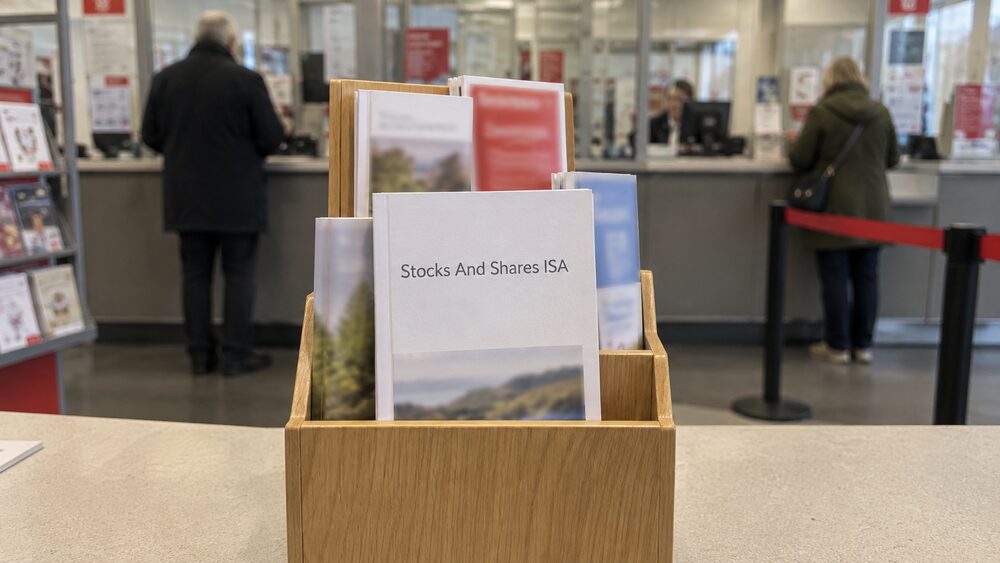
A stocks and shares ISA is an account where the money you put in is invested on the stock markets1. What you can hold inside it is set by law, not by the provider, and the list is wider than many people assume: shares, funds, exchange-traded funds (ETFs), investment trusts and bonds all qualify2.
A stocks and shares ISA is an account where the money you put in is invested on the stock markets1. What you can hold inside it is set by law, not by the provider, and the list is wider than many people assume: shares, funds, exchange-traded funds (ETFs), investment trusts and bonds all qualify2.
The rules that matter most are about where shares are listed, what counts as a qualifying fund, and what happens to cash you leave uninvested. From April 2027 a 22% flat rate charge applies to interest paid on cash held inside a stocks and shares ISA, and transfers from a stocks and shares ISA into a cash ISA end for most people4.
Investments you can hold: shares, funds, ETFs, investment trusts and bonds
The core holdings are shares in companies, also known as equities, and government or corporate bonds10. Most people reach commercial property and commodities through funds rather than buying them directly10. A stocks and shares ISA can hold funds, shares, ETFs and investment trusts, and some providers offer bonds and individual shares alongside them2.
Funds are the widest category. They can cover property, bonds and commodities, and some ISAs allow individual shares, bonds and more unusual holdings such as farmland, vintage cars or wine11. A stocks and shares Junior ISA works the same way, holding funds, shares, bonds, ETFs and investment trusts12.
Two conditions sit underneath all of this. Only authorised or recognised funds may be held in a stocks and shares ISA under current law13. And investments judged to be cash-like will not be permitted in stocks and shares ISAs from 6 April 202714. HMRC's final rules define cash-like assets as money market funds only, which stay eligible provided they do not make up 100% of the portfolio15.
Where shares must be listed and what is excluded
Only shares listed on a recognised stock exchange may be held in an ISA8. The listing requirement is specific: shares, including those in an investment trust, must be acquired through a public offer and cannot, other than in prescribed circumstances, be acquired before listing or admission to trading16.
The underlying regulations set out further conditions. Shares must be officially listed on a recognised stock exchange, securities must satisfy listing and five year repayment conditions, investment trusts must have no eligible rental income, and funds and companies must hold not more than 50 per cent in value of non-qualifying securities17. Securities admitted to trading on a recognised stock exchange in the European Economic Area are also qualifying investments18.
Foreign shares are allowed. Shares listed on a foreign stock exchange can be held in an ISA, and foreign shares other than those listed on the London Stock Exchange are included in your valuation19. Some platforms offer European and US shares within a stocks and shares ISA20.
The account currency is separate from the listing. The only currency you can add to, and hold within, a stocks and shares ISA is pounds sterling9.
| Rule | What it means |
|---|---|
| Listing | Shares must be listed on a recognised stock exchange8 |
| Timing | Shares must be acquired via a public offer, not before listing16 |
| EEA securities | Admitted to trading on a recognised EEA exchange qualifies18 |
| Foreign shares | Allowed, and included in your ISA valuation19 |
| Currency | Pounds sterling only for the account itself9 |
Cash inside a stocks and shares ISA: the 22% charge on interest
Many stocks and shares ISA providers allow investors to hold cash on a temporary basis while they are out of the market, but interest rates will usually be negligible5. Some providers run a formal cash facility that lets you hold cash in the ISA, use it to invest into funds, pay charges or withdraw it21.
From April 2027 that cash becomes less attractive. The rules introduce a 22% charge on interest paid on cash holdings held in stocks and shares and innovative finance ISAs, which are not cash ISAs22. The legislation introduces a flat rate charge of 22% on any interest paid on cash held in a stocks and shares ISA and innovative finance ISA4. The charge is representative of the savings basic rate4.
The mechanics matter. The account manager must pay to the Board an amount representing income tax at the savings basic rate in force for the year, on interest or alternative finance return on cash deposits held under a stocks and shares component or innovative finance component23. No repayment of tax or amounts representing tax may be made to the account investor receiving or entitled to such interest23.
Moving existing shares and ISAs into a stocks and shares ISA
You can transfer existing cash ISAs and stocks and shares ISAs into a new stocks and shares ISA without affecting your allowance25. Providers generally accept transfers in once the account is open26.
The rules on what can move are tighter than the rules on what can be held. Only shares that have been transferred from an HMRC approved scheme can be directly transferred into an ISA27. For other shares, a sale and repurchase, sometimes called bed and ISA, moves investments into the ISA provided they are ISA eligible27. You cannot transfer stocks you already hold in a regular brokerage account into an ISA28.
Transfers between ISA types follow their own rules. Funds invested in a stocks and shares ISA can only be transferred to another stocks and shares ISA, while funds invested in a cash ISA can transfer to a stocks and shares ISA or another cash ISA29. Where a transfer involves innovative finance, it takes place in cash, so stocks and shares ISA investments would be sold and the cash used to invest30.
Fees that depend on what you hold
What you hold drives what you pay. Costs can include platform charges, management charges, trading fees and transfer out fees31. A platform may charge a custody and platform services fee as a percentage of assets held, for example 0.35% on assets held in a Share Investing Stocks and Shares ISA32. Others describe the costs as an annual management fee, the fund costs, and the effect of market spread33. Fund management charges apply on top where funds are held34.
Exit costs vary by provider and by holding. Some providers charge exit fees ranging from £15 to £30 per holding, while most providers charge nothing5. Because the fee is per holding, an account with many small holdings can cost more to leave than one with a few large ones.
Flexibility is also a provider choice rather than a rule. Cash ISAs, stocks and shares ISAs and innovative finance ISAs can be flexible, but it is up to individual providers whether they offer this service35.
Tax-free, but not risk-free: what an ISA does not protect
Money in an ISA remains free from UK Income Tax and Capital Gains Tax while you keep it in ISAs7. Any dividends and returns on shares and bonds held in an ISA are tax-free6, and investments held in a stocks and shares ISA are free from capital gains tax36.
That tax treatment does not extend to everything. Stocks and shares ISAs do not shield your investments from inheritance tax or stamp duty when buying shares25. The same principle applies across ISA types: an innovative finance ISA does not reduce the risk of the investment or protect you from losses, so you can still lose all your money, and it only means that any potential gains will be tax free37.
The value of a stocks and shares ISA can go down as well as up, unlike other ISA types29. Tax-free is a statement about tax, not about safety.
"An IFISA does not reduce the risk of the investment or protect you from losses, so you can still lose all your money. It only means that any potential gains from your investment will be tax free."
The same limit applies across the ISA range. A stocks and shares ISA lets you earn tax-free interest but you invest your money, so the value can go down as well as up33, and stocks and shares Isas don't shield your investments from inheritance tax or stamp duty when buying shares18. What the tax wrapper does is narrow: any dividends and returns on shares and bonds held in an Isa will be tax-free29, and the money remains free from UK Income Tax and Capital Gains Tax while you keep the money in ISAs31.
What changes from April 2027
Three changes affect what a stocks and shares ISA can hold and how it behaves. Investments judged to be cash-like will not be permitted in stocks and shares ISAs from 6 April 202714. A flat rate charge of 22% will apply to any interest or alternative finance return paid on cash held within a non-cash ISA38. And the cash ISA limit falls for younger savers: from April 2027, under-65s can put a maximum £12,000 of the £20,000 allowance in a cash ISA, with the rest in a stocks and shares or innovative finance ISA, while over-65s can split the allowance as they wish39.
Transfers change too. From April 2027 you cannot transfer a stocks and shares ISA into a cash ISA5, and from 6 April 2027 only those aged 65 or over in the tax year will be able to do so24. Anyone wanting to use their full ISA allowance will need to invest at least £8,000 in a stocks and shares ISA40.
The allowance itself stays at £20,000. You could still pay up to £8,000, the remaining portion of the overall £20,000 allowance, into stocks and shares ISAs or innovative finance ISAs where £12,000 has gone into a cash ISA7.
Where to get help
If a provider mishandles a transfer, applies a charge you were not told about, or refuses a holding you believe qualifies, the Financial Ombudsman Service handles complaints about investments and individual savings accounts1. MoneyHelper offers free, impartial guidance on ISAs and investing, and debt advice charities can help where an ISA sits alongside problem debt.
Sources40 cited
- Investments and individual savings accounts (ISAs) Financial Ombudsman Service
- Transfer your ISA interactive investor
- ISA allowance Fidelity International
- The Individual Savings Account (Amendment) Regulations 2026: explanatory memorandum legislation.gov.uk, 2026
- Stocks and shares ISA transfers Which?, 2026-09-25
- How to invest for income Which?, 2026-09-25
- ISA allowances NS&I
- Valuing stocks and shares for Inheritance Tax HM Revenue & Customs, 2022-02-01
- How to invest in a stocks and shares ISA interactive investor, 2026-09-26
- Stocks and shares ISA vs cash ISA Royal London, 2025-09-15
- What is a stocks and shares ISA? Royal London, 2025-09-15
- What is a Junior ISA? AJ Bell
- Individual Savings Account amendment regulation 2026 HM Revenue & Customs, 2026-03-09
- Ways to save Scottish Widows
- Here's what the new ISA changes could mean for you Bestinvest
- The Individual Savings Account (Amendment) Regulations 2023: explanatory memorandum legislation.gov.uk, 2023
- The Individual Savings Account Regulations 1998 legislation.gov.uk, 1998-07-31
- The Individual Savings Account (Amendment) Regulations 2015 legislation.gov.uk, 2015-07-01
- Tax-free savings newsletter 19 HM Revenue & Customs, 2025-11
- Share dealing FAQ Fidelity International, 2026-09-26
- Stocks and shares ISA Aegon
- Tax Update 2026: simplification, modernisation and fairness HM Revenue & Customs, 2026-06-23
- The Individual Savings Account (Amendment) Regulations 2026: draft legislation HM Revenue & Customs, 2026-07-16
- Transferring an ISA Principality Building Society
- What is a stocks and shares ISA? Which?, 2026-04-06
- Stocks and shares ISA Legal & General
- Understanding an ISA Halifax, 2026-09-27
- Bed and ISA Freetrade
- Annual savings statistics 2025: background and methodology HM Revenue & Customs, 2025-09-18
- Innovative finance ISAs explained Which?, 2026-07-08
- ISA guide TSB
- Consolidated terms and conditions: US shares Moneyfarm, 2025-07-29
- ISA fees J.P. Morgan Personal Investing, 2025-11-03
- Stocks and shares ISA Chip
- What is a flexible ISA? Bestinvest
- What is an ISA? Bestinvest
- COBS 4.16: risk summary for P2P agreements Financial Conduct Authority, 2025-10-08
- ISA reform 2027: anti-circumvention rules factsheet HM Revenue & Customs
- Reduction in the cash Individual Savings Account (ISA) limit HM Revenue & Customs
- 4 mistakes to avoid when trying to lower your tax bill Which?









 MoneyHelperFree, impartial money and pensions guidance, set up by government
 FSCSProtects your money if a bank, insurer or investment firm fails
 Financial Ombudsman ServiceFree, independent help when a complaint about a firm is not put right
 GOV.UKOfficial information on tax, benefits and government services
 Citizens AdviceFree advice on money, consumer and legal problems in England and Wales