
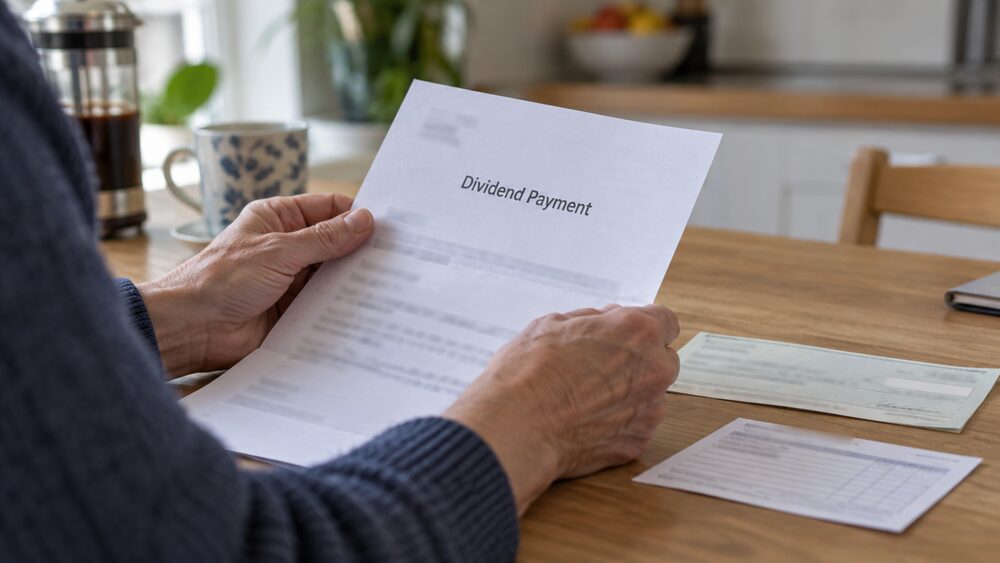
A consolidated tax certificate is the annual summary an investment platform or broker sends you, setting out the taxable income your investments produced in the tax year: dividends on shares and funds, and sometimes interest. Its purpose is practical rather than official. It pulls together in one document the figures you need when filling in a Self Assessment tax return, so you do not have to add up dozens of individual dividend payments yourself. HMRC does not approve or endorse these certificates; they are the platform's own summary of what it paid you, and HMRC has the right to check whether any tax return is accurate and complete1.
The certificate matters most to people who hold investments in a general investment account, sometimes called a dealing account or fund and share account, because income from that kind of account is taxable. If everything you hold sits inside an ISA or a pension, most of that income never reaches a tax return at all, since returns earned inside an ISA are free from UK Income Tax and Capital Gains Tax2. The certificate is one of several documents a platform produces each year, alongside regular statements, contract notes when you buy or sell, and annual statements of costs and charges.
What a consolidated tax certificate is for
The certificate exists to save you work at tax return time. Over a year, a portfolio can generate many separate payments: dividends from each company share, distributions from each fund, and interest where the account pays any. Each of those is a taxable event in a general investment account, and each needs to be reported. The consolidated tax certificate gathers them into one figure per category, typically UK dividends, foreign dividends and interest, for the whole tax year.
What the certificate is not is a legal document in itself. It is the platform's own record of what it paid you, and its accuracy depends on the platform's own systems. HMRC does not approve these certificates, and holding one does not make a tax return correct. What it does do is give you a single, organised source for the figures, which matters because you need your records both to fill in your return correctly and to provide documents if HMRC checks it4. A certificate, kept with your statements and contract notes, forms part of that record.
The document usually shows income by type and by holding, so you can see which shares and funds produced what. For anyone with a simple portfolio, the headline totals may be all they need. For anyone with many holdings, or with foreign shares where tax is withheld abroad, the breakdown helps because different kinds of income are reported in different places on the return.
ISAs and SIPPs are tax-free wrappers, so most of their income never reaches a return
The reason an ISA investor can usually ignore the certificate is the wrapper itself. With an ISA, any returns you earn are free from UK Income Tax and Capital Gains Tax2. Official statistics describe ISAs the same way: tax exempt cash, stocks and shares and/or innovative finance accounts5. Dividends paid on shares held inside a stocks and shares ISA, and gains made selling them, do not go on a Self Assessment return, so there is nothing for a certificate about those holdings to feed into.
The same principle applies to a Self-Invested Personal Pension. A SIPP is a pension wrapper, and income and gains inside it are not taxed as they arise to you. Tax relief works the other way round instead: contributions receive relief, and tax is charged when money is drawn in retirement. So a SIPP holder does not need a consolidated tax certificate for the SIPP's own income either.
There is one wrinkle worth knowing about, because it is a change in the rules rather than a long-standing position. Interest earned on cash deliberately held inside a stocks and shares ISA, or an innovative finance ISA, is treated differently from other ISA returns. Legislation now in force provides that no relief from tax applies to such interest, and the account manager must pay a flat rate charge to the Board at the savings basic rate in force for the year6. Draft regulations set out how this works in practice: the account manager pays an amount representing income tax at the savings basic rate in force for the year, no repayment of tax may be made to the investor receiving the interest, and the charge is payable not later than 6 months after the end of the year in which the interest was paid or credited7.
The practical point is that this charge is the ISA manager's responsibility, not yours. You do not declare this interest on your Self Assessment return, and you cannot reclaim the tax on it. If you hold significant cash inside a stocks and shares ISA, the tax treatment of that cash is different from the rest of the wrapper, and it is worth understanding before assuming everything inside an ISA is tax-free in every sense.
Annual timing: after the end of the tax year
A consolidated tax certificate is issued once a year, and the timing follows the tax year rather than the calendar year. The UK tax year ends on 5 April, and platforms build the certificate from their records of everything paid between the previous 6 April and 5 April. That is why the document normally appears in the weeks afterwards, with May the common month for issue.
The pattern is visible in how other providers handle annual statements. NS&I, for its Guaranteed Income Bonds, states that shortly after the end of each tax year it will send a statement showing the interest earned and the value of the bonds3. The same logic drives platform tax certificates: the figures cannot be finalised until the year they cover has closed, so nothing arrives before 5 April, and a certificate dated for, say, the 2025 to 2026 tax year will be produced after that April.
This timing matters for planning. If you file your Self Assessment return early, soon after the tax year ends, the certificate may not yet be available, and you would be working from your own records or waiting. Filing nearer the January deadline means the certificate will have been issued months before, which is one reason many people find the document most useful in the autumn and winter.
Getting the certificate online or by post
Most platforms now deliver tax documents through an online document library rather than by post. You log in, open the documents or statements section, and download the certificate as a file. Where a platform still posts documents, or where you have chosen paper communications, the certificate arrives by letter.
HMRC's own practice shows both channels in use for tax information generally. A Simple Assessment calculation, for instance, is delivered as a letter by post or in your Personal Tax Account8, and HMRC has described how such letters are official and arrive by post or appear in a customer's Personal Tax Account online9. Investment platforms work the same way in principle: the same document is either posted or placed in your online account.
If you cannot find your certificate, the usual reasons are timing, as above, or that your account produced no taxable income to report. Before contacting the platform, check the document library for earlier years, since the layout and naming of these documents is usually consistent, and a certificate you have received before will be filed in the same place again.
Where cash interest sits, and what a certificate may leave out
Not every figure you need for a tax return comes from the tax certificate. Interest paid on cash held in an investment account is a common gap, because some platforms report cash interest on statements or a separate interest certificate rather than on the consolidated tax certificate. If you keep an uninvested cash balance, or you sold holdings and left the proceeds in cash for a period, the interest on that balance is taxable income in a general investment account and must be reported, wherever the platform happens to show it.
To find it, look at your account statements, which record interest as it is credited, or ask the platform for an interest certificate covering the tax year. You can also cross-check against HMRC's own view: you can see the estimated amount of savings interest HMRC holds about you in your Personal Tax Account10. That estimate is built from information reported to HMRC and can be a useful sanity check, though it is an estimate rather than a substitute for your own records.
The rules around cash inside investment products are more intricate than they first appear. The regulations governing what counts as the cash component of an ISA, for example, list what qualifies: cash deposited in a deposit account with a building society or an institution authorised under the Banking Act 1987, units in a money market fund, and certain securities issued under the National Loans Acts 1968, while excluding national savings certificates, premium savings bonds, national savings stamps and national savings gift tokens11. That is a reminder that "cash" in an investment product can mean several different things, and where the interest sits determines both who reports it and how it is taxed.
How reinvested and accumulation dividends appear
Dividends you never see in cash still count as income, and the certificate normally includes them. There are two common ways this happens.
The first is a dividend reinvestment service, where the platform takes each dividend and buys more of the holding automatically. The dividend was still paid to you, and it is still taxable income in a general investment account; the reinvestment is a separate purchase. The certificate should include reinvested dividends in its totals, and the reinvested amount also becomes part of your allowable cost for Capital Gains Tax when you eventually sell, since each purchase adds to what you paid for the holding.
The second is accumulation units or shares in funds, where income is rolled up inside the fund's price rather than paid out. The income is treated as having been paid to you even though no cash moved. The official guidance on share reorganisations covers the related case of stock dividends, where you take shares instead of cash: you can include the net amount you have already included in your Income Tax as an allowable cost for Capital Gains Tax12. The same principle of income counted once and then added to cost underpins how accumulation income is handled.
The practical warning is not to lose track. With reinvested dividends, the number of small purchases builds up over the years, and each one affects the capital gain when you sell. Keeping the certificate each year, alongside the contract notes for reinvested purchases, preserves the record of both the income and the cost. The guide to dividend reinvestment covers how these services work, and how dividends work explains the underlying payments.
Using the certificate for a Self Assessment tax return
The certificate feeds directly into the return. The dividend totals go into the dividend income section, interest into the savings income section, and any foreign income, where tax has been withheld abroad, into the foreign income pages. The figures are for the tax year that has just ended, matching the return's own period.
The process runs as follows:
- Wait for the certificate, or gather your own records if you file before it is issued.
- Take the dividend totals, separating UK from foreign income if the certificate breaks them down.
- Find cash interest from statements or an interest certificate, since the tax certificate may not carry it.
- Enter the figures in the matching sections of the return.
- Keep the certificate, statements and contract notes with your records.
That last step is the one people most often skip, and it is the one HMRC is explicit about: you need your records to fill in your tax return correctly, and if HMRC checks your return, they may ask for the documents behind it4. HMRC states plainly that it has the right to check whether any tax return is accurate and complete1. A certificate is exactly the kind of document that answers such a check, because it is the platform's own statement of what it paid you.
Not everyone files a full return. HMRC also uses Simple Assessment, where a tax calculation is sent after the end of the tax year if tax cannot be collected through a tax code, for example where the State Pension or other income makes coding impossible13. If you receive a Simple Assessment letter rather than filing a return, the certificate is still useful, because it lets you check that the income HMRC has used matches what your platform actually paid you. The Self Assessment statement itself, sometimes called your bill, is a separate document showing what you owe once the return is in14.
Tax on a general investment account: dividends, interest and gains
A general investment account has no tax wrapper, so three kinds of tax can touch it: tax on dividends, tax on interest and Capital Gains Tax on sales. The certificate covers the first of these directly and sometimes the second, while the third is built from your contract notes rather than any annual summary.
Dividends and interest are income, reported each year as they arise. Gains are different: they arise only when you sell, and the gain is the sale proceeds less what you paid, less allowable costs. That is why contract notes matter as much as the certificate. Each purchase note records the price and the costs of buying, and each sale note records what you received; the gain is the difference, worked out per holding. The guide to how investments are taxed sets out the rules in full, and tax on investments when transferring covers a specific question people often have about moving holdings between accounts.
The scale of this income across the UK is not trivial. Official statistics for the tax year 2023 to 2024 show that property, interest, dividend and other income accounts for 8.2% of total income15. Dividend income in particular is concentrated among taxpayers who file returns, which is why the certificate exists as a product feature at all.
One rate worth noting from official sources: Capital Gains Tax on carried interest for individuals is charged at 32%16. That is a specialist rate applying to a particular kind of investment industry gain, not to ordinary share sales, and it is included here only as an example of how rates vary by the type of gain. The rates that apply to ordinary dividends, interest and gains are set out in the tax guide linked above, and they change over time, so always check the current position rather than relying on an old certificate or an old article.
Other investment documents: statements, contract notes and interest certificates
Beyond the tax certificate, a platform produces a family of documents, each answering a different question.
| Document | What it shows | When it arrives |
|---|---|---|
| Consolidated tax certificate | Taxable dividends and income for the tax year | Once a year, after 5 April |
| Account statement | Holdings, cash balance, transactions and interest credited | Regularly, monthly or quarterly |
| Contract note | Each purchase or sale: price, quantity, costs and stamp duty | At the time of each deal |
| Interest certificate | Interest paid on cash in the account | Annually, or on request |
| Annual costs and charges statement | What you paid in platform and fund charges | Annually |
The contract note is the one to keep permanently. It is the evidence of every price and cost, and without it, working out a capital gain years later means reconstructing history. The annual costs statement is newer and often ignored, but it tells you what holding the account actually cost you, which is a fair question to ask of any investment platform.
Other providers show how these documents vary. NS&I, for example, sends Guaranteed Income Bonds customers an annual statement shortly after each tax year end showing interest earned and bond value3, and its Investment Account is a postal-only account, not promoted on its website, with applications handled by post17. For children's accounts, NS&I notes that grandparents can open and contribute to a child's Investment Account but must nominate a parent or guardian to look after it until the child turns 1618, and a nominated responsible person who has provided evidence of identity can manage the account by post18. Where accounts are merged or consolidated, NS&I asks customers to provide details including the type of investment, approximate start date, amount invested, holder's or customer number, account number and bond or certificate numbers19. The common thread is that the provider holds the record, but you are the one who needs it at tax time.
Duplicates are usually available. Most platforms keep past documents in the online library indefinitely, so a lost certificate can often be reprinted without charge. Where a provider does charge for a paper duplicate, the fee appears in its own schedule of charges. Identity documents may be needed for some requests: the FSCS, for example, cites a passport or valid GB driving licence, bank statement or utility bill as examples of extra documents to prove identity if requested20.
Where to get help
If the figures do not add up, start with the platform: ask it to confirm the dividend and interest totals for the tax year and to explain anything on the certificate you cannot reconcile with your statements. Keep the correspondence, since it becomes part of your records if HMRC later asks questions.
For the tax side, HMRC's guidance on record keeping sets out what you need to keep and why4, and its compliance checks guidance explains your rights and the support available if HMRC opens a check into your return1. Free, impartial help is available: MoneyHelper offers guidance on tax and investments, and HMRC's own helplines can answer questions about Self Assessment. If you receive a Simple Assessment letter you do not understand, HMRC has urged customers not to ignore such letters, which arrive by post or in the Personal Tax Account9.
For broader questions about the investments themselves rather than the tax paperwork, the investing guide covers the products these documents relate to, and where to hold investments explains the choice between an ISA, a pension and a general account, which is the choice that determines whether you need a consolidated tax certificate at all.
Sources20 cited
- HMRC compliance checks: help and support GOV.UK, 2021-03-05
- ISA basics NS&I
- Guaranteed Income Bonds: maturing investments NS&I, 2026-08-17
- Keeping your pay and tax records GOV.UK, 2026-09-26
- Annual Savings Statistics 2025: background and methodology GOV.UK, 2025-09-18
- The Individual Savings Account (Amendment) Regulations 2026 legislation.gov.uk, 2026-09-10
- Draft ISA amendment regulations 2026 GOV.UK, 2026-07-16
- Understand Simple Assessment GOV.UK, 2026-09-25
- HMRC urges customers not to ignore Simple Assessment letters GOV.UK, 2026-07-28
- How you pay tax on savings interest GOV.UK, 2026-09-28
- The Individual Savings Account Regulations 1998 legislation.gov.uk, 1998-07-31
- Capital Gains Tax: share reorganisation, takeover or merger GOV.UK, 2014-11-06
- How your State Pension is taxed GOV.UK, 2026-07-07
- Understand your Self Assessment bill GOV.UK, 2026-09-26
- Personal Incomes Statistics for the tax year 2023 to 2024 GOV.UK, 2023
- Budget 2025: rates and allowances (Annex A) GOV.UK, 2025-12-05
- NS&I Investment Account NS&I, 2026-07-03
- Looking after a child's savings NS&I, 2023-11-13
- Merging your NS&I accounts NS&I, 2026-06-09
- FSCS claims process: sending documents FSCS, 2026-09-25





 MoneyHelperFree, impartial money and pensions guidance, set up by government
 FSCSProtects your money if a bank, insurer or investment firm fails
 FCA Warning ListCheck whether a firm is authorised before you deal with it
 Financial Ombudsman ServiceFree, independent help when a complaint about a firm is not put right
 Citizens AdviceFree advice on money, consumer and legal problems in England and Wales