
PrizeSaver is a savings account offered by participating credit unions across Great Britain. Instead of paying a guaranteed interest rate, it puts every £1 you save towards entries in a monthly prize draw, with a headline prize of up to £5,0001. You open the account with as little as £1, save what you can, and your balance at the end of each month determines how many entries you get into the following month's draw1.
The scheme is run jointly by the credit unions that take part, so your entries go into a shared national draw alongside savers from other participating credit unions, rather than a draw run just by your own1. As of July 2024 the scheme covered around 20 credit unions with a total of 25,000 PrizeSaver accounts4.
The account is a savings account first and a prize draw second. Your money remains savings held with your credit union, protected by the Financial Services Compensation Scheme up to £120,0001, and you can withdraw it. What you give up is a guaranteed return: any dividend on the account depends on your credit union's results and is not promised1.
How the draw works: £1 saved, one entry, up to 200 entries
The mechanics are simple and are stated consistently by every participating credit union: for every £1 you have in your PrizeSaver account, you get one entry into the monthly prize draw1. The balance that counts is the one in your account at the end of the month, and that balance buys your entries into the following month's draw2. Entries are allocated automatically, so there is nothing to do once the account is open and funded.
The entry cap is 200 per account holder per month, which corresponds to a balance of £2002. Several credit unions describe the account as running up to £200 per month, and some set £200 as the maximum balance the account can hold9. Because the draw is shared across all the participating credit unions, your 200 entries go into the same pool as entries from savers at every other participating credit union, which is why the scheme describes itself as a UK-wide credit union savings account with monthly prizes5.
Funding the account is straightforward. You can pay in by Direct Debit or through payroll deduction, where your employer passes your chosen amount to the credit union alongside your wages1. Saving a fixed amount each month is how most members use the account, and because the balance is tracked daily, the credit union can see your savings build through the month even though only the month-end figure buys entries1.
Saving more than £200 adds no extra entries
The entry cap means there is a ceiling on how many chances one person can have. Each PrizeSaver account holder has a maximum of 200 prize draw entries per month, and the maximum PrizeSaver savings counted per member is £2002. Saving beyond that point does not buy further entries: the account is designed around small, regular saving rather than large balances.
This is a deliberate feature of the scheme rather than a quirk of one credit union. The £200 limit keeps the draw fair between people saving modest amounts, since no member can buy a dominant share of the entries. It also means the account is not a place to park large sums: some participating credit unions cap the balance at £200 outright6, while others may allow more to be held, with only the first £200 earning entries. Check the terms of the specific credit union you join, because the treatment of anything above £200 varies between them.
In practice, the account suits someone who wants to build a small savings habit with a chance of a prize as an incentive, not someone comparing returns on a substantial pot. If you have more than £200 to save, the rest would normally go into a different credit union account, and the guide to credit union savings accounts covers the other options.
The prizes: £5,000 headline prize and 20 smaller prizes each month
The prize structure is the same across the scheme. There are 21 prizes up for grabs every month: one headline prize of £5,000 and 20 smaller prizes, made up of 10 prizes of £50 and 10 prizes of £204. Riverside Credit Union describes the same structure: 21 prizes each month with one grand prize of £5,0002, and other participating credit unions describe prizes ranging from £20 all the way to £5,0007.
The headline prize is the draw's main attraction, and participating credit unions market the account on the chance to win up to £5,000 every month1. The smaller prizes matter more often, though: with 20 of them awarded each month alongside the single £5,000 prize, the odds of winning something are concentrated in the £50 and £20 tier4. One credit union's terms describe the further prizes as being "of not less than £20", which matches the £20 floor in the published structure5.
It is worth being clear-eyed about what the prizes are. They are a bonus on top of your savings, not a return you can plan around. With 21 prizes shared among the entries of every saver across the participating credit unions, most members in most months will not win, and the account's value to most people is the savings habit it encourages rather than the prize money.
Who can open a PrizeSaver account
PrizeSaver is offered by participating credit unions, and credit union services are exclusive to their members1. That means the first step is joining a credit union that offers the account, which in turn means meeting that credit union's common bond: the shared characteristic, such as living or working in a particular area, or working for a particular employer or in a particular trade, that defines who can join. The guide to the common bond explains how this works.
Once you are a member, opening the account is light on paperwork. Riverside Credit Union asks existing members to complete a short form to say they want a PrizeSaver account, and non-members to complete the membership application form2. GMB Credit Union describes the account as a separate one that runs alongside your other credit union accounts, and says it can open one quickly for existing members6. The account is open to all participating members of the credit unions in the scheme5.
The minimum opening deposit is £1, so there is no barrier to starting small1. You can then fund the account by Direct Debit or payroll deduction1. If you are not yet a member of any credit union, the guide to joining a credit union covers what ID and other details you will need, and finding a credit union you can join covers how to locate one.
Dividends on PrizeSaver are not guaranteed
PrizeSaver accounts do not pay a guaranteed interest rate. Instead, PrizeSaver savings attract profit-sharing dividends5, and the credit unions offering the account are explicit that dividends are not guaranteed1. A dividend is a share of the credit union's surplus, decided at the end of its financial year, so what you receive depends on how the credit union has performed.
There is a real example of what this can look like. Plane Saver paid a dividend of 1.75% on the PrizeSaver account for 2024-2025, while stating that this was not guaranteed1. That figure is a record of one year at one credit union, not a promise of what future years will pay, and dividends can vary between credit unions and between years, including paying nothing at all.
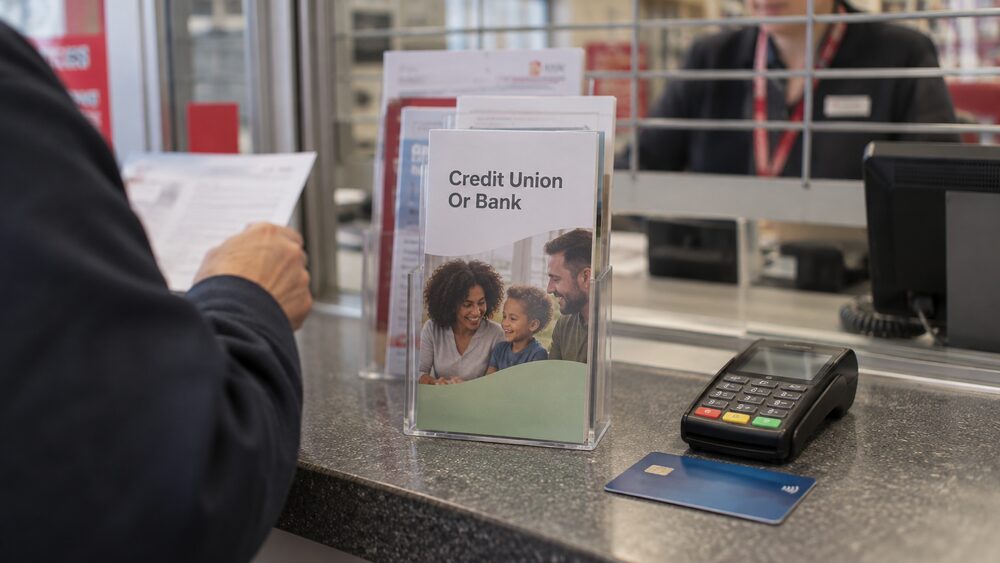
This is the core trade-off of the account. A conventional savings account pays a rate you know in advance; PrizeSaver pays a possible dividend plus a chance of a prize. For a saver whose priority is a predictable return, that matters. For a saver who responds well to the incentive of the draw, the account is designed to make regular saving feel rewarding in a different way. The comparison between credit unions and banks, including how their savings differ, is covered in credit union or bank.
Is PrizeSaver gambling?
The scheme's own terms answer this directly. The PrizeSaver account is described as "a free prize draw, (not a lottery/raffle/gambling"5. The distinction the scheme draws is that you are not staking money on an outcome: you are saving money that remains yours, withdrawable, and protected, and the entries into the draw come automatically from your balance rather than from buying anything.
This is the same principle behind other prize-linked savings in the UK, most familiarly Premium Bonds from National Savings & Investments, where the prizes replace interest rather than being won by staking money. The practical test for a saver is simple: can you get your money back out, and is it protected? With PrizeSaver, the answer to both is yes. Your balance is savings held with your credit union, covered by the Financial Services Compensation Scheme1, and the guide to withdrawals covers how you get money out of credit union accounts.
That said, the account is not designed as a route to winnings. The prizes are an incentive to save, and treating the draw as a source of income would misunderstand it. If the possibility of a prize is the only reason to save, the account has done its job only if it also builds a habit that lasts.
Northern Ireland: a separate credit union system
PrizeSaver is not available in Northern Ireland. The participating credit unions are in Great Britain, and the credit union system in Northern Ireland is separate in both regulation and product range. MoneyHelper lists credit union finders separately for England, Scotland and Wales, and for Northern Ireland10.
The differences are structural. Credit unions in Northern Ireland are regulated by the Registry of Companies, Credit Unions and Industrial and Provident Societies, a different regulator from the one that supervises credit unions in Great Britain11. A Northern Ireland Assembly research paper put the number of credit unions there at approximately 17011, and the Irish League of Credit Unions acts as a trade and representative body for 92 credit unions in Northern Ireland12.
The product gap is wide as well. A 2025 Northern Ireland Assembly briefing sets out that credit unions there cannot offer current accounts, insurance or mortgages, and are prohibited from services such as hire purchase agreements, conditional sale agreements, insurance and loans to other credit unions13. So a saver in Northern Ireland looking for prize-linked saving would need to look at what is available there, or at UK-wide options such as Premium Bonds, rather than PrizeSaver. The wider differences in money rules across the nations are covered in Money in Scotland, Wales and Northern Ireland.
Claiming a prize: notification and deadlines
The draw runs monthly, and the participating credit unions publish when it happens. Voyager Alliance states that the draw takes place between the 15th and 19th of each month, that winning members are notified within 3 working days, and that prize money is credited to their Retail CU Membership Account8. In other words, you do not need to claim in the ordinary case: the credit union contacts you and pays the prize into your account.
Because notification depends on the credit union reaching you, the practical steps are on your side. Keeping your phone number, email and address up to date with your credit union, and making sure you can still log in to your membership account, means a notification does not go astray. If you have changed contact details since opening the account, telling the credit union means a winning notification reaches you.
If you believe you have won but have heard nothing, contact your credit union directly. This is an area where the wider prize-drawing market offers a useful comparison: NS&I contacts everyone who wins a Premium Bonds prize14, provides a prize checker showing prizes won this month, in the previous six draws, and any older unclaimed prizes15, and has a dedicated process for people who think they have won a Premium Bonds prize and want to claim it16. PrizeSaver has no equivalent national prize checker, so your credit union is the single point of contact for confirming a win.
How your PrizeSaver savings are protected
PrizeSaver savings are protected by the Financial Services Compensation Scheme, the same scheme that covers banks and building societies. The scheme's own material states that savings in a credit union are covered by the FSCS, exactly the same protection as savings in a bank or building society17, and the account's terms state plainly that it is protected by the Financial Services Compensation Scheme1. The protection level quoted for the account is up to £120,0001.
Official guidance across Great Britain is consistent on this point. The Welsh Parliament's material on credit unions states that savings are protected by the FSCS18, the Scottish Government says loans and savings are protected by the scheme19, and the Welsh Government's consumer guidance says the same20. An independent credit union body puts it in members' terms: all shares, meaning savings, in its affiliated credit union are eligible for FSCS protection20.
What this means in practice is that if your credit union failed, the FSCS would compensate eligible savers up to the scheme limit. Your PrizeSaver balance is not a ticket you could lose: it is a deposit, and it is covered in the same way as any other savings with the same credit union. The guide to consumer protection in UK financial services covers how the FSCS works and when it pays out.
PrizeSaver and borrowing from your credit union
PrizeSaver is a savings account, but saving with a credit union is often connected to borrowing from one. Credit unions lend from their members' pooled savings: members' savings are used to fund loans to other credit-worthy members of the credit union20. Saving into PrizeSaver therefore contributes to the pool your credit union lends from, alongside your other accounts.
Saving regularly can also be a step towards borrowing. Independent guidance from Business Debtline notes that if you join a credit union and start saving with them, you will also be able to apply to borrow money once you have proved you are a reliable saver21. Shelter's guidance makes the membership point plainly: you need to be a credit union member to apply for a loan22. GMB Credit Union describes PrizeSaver as a separate account that runs alongside your other credit union accounts6, so opening one does not replace your main savings or affect your standing as a member.
Whether PrizeSaver savings specifically can be held as security against a loan is a matter for each credit union's own rules, so ask yours directly. The guides to types of credit union loan, what a loan costs and borrowing against your savings cover how credit union borrowing works.
Other prize-linked ways to save
PrizeSaver is one of several accounts that reward saving with prizes rather than, or as well as, interest. The most familiar is Premium Bonds from NS&I, where prizes replace interest and everyone who wins is notified directly15. NS&I also provides tools for checking prizes, including unclaimed ones from past draws15, which PrizeSaver does not have.
Among banks, Which? has reported on Nationwide's Start to Save account, in which savers can win £250 if they increase their balance by at least £25 in each of the six months leading up to its prize draws23. That is a different design from PrizeSaver: the entries are earned by growing the balance over time rather than by the balance itself, and the prizes are smaller and more numerous.
Individual credit unions also run their own local prize draws on particular accounts, separate from the national PrizeSaver scheme, so it is worth asking your credit union what it offers. The common thread across all of these is that the prize is an incentive, and the savings themselves remain protected money you can withdraw. The guide to credit union savings accounts covers the non-prize alternatives for savers who prefer a predictable return.
Where to get free help
Free, impartial help is available at every stage of using a credit union. MoneyHelper, the government-backed money guidance service, publishes information on credit unions and their accounts, and lists credit union finders separately for England, Scotland and Wales, and for Northern Ireland10. The Building Societies Association's consumer factsheet points to www.findyourcreditunion.co.uk as a website that helps you locate credit unions24.
If you are saving towards a goal or working out what you can afford to put aside, Business Debtline's budgeting guidance is free and covers saving with credit unions as part of managing a household budget21. For anything to do with a complaint about a credit union, the Financial Ombudsman Service is the free route for unresolved disputes, and the guide to consumer protection explains when and how to use it.
The guides on this site cover the rest of the ground: how to join a credit union, finding one you can join, and the full range of what credit unions offer.
Sources24 cited
- PrizeSaver account page, Plane Saver Credit Union Plane Saver Credit Union, 2026
- PrizeSaver account, GMB Credit Union GMB Credit Union, 2026
- Prize Saver account, Beds Credit Union Beds Credit Union, 2026
- Prize Saver account, East Sussex Credit Union East Sussex Credit Union, 2026
- PrizeSaver account, Riverside Credit Union Riverside Credit Union, 2026
- Savings accounts, Plane Saver Credit Union Plane Saver Credit Union, 2026
- PrizeSaver account, Plus Credit Union Plus Credit Union, 2026
- PrizeSaver account, Voyager Alliance Voyager Alliance, 2026
- PrizeSaver account terms, Association of British Credit Unions ABCUL, 2026
- Credit union current accounts, MoneyHelper MoneyHelper, 2026
- Inquiry into credit union regulation, services and funding Northern Ireland Assembly, 2007
- Illegal lending help and advice Consumer Council Northern Ireland, 2026
- Credit unions in Northern Ireland briefing Northern Ireland Assembly, 2025
- Check unclaimed prizes, NS&I NS&I, 2022
- Premium Bonds prizes, NS&I NS&I, 2026
- Lost touch with NS&I NS&I, 2021
- Scotland's credit unions: investing in the future, page 4 Scottish Government, 2016
- Credit unions briefing, Senedd Business Committee Senedd, 2016
- Save, bank or borrow with a credit union Welsh Government, 2026
- About credit unions, Universal Federal Credit Union Universal Federal Credit Union, 2026
- Your business and household budget, Business Debtline Business Debtline, 2026
- Emergency grants, loans and money help, Shelter England Shelter England, 2026
- Regular saver accounts: can they help you reach a savings goal? Which?, 2023
- Credit unions factsheet, Building Societies Association Building Societies Association, 2026





 MoneyHelperFree, impartial money and pensions guidance, set up by government
 FSCSProtects your money if a bank, insurer or investment firm fails
 Financial Ombudsman ServiceFree, independent help when a complaint about a firm is not put right
 StepChangeFree debt advice and solutions from a charity
 Citizens AdviceFree advice on money, consumer and legal problems in England and Wales