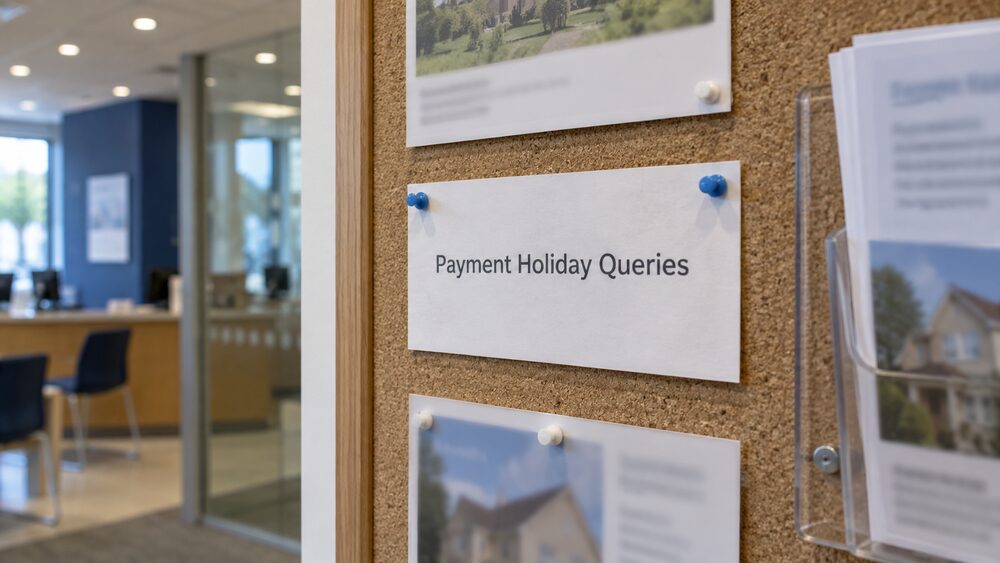
If you took a payment holiday on your mortgage, credit card or personal loan during the Covid-19 pandemic, the arrangement was designed so that it did not appear on your credit file as a missed payment. Under the temporary measures, the Financial Conduct Authority (FCA) told lenders to ensure that no one's credit reports and scores were impacted as a result of getting payment help1. Payment holidays taken out before the scheme's deadlines were not meant to show up on your credit report at all2.
That protection had limits, and they still matter years later. Help arranged after the scheme closed was reported through the normal process, and if you had already missed payments before asking for help, that help could appear on your file1. Lenders were also allowed to take other information into account when making lending decisions, including what you tell them on an application and your bank account information3. So a Covid payment holiday should not have damaged your credit score, but it was never completely invisible.
Covid-19 payment holidays do not appear on your credit file
The central promise of the Covid-19 payment holiday scheme was that taking one would not damage your credit record. The FCA's guidance for firms was explicit: a worsening status would not be reported to the customer's credit file in respect of any payment deferral taken under that guidance3. Firms were told not to report a worsening status on a customer's credit file during any initial or further payment deferral period, in line with reporting guidance published by the credit reference agencies3. Which? reported at the time that mortgage payment holidays taken under the scheme would have no impact on your credit history1.
This was not a loophole or a lucky side effect. It was the rule, and it applied across the products the scheme covered: mortgages, credit cards, personal loans and motor finance. A payment holiday is, by the FCA's own glossary definition, a feature of a regulated mortgage contract under which the lender permits the customer to make no payments for a specified period without being in arrears5. The Covid scheme extended that principle to other forms of borrowing, and the credit reporting rules were adjusted to match.
There were two important qualifications. First, the protection applied to deferrals taken under the scheme, before the deadlines. Payment holidays taken out before the deadline would not show up on your credit report, but additional help received after that date could be marked on your file2. Second, lenders could still see other things. While a worsening status would not be reported in respect of a payment deferral, the FCA noted that lenders may take into account other information when making future lending decisions, including information provided by applicants or bank account information3. A deferral was not a black mark, but it was not a secret either.
If a Covid payment holiday does show on your credit file as a missed payment, that is worth challenging. The Financial Ombudsman Service has dealt with exactly this situation: in one published case, a borrower named Hinesh found two missed payments marked on his credit file after taking a repayment holiday6. The ombudsman's involvement shows that errors of this kind happen and can be put right. The guide to correcting wrong information on your credit report explains the process, and how long information stays on your credit file covers the timescales involved.
What the Covid-19 payment holiday scheme offered
The scheme began in March 2020, when the government announced that borrowers whose finances had been affected by Covid-19 could apply for a three-month payment holiday on their mortgage, credit card or loan by contacting their lender2. Borrowers applied by self-certifying that their income would be directly or indirectly affected by the pandemic1. You did not need a Covid-19 diagnosis to qualify for assistance on car finance7.
The scale was extraordinary. By late October 2020, more than 4.4 million payment deferrals had been granted, including 2.5 million mortgage holidays, 1.1 million credit card deferrals and 793,000 personal loan deferrals2. At that point, 323,700 payment holidays were still in place, including 162,000 on mortgages, 97,300 on credit cards and 64,000 on personal loans2. A further 27 million interest-free buffers had been applied to current account overdrafts2.
The deadlines were extended as the pandemic continued. The application deadline for new mortgage payment holidays was pushed to 31 October 202011. For credit cards, the FCA's updated guidance set a last date of 31 March 2021 for eligible customers seeking a first payment deferral, and for those whose previous deferrals totalled less than six months8. For personal loans, new applications and extensions to Covid-19 payment deferrals were extended until the end of March 2021, with a long stop date for deferrals of 31 July 202110. Mortgage payment holidays came to an end in April 20219.
Once you had set up a deferral, you would not need to make a payment for three months, though interest would continue to accrue2. After the deadlines passed, banks offered ongoing tailored support for customers rather than formal payment holidays2.
Mortgages, credit cards and loans: how each deferral worked
A mortgage payment holiday is a form of deferment: the payments are paused, not cancelled12. All repayments, and the interest accrued over the holiday period, still needed to be paid by the end of the mortgage term11. The same principle ran through every product the scheme covered.
For mortgages, homeowners who were up to date with their payments could apply for a three-month payment holiday when the scheme was announced in March 20201. Those who had already started a mortgage payment holiday could top up to six months without this being recorded on their credit file1. Homeowners who had already benefited from a six-month payment deferral were not able to take further payment holidays without an impact on their credit history, and were instead offered tailored support1. The Building Societies Association stressed that extending a holiday was not a blanket nor automatic process, and borrowers needed to contact their lender to explore extending11.
For credit cards and personal loans, the FCA's guidance defined a payment deferral as an arrangement made on or after 9 April 2020 under which a firm permits the customer to make no payments or reduced payments for a specified period without considering them to be in arrears3. Customers still had use of their card: the guidance stated that use of a card or credit facility should not be suspended except where the firm acted under section 98A of the Consumer Credit Act 1974, for example fraud or a significantly increased risk of inability to repay3. For customers still in difficulty after an initial deferral, firms were told to offer a full or partial payment deferral for a period of three months, to a level the customer indicated they could afford3.
For car finance, payment breaks were initially intended to operate for three months from 27 April 20207. From 17 July 2020, credit firms had to set out specified options to customers experiencing financial difficulty due to the pandemic1.
| Product | Initial deferral | Maximum under the scheme | Key deadline |
|---|---|---|---|
| Mortgage | 3 months | 6 months in total, without being recorded on your credit file1 | 31 October 2020 for new applications11 |
| Credit card | 3 months | 6 months in total for eligible customers8 | 31 March 2021 for a first deferral8 |
| Personal loan | 3 months | Extended applications to end of March 202110 | 31 July 2021 long stop10 |
| Car finance | 3 months from 27 April 20207 |
Interest kept building during a Covid-19 payment holiday
A payment holiday paused your payments, not the cost of the debt. Interest continued to accrue during the deferral2, and interest and charges could still be added4. On a mortgage, the interest accrued over the holiday period had to be paid by the end of the mortgage term11. On a credit card, interest built up while the holiday was in place13.
The practical effect was that your balance grew, and your minimum payments could rise afterwards. Any extra interest accrued was added to your balance, so you might see an increase in your credit card's minimum payment2. Your minimum payments rose if you took a payment holiday because of the interest added during that time13. This is the trade-off at the heart of any payment holiday: immediate relief in exchange for a slightly larger debt and higher payments later.
For mortgages, the arithmetic worked differently but the direction was the same. Because the deferred payments and the accrued interest still had to be repaid by the end of the term, a holiday either extended the term, increased the monthly payment, or both. None of this was a credit file issue: it was a cost issue. The scheme protected your credit record, not your balance.
Paying back what was deferred: longer term or higher payments
At the end of a mortgage payment holiday, your lender should contact you to discuss options, which might be to extend the total mortgage term or increase your monthly payments2. The Building Societies Association described the repayment options in similar terms: adding the holiday period onto the end of the existing mortgage term, recalculating the monthly repayment amount, or paying a lump sum after the holiday11.
The same choice exists for other debts. You need to pay back missed payments after the payment break ends, either by making higher future payments or by paying the agreement back over a longer time4. On a credit card, you still have to pay the full amount and any interest added during the break13, and your monthly minimum payments rise to cover the extra interest that was not paid4.
If you could not meet the extra payments, lenders had some flexibility. Guidance for borrowers in arrears notes that you may be able to delay the extra payments for a while or add them to your loan, depending on your track record14. The general rule, though, is that a payment holiday moves the cost of the debt rather than removing it.
Help after the scheme closed can show on your credit file
This is where the scheme's protection ended. Payment holidays taken out before the deadline would not show up on your credit report, but additional help you received after that date could be marked on your file2. Anyone still receiving financial help from a provider, or seeking help for the first time after the deadline, had that aid reported on their credit report in accordance with the normal reporting process1.
The Financial Ombudsman Service puts the position plainly for borrowers who had already fallen behind: if you have already missed payments, any help you receive will impact your credit file15. That is not a penalty for asking for help. It reflects the fact that by the time tailored support is arranged, the missed payments have already happened, and missed, late or partial payments are recorded on your credit file for at least six years16.
The FCA also built in a safeguard for cases where firms' own operational difficulties got in the way. Where a customer could not reach a timely agreement with a firm because of those difficulties and subsequently missed a payment that was reported to their credit file, the FCA expected firms to work with customers and credit reference agencies to ensure any necessary rectifications were made, so that no worsening status was recorded in respect of the payment deferral period, and no default or arrears charges were levied3. If you believe a deferral was wrongly recorded because of a lender's administrative problems, that expectation is the basis on which to complain.
For the position on defaults, missed payments and how long entries stay, see missed and late payments on your credit file and defaults and default notices.
Payment holidays now: treated as missed payments
Outside the Covid-19 scheme, the rules are different, and the difference matters for anyone considering a payment break today. A payment holiday is not automatically marked as a missed payment on your credit file if it is properly agreed12. But the gap in payments may be marked on your credit file, and this can make it harder to get credit in future4.
The key distinction is between an agreed break and an unagreed one. If you stop making payments without the provider's agreement, the provider and credit reference agencies count this as a missed payment, recorded on your credit file, and several missed payments put your account at risk of defaulting13. Even with an agreed holiday, you do have to make up the payments missed during it, and these get treated as arrears17. The missed payments during this period are likely to be treated as arrears4, and interest may continue to be added18.
Welsh Government guidance summarises the current position: creditors may agree to a short term payment holiday, but they do not have to agree, and missed payments will usually be treated as arrears with interest possibly continuing to be added18. In other words, the credit file protection of 2020 to 2021 was a temporary measure, not a permanent feature of payment holidays.
Default notices: where a payment holiday can lead today
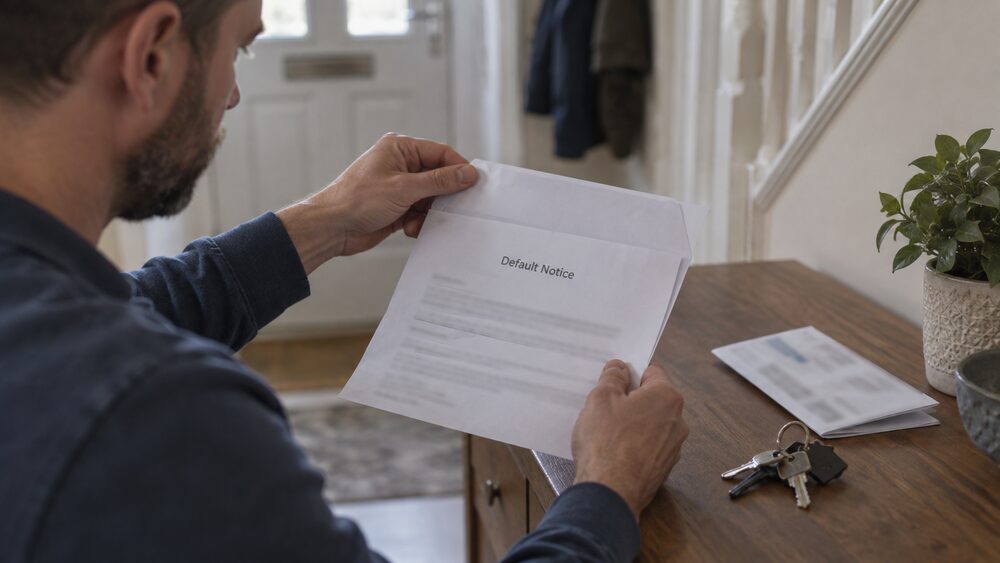
A default notice is a formal warning letter saying you have missed payments on your mortgage or loan, giving you a period to pay your arrears19. Default notices apply to debts regulated by the Consumer Credit Act, like credit and store cards, payday loans, personal loans and hire purchases20. The people you owe may issue a default notice during or after a payment holiday, depending on how long the holiday is4.
The sequence that leads there is well documented. Continuous non-payment can result in formal notices of arrears, and after three or four missed payments in a row, a default notice21. Debt collectors and creditors will soon think about sending a default notice if the debt is something like a credit card or buy now pay later17. Credit card companies may send a default notice if you miss three to six payments22. You get a warning letter, called a default notice, and the account defaults around 14 days later23. A default notice will negatively impact your credit rating for six years, and would be quite damaging for future financing plans21.
Two points of consumer protection are worth knowing. First, Consumer Credit Act warning letters can be sent even if a payment holiday was agreed4, so receiving one does not necessarily mean the holiday has been cancelled. Second, while it may be a requirement of the Consumer Credit Act to issue a default notice, the Information Commissioner's Office has confirmed there is no data protection obligation on a lender to issue a default notice before marking an account as in default on your credit file24. The guide to defaults recorded without a default notice covers that gap in detail.
If a default does end up on your file, your credit file will show that you did not make your agreed payments, which impacts your credit score20. Free, impartial help is available: StepChange and National Debtline offer free debt advice, and the guide to debt solutions and your credit file explains what each option does to your record.
Taking a payment holiday today: eligibility and how to ask
There is no scheme today, but payment holidays and similar forbearance still exist as individual arrangements with lenders. You may be able to request a payment holiday if you are going through financial difficulties and have spoken to your provider13. You can apply for a payment holiday from your mortgage, credit card, loan or hire purchase agreement17.
The process is broadly the same whichever debt is involved:
For a mortgage, the three steps are to speak to your lender, request a payment holiday, and let your lender decide based on your situation12. For a credit card, the provider may ask you to provide evidence of your financial difficulty and complete an affordability test13. More generally, you show your situation by giving supporting information, including your bank, local authority or landlord, and filling in an income and expenditure form based on your budget4.
Two things to hold in mind before asking. First, the people you owe do not have to agree to it4. A guest house owner who complained to the Financial Ombudsman Service when her bank refused a payment holiday was told the suitability of mortgage payment holidays was not limited to residential customers, but the decision still rested with the lender based on her circumstances25. Second, the credit file consequences described above apply: an agreed break is better than an unagreed one, but the missed payments still have to be made up and are likely to be treated as arrears4.
Applying for a mortgage after a payment holiday
A Covid payment holiday taken under the scheme should not, by itself, have stopped you getting a mortgage later, because it was not recorded as a worsening status on your credit file3. But lenders could take other information into account when making lending decisions, including information provided by applicants and bank account information3. A mortgage lender can therefore still ask on an application form whether you took a payment holiday, and the answer given on the application form needs to be accurate.
The ombudsman case of Hinesh shows what can go wrong and how it is resolved. Hinesh took a repayment holiday and shortly afterwards noticed two missed payments marked on his credit file6. His lender claimed that when he applied for the repayment holiday, it would have definitely informed him how it would affect his credit file, and its internal policy stated a repayment holiday would be recorded on a customer's credit file6. The case illustrates that some lenders' internal policies did not match the scheme's reporting rules, and that a complaint, first to the lender and then to the ombudsman, is the route to a correction.
A few practical points for anyone in this position now:
- A credit report check before applying shows what a lender will see. The guide to checking your credit report for free explains how to do this at no cost.
- If a Covid deferral shows as missed payments, the route is a complaint to the lender first, then the Financial Ombudsman Service if it is not fixed.
- If you are currently struggling with mortgage payments, lenders can be contacted early. The ombudsman can help with complaints about how a lender has handled financial difficulties with a mortgage15, and free debt advice is available from charities such as StepChange.
- If you are on a debt management plan, you can still get a mortgage holiday unless you have mortgage arrears12.
The wider picture on how lenders read your file is covered in how lenders decide whether to accept you, and the factors that move your score in what affects your credit score.
Sources25 cited
- Coronavirus: what it means for mortgages, savings, borrowing and benefits Which?, 2020-10-31
- One week left to apply for a payment holiday on your mortgage, credit card or loan Which?, 2020-10-25
- Finalised guidance: credit cards, coronavirus, updated temporary guidance for firms Financial Conduct Authority, 2020-07
- Payment holiday for debt repayments StepChange Debt Charity, 2026-09-25
- FCA Handbook glossary: payment holiday Financial Conduct Authority, 2026-09-26
- Hinesh's mortgage repayment holiday marked on credit file Financial Ombudsman Service, 2026-09-26
- Coronavirus: how to apply for a car finance payment holiday Which?, 2020-08-14
- Credit cards and retail revolving credit: coronavirus payment deferral guidance Financial Conduct Authority, 2020-11
- Scottish Housing Market Review Q2 2022 Scottish Government, 2022-06-30
- Household Finance Review 2020 Q3 UK Finance, 2020
- What next for mortgage payment holidays Building Societies Association, 2020-05-22
- Mortgage payment holidays StepChange Debt Charity, 2026-09-25
- Credit card payment holidays StepChange Debt Charity, 2026-09-25
- Mortgage arrears or payment difficulties nidirect, 2025-11-07
- Financial difficulties with mortgages Financial Ombudsman Service, 2026-09-26
- Mortgage arrears StepChange Debt Charity, 2026-09-25
- Debt collection StepChange Debt Charity, 2026-09-25
- Get advice about managing credit Welsh Government, 2022-11-18
- Repossession letters Shelter Scotland, 2025-08-13
- Default notices and missed payments StepChange Debt Charity, 2026-09-25
- Car finance Advice NI, 2026-09-26
- Credit card debt Shelter Cymru, 2026-08-30
- Statute barred debt StepChange Debt Charity, 2026-09-25
- Credit Information Commissioner's Office, 2026-09-25
- Guest house owner complains when her bank wouldn't grant her a payment holiday Financial Ombudsman Service, 2026-09-26


 MoneyHelperFree, impartial money and pensions guidance, set up by government
 Financial Ombudsman ServiceFree, independent help when a complaint about a firm is not put right
 Citizens AdviceFree advice on money, consumer and legal problems in England and Wales
 StepChangeFree debt advice and solutions from a charity
 GOV.UKOfficial information on tax, benefits and government services