
When a company goes into administration, the people who run it lose control and an insolvency practitioner takes over. For customers, that usually means three things at once: gift cards and vouchers may stop being accepted, orders already paid for may never arrive, and any money the company owes you puts you at the back of a long queue of creditors. None of that is automatic, and none of it is hopeless, but the routes that work are the ones that go around the failed business rather than through it.
The strongest of those routes is your card provider. If goods are not delivered, arrive damaged or not as described, or the trader goes out of business, you may be able to use chargeback to ask your provider to reverse the payment1. It is best to claim as soon as you realise there is a problem, as you will usually need to claim within 120 days2. Gift cards are a weaker position still: some vouchers expire after as little as 12 months, and others carry restrictions on where or how they can be spent3. Where the failed business is a regulated bank or building society, a different system takes over, and the Financial Services Compensation Scheme typically pays depositors within seven days of the firm failing4.
What administration means for customers
Administration is an insolvency process. An administrator is appointed to take control of the company, and their duty is to the body of creditors as a whole, not to any individual customer. In practice that means the administrator decides, day by day, whether stores keep trading, whether orders go out, and whether gift cards are still accepted. Those decisions can change without notice, which is why a gift card that works on Monday can be refused on Friday.
As a customer, your position is that of a creditor: the company owes you goods, a service, or money, and you are claiming alongside everyone else it owes. Unsecured customers, which is what most shoppers and depositors of goods are, rank behind the secured creditors and the costs of the insolvency itself, so waiting for the administrator to pay out usually produces little or nothing. That is why the practical advice throughout this page is to use routes that do not depend on the failed company's own cash: chargeback through your card provider, or the compensation schemes that exist for regulated financial firms.
It is worth being clear about the word itself, because "administration" is used in two quite different senses. When a person dies, the administration of their estate is the ordinary process of gathering in and distributing their assets, and an executor or administrator may need probate or letters of administration if the estate is worth above a certain amount7. That has nothing to do with a company going bust. This page is about corporate insolvency only.
One further point matters if the failed business was a financial firm. The Financial Conduct Authority's Consumer Duty applies across all of a firm's regulated activities, from high-level strategic planning to individual customer interactions8, and a firm whose authorisation has been cancelled can no longer carry out regulated financial activities at all, in which case the FCA's guidance is to avoid dealing with it9. Checking a firm's status on the FCA Register tells you which situation you are in.
Gift cards and vouchers can lose their value when a store fails
A gift card is, in legal terms, a promise by the retailer to supply goods or services later. The money you paid for it has already been spent by the company. When the company enters administration, the administrator inherits that promise but not an obligation to keep it, and honouring gift cards means giving away stock or cash that other creditors are also chasing. Administrators sometimes continue accepting cards for a period, sometimes accept them only against part of the purchase price, and sometimes stop accepting them immediately. None of those outcomes is guaranteed, and none can be relied on in advance.
The practical consequence is that a gift card balance should be treated as money at risk from the moment the retailer's failure is announced. If the card still works, spending it promptly is the only use of it that is fully within your control. If it does not, the fallback routes are the same as for any other payment to a failed trader: chargeback, if the card itself was bought with a debit or credit card, works on the basis that the trader has gone out of business1.
Store cards deserve a separate word of caution. They typically have lower credit limits and provide rewards for spending with that particular retailer10, which ties the value of the card to the fortunes of one business. A store card is a credit agreement, so it does not simply vanish when the retailer fails; the debt side of it is an asset that administrators routinely sell on to a third party, which then collects the balances. If you hold a store card with a failed retailer, keep making the agreed payments unless told otherwise, and take advice before withholding anything, because the credit agreement survives the shop.
Gift card rules: expiry dates, terms and change
Before a retailer even fails, the terms attached to gift cards can quietly reduce what they are worth. Some vouchers expire after as little as 12 months, while others have restrictions on where or how they can be spent3. An expiry date that passes while the retailer is still trading leaves you with no claim at all, and a restriction on where a voucher can be spent can make it unusable in the parts of a group that survive an insolvency.
Because the rules are set by each retailer's own terms rather than by a single UK-wide law, the practical approach is to read the card or voucher when you receive it. The things worth checking are:
- The expiry date, if there is one, and how long it gives you.
- Where the card can be spent, if the retailer has more than one brand or channel.
- Whether change is given, and in what form, if the purchase costs less than the card's value.
- Any restrictions on sale items or online orders.
Keep the receipt when a card is bought, and keep the card itself even after it is refused. A refused card with a balance on it is the evidence you need if you later claim through chargeback or write to the administrators as a creditor.
Not every voucher in circulation is a retailer's promise. The government's Payment Exception Service, used where someone cannot be paid in the normal way, lets people get vouchers that can be swapped for cash at a Post Office or PayPoint outlet, often found in a corner shop, or have the money loaded onto a payment card or sent by email or text message11. Those vouchers are backed by the state, not by a shop, and they keep their value regardless of what happens to any retailer.
Deposits and undelivered orders: getting your money back
If you paid a deposit, paid in full for furniture or a holiday item, or bought from a shop that took your money and then stopped trading, the goods may never arrive. Your claim against the company is a claim in the insolvency, and as an ordinary customer you are near the back of the queue. The route that usually works instead is chargeback: if goods are not delivered, arrive damaged or not as described, or the trader goes out of business, you may be able to use it to ask your card provider to reverse the payment1.
Chargeback is not a legal right in the way that some statutory protections are; it is a scheme operated by the card networks, and the provider assesses the claim on its facts. What it needs from you is evidence: the receipt or order confirmation, proof of what was promised and when, and a record of what happened after the failure. Claims are made to the bank or card issuer you paid from, not to the failed trader, and the deadline is short. It is best to claim as soon as you realise there is a problem, as you will usually need to claim within 120 days2.
A few practical points shape how well a claim goes:
- Pay by card where you can. The protection attaches to the payment method, not to the purchase.
- Claim quickly. The 120 day window is the usual limit, and it runs from when you became aware of the problem2.
- Keep everything. Order confirmations, screenshots of the retailer's website, and correspondence with the administrators all support the claim.
- Do not stop at the first refusal. A card provider that rejects a chargeback can be taken to the Financial Ombudsman Service, which is free for consumers5.
If you paid by credit card, Section 75 protection may also apply to larger purchases, and it works alongside chargeback rather than instead of it. The dedicated pages on statutory rights when you buy and on complaining about a bank cover those routes in more detail.
When the business is a regulated financial firm
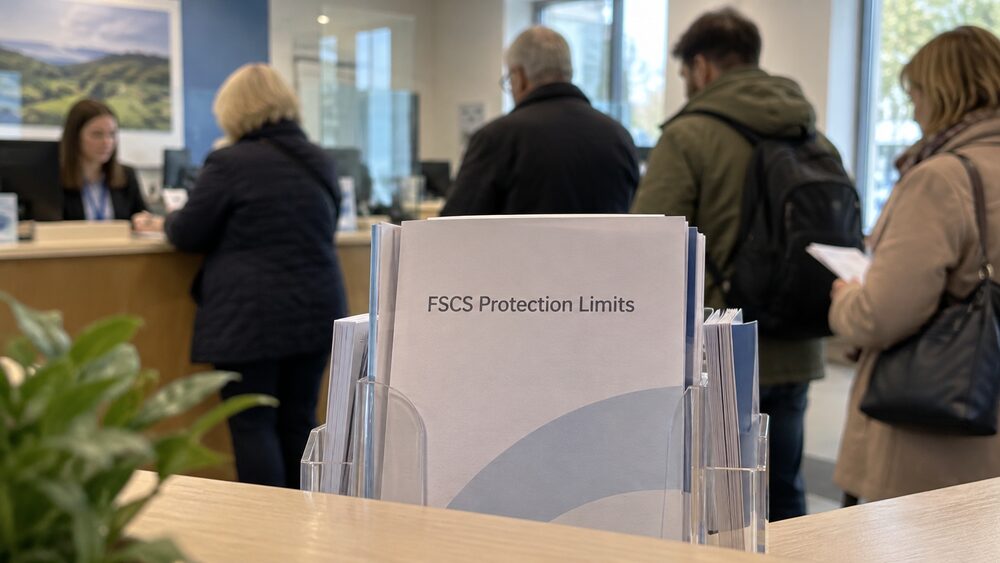
A failed shop and a failed bank are different events. When a bank, building society or credit union authorised by the Prudential Regulation Authority fails, the Financial Services Compensation Scheme steps in. The technical term for the firm failing is a declaration of default: once the FSCS is satisfied that a firm is unable, or likely to be unable, to pay claims against it, it declares the firm in default, which opens the way for the firm's customers to claim compensation12. For depositors, the money usually arrives quickly: payments to account holders of failed banks, building societies and credit unions are typically made within seven days of the firm failing, although complex claims may take longer4.
The order of operations matters if the failed firm gave you advice rather than holding your money. If you think you received unsuitable advice, for example to transfer a pension, and the adviser is still trading, you complain to the adviser first and then to the Financial Ombudsman Service; the FSCS handles claims where the adviser has failed13. The two schemes are explained side by side on FSCS vs Financial Ombudsman Service, and the limits are on FSCS compensation limits.
Where an insurance provider fails, an insolvency practitioner takes over. If a replacement policy cannot be arranged, the practitioner will calculate refunds for policyholders based on the remaining portion of their policy14. And where the customer of a failed firm is themselves in bankruptcy, a separate rule bites: when a consumer enters bankruptcy, their assets, including any right to compensation, pass to the trustee in bankruptcy15. A windfall owed to a bankrupt person is not theirs to claim personally.
Two boundaries on the regulated side are worth knowing. The Payment Services Regulations, which govern many payment firms, do not apply to credit unions, municipal banks or the National Savings Bank16. And NS&I, which is not a bank in the ordinary sense, states that it will normally refund unauthorised payments, including missed interest or prizes, unless the customer failed to take reasonable care or did not report lost security details promptly17. If a firm you deal with has stopped being authorised, the FCA's guidance is to avoid dealing with it, and its status can be checked on the FCA Register9.
Claim deadlines to keep in mind
Deadlines are what catch people out after a business fails, because the most useful routes expire while customers are still waiting to see what the administrators will do. The ones to diary are:
| Deadline | What it applies to |
|---|---|
| Usually 120 days | Chargeback claim, from realising there is a problem2 |
| Up to 8 weeks | Most complaints, for a business to consider and respond5 |
| 15 business days, then 35 | Holding response and final response for certain payment and e-money complaints in exceptional circumstances18 |
| 30 days | An organisation acknowledging a data protection complaint, starting the day after it receives it19 |
| Eight weeks | A claims management company giving its final response to a complaint20 |
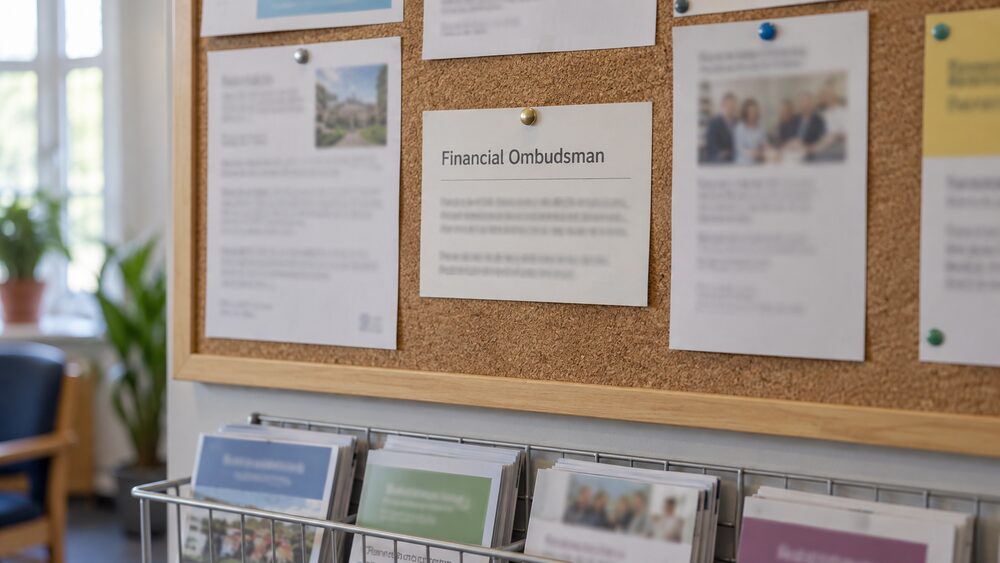
The eight week rule has a follow-on that matters. If a business does not send you a final response letter within eight weeks, or you are unhappy with its response, you can bring the complaint to the Financial Ombudsman Service21. That is the pivot from complaining to the firm to getting an independent decision, and it is free.
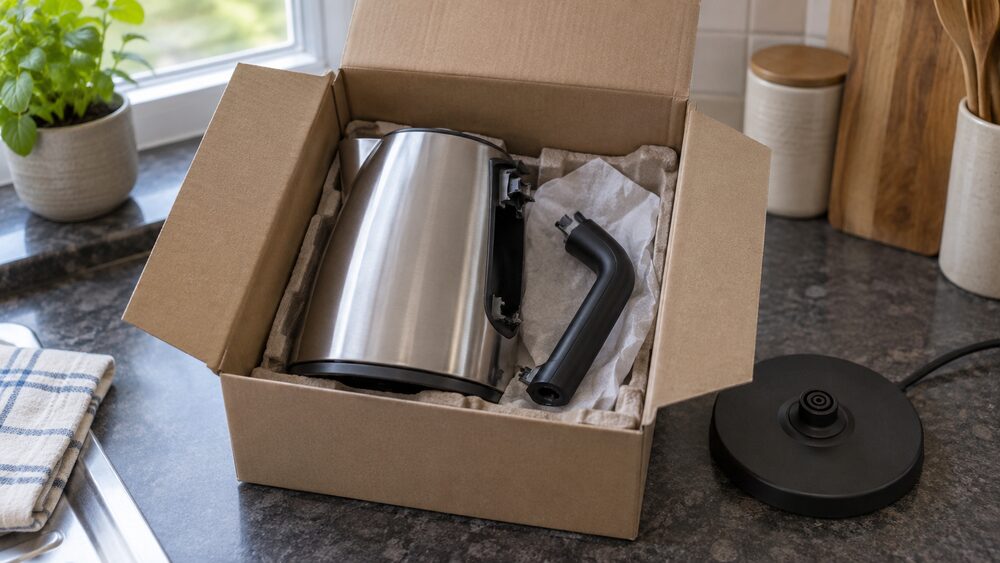
The main route to a refund after a trader fails, and where it leads if the card provider refuses.
How to make a claim and what happens if it is refused
The process after a business fails is best done in a fixed order, because each step preserves the option of the next:
- Gather the evidence. Receipts, order confirmations, the gift card itself, and anything the retailer or its administrators sent you.
- Claim through your card provider first. Ask for a chargeback on the basis that the trader has gone out of business or the goods were not delivered1. Do this within the 120 day window2.
- Register as a creditor if asked. Administrators publish notices explaining how customers with claims should register them. This rarely pays much, but it costs little and keeps your claim alive.
- Escalate a refusal. If the card provider rejects the chargeback, complain to it, and if there is no final response within eight weeks or you are unhappy with the response, take the complaint to the Financial Ombudsman Service21.
- Consider court as a last resort. If someone owes you money and ignores a formal demand for it, you can apply to a court to make an individual bankrupt or get a company wound up22. Against a company already in administration this is rarely worthwhile, but against a sole trader who has simply stopped paying it is an option.
If you used a claims management company to pursue a claim and are unhappy with how it handled things, ask the company for a copy of its complaints procedure or check its website, contact it with your complaint so it has a chance to put things right, and keep a record of your complaint23. Claims management companies must give their final response within eight weeks20, and complaints about them can also be escalated.
A refusal from a card provider is not the end of the matter. The ombudsman looks at the complaint afresh and can tell the provider to pay, and its service is free. The pages on taking a complaint to the Financial Ombudsman Service and on small claims court set out those routes, with the Scottish and Northern Irish equivalents linked from the same section.
Where the protection stops
The routes on this page have edges, and it is better to know them before you rely on them.
The first edge is the payment method. A continuous-payment authority, the recurring card payment used for subscriptions and regular instalments, is not covered by any bank guarantee6. If a business you pay by recurring card payment fails, the payments simply stop, and any money already taken is subject to the same chargeback and insolvency routes as any other payment. The rules on when a payment goes wrong cover the separate protections for unauthorised transactions, where a payment provider must refund the amount and restore the account to the state it would have been in had the transaction not taken place24.
The second edge is who the failed business was. The Payment Services Regulations do not apply to credit unions, municipal banks or the National Savings Bank16, so the protections built on those regulations do not reach every payment firm in the same way. And the FSCS protects customers of authorised deposit takers, advisers and insurers; it does not protect the customers of ordinary retailers, which is why a gift card from a failed shop has no scheme behind it at all. What the FSCS does and does not cover is set out on what the FSCS does not cover.
The third edge is timing. Chargeback usually needs to be claimed within 120 days2, and gift cards can expire after as little as 12 months even when nothing has gone wrong3. Waiting to see whether an administrator will pay out is the single most common way customers lose the chance of a refund through a faster route.
Where a route has stopped, the remaining options are the insolvency process itself, the ombudsman where a provider mishandled a claim, and the courts. Free, impartial help is available at any point: MoneyHelper for everyday money questions, the Financial Ombudsman Service for complaints about financial firms, and the general guidance on your options if you are owed money for everything else.
Sources24 cited
- Safer ways to pay Consumer Council Northern Ireland
- Shop safely online MoneyHelper, 2026-09-25
- How to track down forgotten money Which?, 2026-07-11
- What is the Financial Services Compensation Scheme? Bank of England, 2025-12-01
- How to complain Financial Ombudsman Service, 2026-09-25
- Continuous-payment authorities and bank guarantees Financial Ombudsman Service, 2009-12
- Debt when someone dies nidirect, 2026-06-26
- Treating customers fairly: Help to Buy Wales Welsh Government, 2026
- How to check a firm or individual is authorised Financial Conduct Authority, 2023-03-20
- Key features of the credit card market Financial Conduct Authority, 2015
- Choosing a bank account for your Universal Credit payment MoneyHelper, 2026-09-25
- Who is involved in the claims process Financial Services Compensation Scheme, 2026-09-25
- Defined benefit pension transfer claims Financial Services Compensation Scheme, 2026-09-25
- Who is involved in the claims process Financial Services Compensation Scheme, 2026-09-25
- The ombudsman's approach to redress for mis-sold PPI Financial Ombudsman Service, 2026-09-27
- The Payment Services Regulations 2017 legislation.gov.uk, 2026
- Green Savings Bonds brochure NS&I, 2025-07
- DISP 1.6: complaints time limits FCA Handbook, 2026-06-01
- How to make a data protection complaint Information Commissioner's Office, 2026-06-29
- Ordering a leaflet: complaints about claims management companies Claims Management Ombudsman, 2026-09-27
- Debt collecting: how the ombudsman can help Financial Ombudsman Service, 2026-09-26
- Options if you are owed money GOV.UK, 2026-09-27
- Complain about a claims company GOV.UK, 2026-09-26
- The Payment Services Regulations 2017, Part 7 legislation.gov.uk, 2026



 Citizens AdviceFree advice on money, consumer and legal problems in England and Wales
 Financial Ombudsman ServiceFree, independent help when a complaint about a firm is not put right
 MoneyHelperFree, impartial money and pensions guidance, set up by government
 Citizens Advice ScotlandFree advice across Scotland