Yes, in most cases. If your funeral plan provider goes out of business, the Financial Services Compensation Scheme (FSCS) can step in. The rule that decides whether you are covered is the date the provider failed, not the date you bought the plan: the provider must have gone out of business on or after 29 July 2022, and the plan must have been sold by a firm regulated by the Financial Conduct Authority (FCA)1.
Yes, in most cases. If your funeral plan provider goes out of business, the Financial Services Compensation Scheme (FSCS) can step in. The rule that decides whether you are covered is the date the provider failed, not the date you bought the plan: the provider must have gone out of business on or after 29 July 2022, and the plan must have been sold by a firm regulated by the Financial Conduct Authority (FCA)1.
That date matters because funeral plans only came under FCA regulation, and therefore under the FSCS, from 29 July 2022. Plans bought before then are still included, provided the provider failed on or after that date3. The protection is capped at £85,000 per eligible person, per firm, for all types of funeral plan claims1.
Where a provider has failed, the FSCS does not simply send a cheque. It first tries to arrange for another regulated provider to take on the plan, on terms that match the original in all material respects. If that is not possible, or the customer prefers it, compensation is paid instead5.
FSCS protection covers funeral plans when the provider fails
The FSCS covers a range of financial products when a UK-authorised firm fails, including deposits, insurance, investments, pensions, mortgage advice and certain other regulated services7. Funeral plans were added to that list on 29 July 2022, when the FCA took over their regulation5.
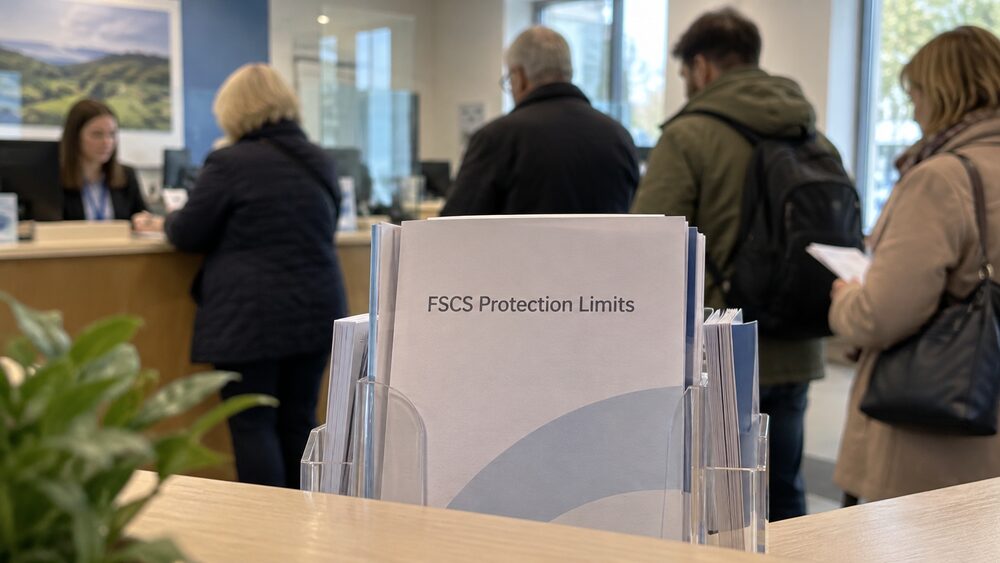
For a funeral plan claim to qualify, two things must be true. The provider must have gone out of business on or after 29 July 2022, and it must have been regulated by the FCA4. The FSCS describes the position for plan holders as follows:
"If you have a funeral plan and your provider went out of business on or after 29 July 2022, you may be FSCS protected."
The scheme's rules go further than paying money. Where a funeral plan provider is in default, the FSCS may make arrangements to secure continuity of the contract if it is reasonably practicable, would benefit eligible claimants generally, and any extra cost over compensation is likely to be justified by the benefits6. Where it does arrange a replacement, it must seek to secure a funeral on terms corresponding in all material respects to those in the original plan6.
In practice, that means the first question after a provider fails is not "how much will I get?" but "can this plan be kept going?" The FSCS will ask the customer whether they want replacement cover, and if they do not, they can receive compensation instead5.
Cover starts from the provider's failure date, not your purchase date
This is the point that catches people out. The date that decides whether the FSCS can help is the date the provider went out of business, not the date on the plan. A plan taken out in 2005 from a provider that failed in 2023 is covered. A plan taken out in 2021 from a provider that failed in 2021 is not3.
The same principle runs through other compensation schemes. The Pension Protection Fund, for example, only applies to companies and employers that went bust on or after 6 April 20058. The date the scheme started is the dividing line, and events before it fall outside.
For funeral plans, the dividing line is 29 July 2022. The FSCS states plainly that providers that went out of business on or after that date are covered, including plans bought before it4. The scheme's own consumer leaflet repeats the same wording, so the message is consistent across the FSCS's published material3.
If you are trying to work out which side of the line your provider falls on, the failure date is a matter of public record. The FSCS publishes the firms it is handling, and the FCA's register shows whether a firm is authorised.
Plans bought before FSCS cover began are included
A common worry is that an old plan, bought when funeral plans were not regulated at all, has no protection. That is not how the scheme works. The FSCS covers the provider's failure, and it applies to plans bought before 29 July 2022 as well as after3.
The FSCS's full list of protected products now runs to banks and building societies, credit unions, pensions, investments, mortgages, insurance, debt management, PPI and, from 29 July 2022, funeral plans5. Its own research describes the same scope: deposits, insurance policies, some investments, insurance broking, mortgage advice, self-invested personal pensions, pensions advice, PPI, debt management plans and funeral plans9.
What the plan itself covers is a separate question from whether the provider is protected. Most plans cover the funeral directors' costs, some cover cremation costs, and the majority only contribute to burial costs; the burial plot, flowers and catering are often not included10. That is a matter of what you bought, not of FSCS cover, and it does not change if the provider fails.
Where FSCS funeral plan protection does not apply
The £85,000 limit is the first boundary. For all types of funeral plan claims, cover runs to £85,000 per eligible person, per firm1. Most funeral plans cost far less than that, so the cap rarely bites, but it is the ceiling on what the scheme will pay.
The second boundary is the failure date. A provider that went out of business before 29 July 2022 is outside the scheme, however long you held the plan3.
The third is regulation. The provider must have been regulated by the FCA4. Firms that are not on the Financial Services Register must not sell or carry out funeral plans in the UK; they will either have transferred their plans to an authorised provider or begun winding down their business11.
It also helps to know what the FSCS does not cover at all, because funeral plans sit inside a wider scheme with clear edges. Credit insurance, marine insurance and aviation insurance claims are not eligible for FSCS protection12. Nor does the FSCS cover payment services: when Premier Payment Solutions Ltd entered liquidation, the FCA noted that the FSCS only applies to certain types of activity and does not cover payment services13. Defined benefit pension schemes themselves are not covered either, though the advice to transfer out of one is14.
What happens to your funeral plan if the company goes bust
The process has two possible endings, and the FSCS decides which one applies.
The preferred outcome is continuity. Under the scheme rules, the FSCS may make arrangements to secure continuity of the funeral plan contract where the contract is with a firm in default, it is reasonably practicable, it would benefit eligible claimants generally, and the extra cost over compensation is likely to be justified by the benefits6. Where it does this, it must seek to secure a funeral on terms corresponding in all material respects to those in the original contract6. In plain terms, the funeral you were promised should still happen.
If continuity is not possible, compensation follows. The FSCS will ask the customer whether they want replacement cover, and if they do not, they can take compensation instead5.
There is a third scenario, and it is the one families fear most: the plan holder dies after the provider fails, before a replacement contract or compensation has been secured, and the insolvency practitioner cannot secure the provision of a funeral. In that case, the FSCS may be able to help with the provision of a funeral5.
The law backs this up. Section 215 of the Financial Services and Markets Act 2000 allows the compensation scheme to make provision for a firm that enters into or carries out funeral plan contracts and is unable, or likely to be unable, to satisfy claims made against it15.
What to do if your funeral plan provider goes out of business
The FSCS sets out the route clearly. A customer's nominated representative or next of kin needs to contact the named funeral director in the original funeral plan, then notify the FSCS by phone, post or live chat5.
That order matters. The funeral director is the first point of contact because the immediate question is whether the funeral can still go ahead. The FSCS then takes over the question of continuity or compensation.
There is no need to pay anyone to do this. The FSCS handles claims directly and free of charge, and its process does not require a claims management company. Where a plan is still running normally, existing plan holders can contact their provider for help with an existing plan16.
If the problem is not the provider's failure but how the plan was sold or administered, a complaint to the firm is the usual first step, and the Financial Ombudsman Service can look at disputes with firms it covers. MoneyHelper offers free, impartial guidance on financial matters.
Families dealing with a death at the same time may also be able to claim a Funeral Support Payment, a grant that does not have to be repaid but can be recovered from the estate of the person who died before any inheritance is paid out17. In Scotland, applications can be made by telephone18. One of the questions asked of callers is whether the person who died had a funeral plan or funeral insurance, so it is worth having the plan details to hand19.
Sources19 cited
- What we cover FSCS, 2026-09-25
- Funeral plans FSCS, 2026-09-25
- FSCS protected badge A5 leaflet FSCS, 2025-11-27
- FSCS protected website leaflet FSCS, 2025-11
- MPS funeral plans FSCS, 2026-09-25
- COMP3.3: The scheme in operation FCA Handbook, 2022-07-29
- Financial Services and Markets Act 2000, Part XV legislation.gov.uk, 2025-07-16
- FPCOB 14: Funeral plan redemption FCA Handbook, 2022-07-29
- FPCOB 14 (static version) FCA Handbook, 2022-07-29
- Pre-paid funeral plan providers and the Financial Services Compensation Scheme GOV.UK, 2022-04-21
- Pre-paid funeral plans consultation GOV.UK, 2018-06-01
- Insurance FSCS, 2026-09-25
- Flood insurance FSCS, 2026-09-25
- Guide to investment protection FSCS, 2026-09-25
- Investment protection guide FSCS, 2026-09-25
- DB transfers FSCS, 2026-09-26
- Pensions: nurse FSCS, 2026-09-25
- Premier Payment Solutions Ltd enters liquidation FCA, 2026-09-14
- Post Office Prepaid Funeral Plan Post Office, 2026









 Citizens AdviceFree advice on money, consumer and legal problems in England and Wales
 Financial Ombudsman ServiceFree, independent help when a complaint about a firm is not put right
 MoneyHelperFree, impartial money and pensions guidance, set up by government
 Citizens Advice ScotlandFree advice across Scotland