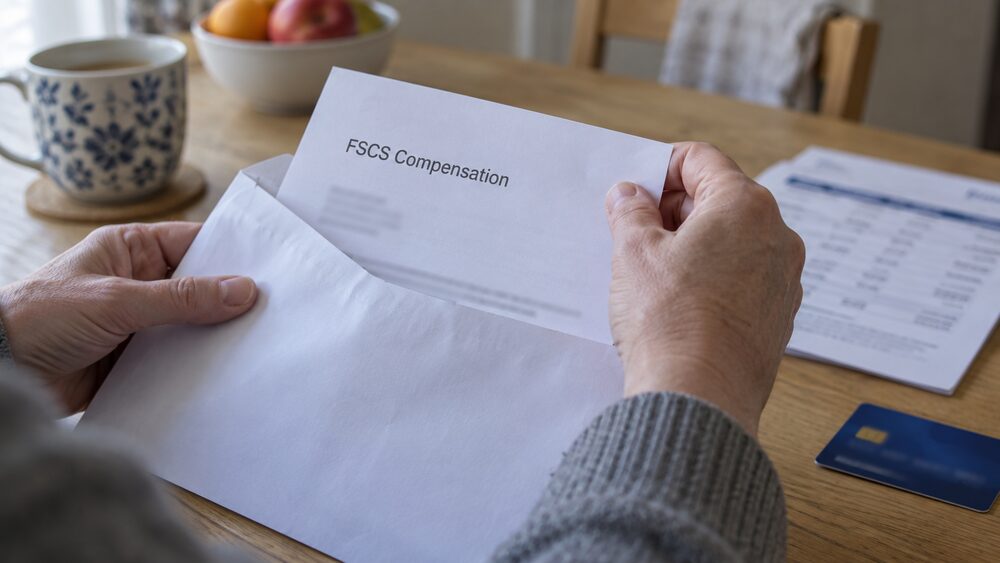
If the Financial Services Compensation Scheme turns down your claim, or pays less than you expected, you can ask for that decision to be looked at again. The FSCS runs its own appeal process, and it is free. You have three months from the date of the decision to apply, and the appeal is handled by someone who was not involved in the original decision1.
If the Financial Services Compensation Scheme turns down your claim, or pays less than you expected, you can ask for that decision to be looked at again. The FSCS runs its own appeal process, and it is free. You have three months from the date of the decision to apply, and the appeal is handled by someone who was not involved in the original decision1.
The process changed on 17 February 2026. Decisions issued on or after that date go through a one-stage appeals process, where previously there were two stages3. For older decisions, customers had three months from the claim decision to apply for an appeal and another three months from the appeal decision to apply for an escalated appeal3.
It helps to know at the outset what an appeal can and cannot do. It is a route for challenging the decision on your claim, not a second opinion on whether the firm failed or whether your loss was covered. If your complaint is about how the FSCS treated you rather than the outcome, that goes down a separate complaints route, and if you are still unhappy at the end of the appeal process you may be able to challenge the decision in the High Court through judicial review4.
What an FSCS decision covers and why a claim can be turned down
An FSCS decision is not only a yes or no on compensation. It covers decisions to accept or reject a claim, the amount of compensation, the terms on which a payment is made, and the exercise of FSCS discretions1. Each of those can be appealed, which matters if your claim was accepted but the figure was lower than you believe it should be.
The FSCS first has to satisfy itself that the firm in question has actually failed, meaning it cannot meet claims against it, before it goes on to decide whether there is evidence of a protected claim6. A claim can then fall down for reasons that have nothing to do with the firm's failure. The type of product may sit outside the scheme: credit insurance, aviation insurance and marine insurance are not eligible for FSCS protection7. The basis of your claim also matters. The FSCS defines this as the civil liability you rely on when bringing your claim, for example negligence, breach of contract, misrepresentation or breach of the FCA Rules1.
Some decisions are not final and so cannot be appealed at all. Interim decisions and the postponement of payment under COMP 9.2.2(2)R are not final decisions for appeal purposes3. If you have received something that reads as a holding position rather than a decision, the appeal clock has not started.
If the firm or adviser you are complaining about is still trading, the FSCS is not the right route in the first place. In that situation you can complain to the Financial Ombudsman Service instead8. The ombudsman can look at a complaint if you feel you were given the wrong advice by an adviser or firm regulated by the Financial Conduct Authority9.
Asking the FSCS to review its decision
The appeal is made by email to appeals@fscs.org.uk, identifying the parts of the decision you are challenging and providing all the information needed3. The FSCS will let you know it has your appeal within two working days, and will try to get back to you within five working days on email contact about a claim decision2. Your appeal is reviewed by someone who was not involved in deciding your original claim2.
The time limit is strict. It runs for three calendar months from the date of the decision you are appealing, and it is not different if bank holidays fall within that period1. The FSCS gives the example of a decision letter dated 1 March 2024 sent by post, where the three-month time limit to appeal ends at midnight on 1 June 20241. Any request to appeal outside the time limit requires the approval of the Chief Customer Officer or Chief Counsel, or a member of staff delegated by them1.
The FSCS has said it is satisfied that the updates to the appeal policy are reasonable, proportionate and consistent with its responsibilities under the European Convention on Human Rights1. It also has the power to make arrangements for appeals, including under section 214(1)(h) of the Financial Services and Markets Act 20003.
What evidence should I send when asking for a review?
The strongest appeal is one that was prepared before the original claim was submitted, because the FSCS expects all relevant evidence and grounds to be included at that point1. If you are adding something at the appeal stage, it has to clear a high bar.
New evidence must meet three conditions: it was not available at the time you made your original claim, it would be likely to have an important influence on the outcome of the appeal, and it presents as credible1. All three need to be satisfied, not just one.
What counts as useful evidence depends on the claim. In disputes about insurance damage, the Financial Ombudsman Service has described the kind of material that helps as evidence of expert advice, photos of the damage, a report including photos from a surveyor or loss adjuster, and a report from a specialist company10. In benefit disputes, which run on different rules, the equivalent list includes a medical report from your GP or consultant, bank statements, extracts from relevant Council Tax legislation, and case law to support the appeal11. The principle carries across: documents that speak to the specific reason the decision went against you.
If you are asking for a decision to be reconsidered in a different scheme, the request usually has to be made in writing, with reasons explaining why you consider the decision is wrong and any new information relating to your injury or illness12. The FSCS route is by email rather than a form, but the same discipline applies: say which parts of the decision you dispute and why.
How to make a complaint about the FSCS, step by step
A complaint about the FSCS is a different thing from an appeal. It is about how the organisation handled your claim or the service you received, not about whether the decision itself was right. The FSCS may refuse to escalate complaints that only relate to the decision outcome4.
- Complain to the FSCS directly, over the phone or in writing, or by using the contact us form4.
- The FSCS aims to respond within 20 working days4.
- If you are still unhappy about claim handling or service, you can escalate your complaint to the independent investigator4.
- The investigator's report goes to you, to the FSCS Board, and is presented to the Chief Customer Officer and Chief Counsel4.
The distinction matters because people often reach for the complaints route when what they actually want is the decision changed. If the outcome is the issue, the appeal is the mechanism, and the three-month deadline applies to it. If the way you were treated is the issue, the complaints route is open and the 20-working-day response target applies.
The FSCS also has discretion not to accept large volume appeals, and expects professional representatives to meet conditions set out in the appeal policy3. That is aimed at claims management firms and similar representatives rather than individual consumers, but it is worth knowing if someone is offering to run an appeal on your behalf.
Taking a complaint further: the independent reviewer
The independent investigator is the escalation point for service complaints. The investigation is independent of the team responsible for your claim4. The investigator sends a copy of their report to you, sends a copy to the FSCS Board, and presents their report to the Chief Customer Officer and Chief Counsel4.
This is not the same as an appeal. The investigator is looking at how the claim was handled, not re-deciding whether the claim should be paid. Where a complaint is about the decision itself, the FSCS may decline to escalate it, and the appeal process is where that argument belongs4.
Beyond the FSCS, the wider pattern in UK dispute resolution is that a complaint goes first to the organisation, then to an independent scheme. The Financial Ombudsman Service describes its own model in similar terms: consumers may complain to the firm and seek redress from it, and refer the complaint to the ombudsman if the firm does not satisfy the complaint and it is appropriate13. Other schemes follow the same shape. In Scotland, for example, an applicant who is still unhappy after a Scottish Welfare Fund review decision can ask the Scottish Public Services Ombudsman for an independent review14. Where a decision is made without human involvement, the pattern is again the same: complain to the organisation first, and if you remain dissatisfied you can complain to the Information Commissioner's Office, and you can also seek to enforce your rights through the courts15.
Can I appeal an FSCS decision to the Financial Ombudsman Service?
No. The ombudsman is not an appeal body for the FSCS. It handles complaints about firms that are still trading. If the adviser is still trading, you can complain to the Financial Ombudsman Service8. If you think you might have received unsuitable advice to transfer your pension and the adviser is still trading, you would complain to the adviser first and then contact the ombudsman; the FSCS handles claims where the adviser has failed16.
The two schemes also have different limits. The ombudsman can award up to £455,000 plus interest in maximum compensation on complaints referred on or after 1 April 2026 about acts or omissions on or after 1 April 201917. The FSCS limit depends on the type of claim, and is set for it by the FCA and the Prudential Regulation Authority18.
There is one further difference worth knowing. Neither side can appeal an ombudsman's final decision to another ombudsman or to court just because they disagree with it19. Consumers can still go to court if they do not want to accept the ombudsman's decision20. The FSCS route ends differently, with judicial review as the possible next step rather than a fresh hearing.
Can I take the FSCS to court over its decision?
At the end of the appeal process, if you are still unhappy with the FSCS's decision, you may be able to challenge it in the High Court through a process called judicial review2. This is a review of the lawfulness of the decision-making, not a re-run of your claim on its merits, and it is a significant step.
It is also the end of the line rather than a parallel route. The internal appeal comes first, and judicial review is what may be available after it2. If you are considering it, the practical questions are whether the FSCS applied its own policy correctly and whether the process was fair, rather than whether you disagree with the outcome.
Where challenging an FSCS decision has limits
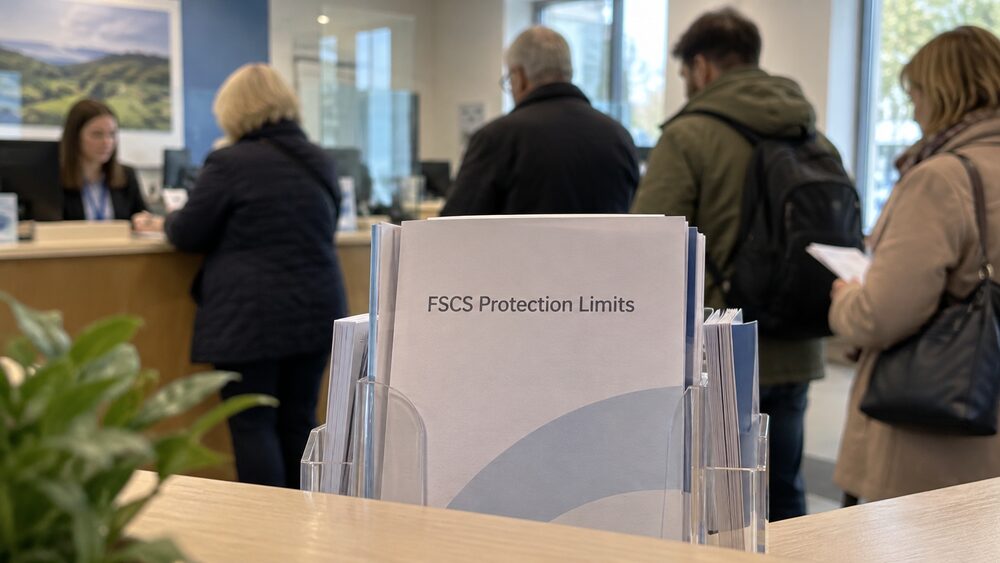
The appeal process cannot change the rules the FSCS works to. Compensation limits are set for the FSCS by the FCA and the Prudential Regulation Authority18. For bank, building society and credit union failures the maximum is £120,000 per person, per banking licence21. For other types of claim the limit is £85,00021. Joint accounts are covered up to £240,00022. Where joint account holders are acting as business partners, the business partnership is entitled to a single claim of £120,000, not one claim per business partner23.
The type of product can also put a claim outside the scheme entirely, and no appeal can change that. Credit insurance, aviation insurance and marine insurance are not eligible for FSCS protection7. Where a product is covered, the level of protection varies: whole of life assurance claims are covered at 100%, while warranty claims are covered at 90%24.
There is a further limit on new arguments. Exceptional circumstances do not include a new legal basis of claim becoming available to the customer after the time limit has expired, for example following a court judgment that changes the law on an issue relevant to the claim1. A change in the law after your deadline does not reopen your appeal window.
If you are dealing with a failed firm and want to understand the wider picture, the FSCS explained page sets out how the scheme works, and FSCS compensation limits covers the caps in more detail. If your complaint is about a firm that is still trading, taking a complaint to the Financial Ombudsman Service explains that route, and how to complain to a financial firm covers the first step. Free, impartial help is available from MoneyHelper and from debt advice charities if the failure has left you in financial difficulty.
Sources24 cited
- Appeals process FAQ FSCS, 2026-09-25
- Appeal a claim decision FSCS, 2026-09-25
- Appeals FAQ FSCS, 2026-09-25
- Complaints FSCS, 2026-09-25
- FSCS and the Financial Ombudsman Service FSCS, 2026-09-25
- Processing claims FSCS, 2023-06-22
- Flood insurance FSCS, 2026-09-25
- Pensions FSCS, 2026-09-25
- Transfers from personal pension arrangements Financial Ombudsman Service, 2026-09-26
- Accidental damage Financial Ombudsman Service, 2026-09-27
- Response from the benefit office Turn2us, 2026-07-27
- How do I challenge an Armed Forces Compensation Scheme decision Turn2us, 2025-09-09
- FCA Handbook UNFCOG 1.6 Financial Conduct Authority, 2026
- Scottish Welfare Fund statutory guidance Scottish Government, 2026-03
- Your rights relating to decisions being made about you without human involvement Information Commissioner's Office, 2026-09-25
- Defined benefit pension transfers FSCS, 2026-09-25
- Compensation Financial Ombudsman Service, 2026-10-01
- DB transfers FSCS, 2026-09-26
- How we make decisions Financial Ombudsman Service, 2026-09-27
- Alternative dispute resolution Financial Ombudsman Service, 2026-09-27
- Scams: what to look for FSCS, 2026-05-05
- Protect your money NS&I, 2025-12-01
- Banks, building societies and credit unions FSCS, 2026-09-25
- Insurance FSCS, 2026-09-25



 Citizens AdviceFree advice on money, consumer and legal problems in England and Wales
 Financial Ombudsman ServiceFree, independent help when a complaint about a firm is not put right
 MoneyHelperFree, impartial money and pensions guidance, set up by government
 Citizens Advice ScotlandFree advice across Scotland