
When a bank is bought, merged with another, or closes a brand name, the account you hold usually carries on rather than being shut down. Your money, direct debits and standing orders are typically transferred to the new owner, and in many cases your sort code and account number stay the same for a period. What changes most often are the terms of the account, the app and website you use, and, importantly, how your FSCS protection is counted.
The biggest practical effect of a takeover is usually on deposit protection rather than on day-to-day banking. FSCS protects up to £120,000 per person, per banking licence1. When two banks that used to have separate licences come under one owner, the £120,000 limit starts applying to the total you hold across both, not to each one separately2. That is what happened when Barclays took over Tesco Bank's savings, credit cards and loans in November 2024, and when NatWest acquired Sainsbury's Bank's savings, credit cards and loans in May 20253.
Recent takeovers: Tesco Bank, Sainsbury's Bank and Virgin Money
Several well-known banking brands have changed hands recently, and each shows a different pattern of what happens next.
In November 2024, Barclays took over Tesco Bank's savings, credit cards and loans. The Tesco Bank brand continues, but the £120,000 FSCS limit is now shared between the two banks3. In May 2025, NatWest acquired Sainsbury's Bank's savings, credit cards and loans, and the £120,000 limit is now shared between the two banks and Ulster Bank, which is also part of the NatWest group3.
Virgin Money customers have experienced a change of a different kind. Virgin Money wrote to customers in November 2025 explaining what the transfer to Nationwide means for them, including the key dates and documents involved7. Virgin Money itself was formed from earlier mergers: the Clydesdale and Yorkshire Bank brands are currently being phased out in favour of Virgin Money, and the merger has led to branch closures8.
The pattern across all of these is the same in one respect: the brand on the app or the high street may change, but the accounts behind it usually continue under a new owner. What customers need to watch is which banking licence now sits behind each brand, because that determines how their protection is counted.
Your account usually moves across, not closed
When a takeover or brand closure happens, the normal approach is to migrate accounts to the new owner rather than close them. Where there is an arrangement in place between the old and new bank, the old bank must transfer any account balance and make arrangements for direct debits and standing orders9. If there are mistakes or delays in the transfer process that lead to bank charges, those charges are not something the customer is expected to pay9.
Current accounts are usually handled automatically. Savings accounts are different: they cannot usually be moved automatically, and you may need to speak with your bank to arrange this11. If you hold savings with a brand that is being absorbed into another group, it is worth contacting the bank directly rather than assuming the money will simply appear in a new account.
If you switch using the Current Account Switch Service, payments sent to or from the old account are redirected to the new account for a period afterwards. TSB, for example, states that all payments sent to or from the old account will be redirected to the TSB account for at least 3 years after the switch completes12. You can still use the old account up to day 6 of the switch, but any new payments set up during the switch will not be transferred12.
What the new owner can change and how they must tell you
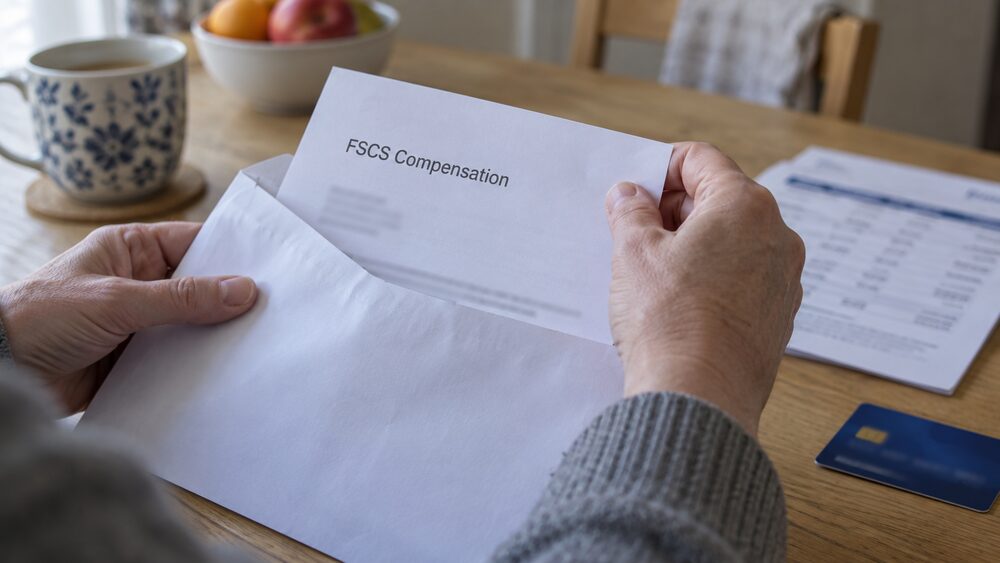
A new owner can change the terms of your account, including fees, interest rates and how the account works, but it must tell you before changes take effect. The letters you receive during a transfer are not just marketing: they set out the new terms, and ignoring them can mean accepting changes by default.
There are rules limiting how abruptly an account can be closed. For basic bank accounts, the bank must give at least two months' notice if it closes the account for breaking the terms, for example because you opened another UK bank account, have not used the account in over two years, have moved abroad, or because of fraudulent use or abuse towards staff6. For accounts opened on or after 28 April 2026, the bank should explain why it has closed the account if it can13.
If your account details change, organisations that pay you or take payments from you need to know in time. Student Finance England requires 4 working days' notice to change bank details so that a payment is made to the new account14. If you receive Universal Credit or other benefits, you can ask your new provider to transfer your balance and all your incoming and outgoing payments over, so payments follow the account rather than stopping15.
FSCS protection: up to £120,000 per person, per banking licence
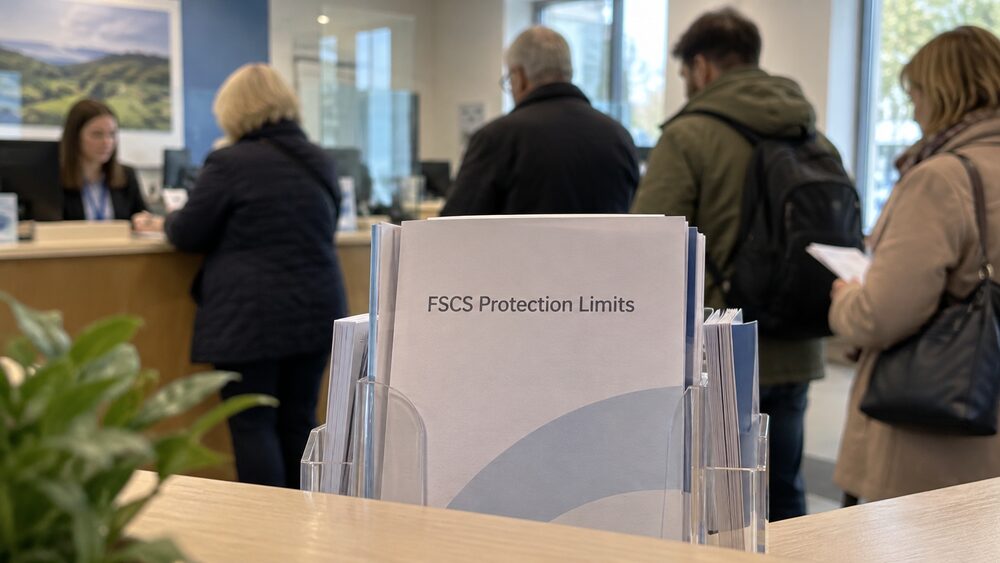
The Financial Services Compensation Scheme protects deposits up to £120,000 per person, per banking licence1. The limit rose from £85,000 to £120,000 on 1 December 2025, and the change applies to all banks, building societies and credit unions in the UK4. Before 1 December 2025 the limit was £85,000 per individual, per financial institution16.
Protection is automatic: you do not apply for it or pay for it. The FSCS describes itself as the body that gives you automatic protection up to £120,000 if your bank, building society or credit union fails17. What matters is which authorised firm holds your money. If a current account and a savings account share one authorisation number, they are classed as a single firm and the £120,000 limit is shared across both18.
You can check your own position using the FSCS protection checker, which lets you confirm whether your money is protected and how your accounts are grouped19. The FSCS also publishes lists of the banks, building societies and credit unions it covers20.
A few points about how the limit is counted:
- Per person, per licence: the limit applies to the total you hold with one authorised firm, across all accounts in your name or where you are the beneficial owner21
- Joint accounts: each account holder is protected up to £120,000 in total across all accounts they hold, regardless of the number of account holders21
- Business accounts: if your business is a separate legal entity, such as a limited company or LLP, you could claim up to £120,000 for each account, separate from your personal claim20
The full detail is on FSCS compensation limits and what the FSCS does not cover.
When both banks become one: checking your savings against the limit
This is the change that catches people out after a takeover. Before a merger, two banks each had their own licence, so you could hold up to £120,000 with each and be fully protected. Once they share a licence, the £120,000 compensation limit applies to the total amount you hold across all these accounts, not to each separate account2.
The FSCS gives a worked example: if a current account and a savings account share one authorisation number, they are classed as a single firm, and the limit for compensation is £120,000 in total, shared across both18. The same rule applies if you have an individual account and a joint account within the same banking group: the £120,000 limit applies across all these accounts, not to each separate account19.
This is exactly what happened to customers of Tesco Bank and Barclays, and of Sainsbury's Bank and NatWest: after the mergers, the £120,000 limit became shared between the banks3. Someone who had £120,000 with each bank before the merger was fully protected; afterwards, £120,000 of the combined total sat above the limit.
If you hold a joint account, note that each holder is protected separately for their share, and a joint account normally allows two or more people to receive payments, pay by debit card, transfer money and manage the account, depending on the bank22. The dedicated pages on FSCS protection when bank brands share a licence, FSCS cover on joint accounts and keeping savings above the FSCS limit covered go through the options, including spreading money across separately licensed banks.
Payments, direct debits and refunds during a transfer
Direct debits are covered by the Direct Debit Guarantee: if the bank, or an organisation you are paying, makes a mistake, your bank must refund the payment to you23. This applies during a transfer just as it does at any other time, so a direct debit taken twice or taken in error during a migration is refundable.
Under the Current Account Switch Service, the new bank must refund you for any charges incurred as a result of a direct debit or standing order not having been successfully transferred to the new account24. This is the safety net that makes switching low-risk: if a payment fails because of the move rather than because of you, the resulting charges are not yours to bear.
The mechanics of a switch are worth knowing. You can still use your old account up to day 6 of the switch, but any new payments set up during the switch will not be transferred12. After the switch completes, payments sent to or from the old account are redirected to the new account for at least 3 years12.
If a payment goes wrong in a way the switch guarantee does not cover, your bank still has duties to investigate and, in some cases, refund. The page on when a payment goes wrong sets these out.
Branch closures and access to cash after a takeover
Mergers often lead to branch closures, as the combined group closes overlapping sites. The Clydesdale and Yorkshire brands being phased out in favour of Virgin Money is one example where the merger has led to closures8. The wider picture is substantial: banks and building societies have closed 6,871 branches since January 2015, at a rate of around 53 each month, which represents 69% of the branches that were open at the start of 201525.
*A shut branch with a notice in the window, a common sight as merged groups close overlapping sites.
There are rules around access to cash. The 14 largest banks and building societies in the UK must conduct cash access assessments in response to trigger events, which can include a branch closure26. The Financial Conduct Authority has published information clarifying what these reviews can look at, added in February 202627. The aim is that a closure cannot simply remove the last source of cash in an area without alternatives being considered.
If your branch closes after a takeover, your account itself is unaffected: banking continues through the app, online and by phone, and cash access may be maintained through alternatives such as post offices or cash machines. Banks and building societies must make sure their services are accessible11, and if you rely on branch access, the closure notice should tell you what the alternatives are and how to have your say during the assessment.
Moving your account if you don't like the new bank
You are not tied to the new owner. If you do not want to bank with the group that has taken over your account, you can switch to a different bank or building society, and the Current Account Switch Service makes this straightforward24.
The process is: contact the new provider's customer services, ask it to transfer your balance and all incoming and outgoing payments, and it handles the switch, including moving direct debits and standing orders29. The steps involved are opening the new account before closing the old one, cancelling or moving standing orders and direct debits if the full switch service is not being used, returning unused cheques and cards cut into pieces, and leaving enough money to cover uncleared cheques if a balance is being transferred10.
One thing to sort out before switching is any overdraft. If your new account's overdraft covers what you owe, the funds will be sent to your old bank and you will owe the overdraft balance on the new account instead. If it is a lower amount, or you cannot get one, you will need to arrange to pay off the remainder separately before you can switch or close your old account29.
If you cannot get a standard current account, fee-free basic bank accounts exist. The largest banks have to offer them, including Virgin Money, which covers the Clydesdale and Yorkshire Bank brands30. Guidance on how to choose the right bank account and on basic bank accounts is available free from MoneyHelper31.
When you owe the new bank money
A takeover can change the relationship between money you hold and money you owe, because the new owner may bring your debts and your deposits under one roof.
If you have an overdraft or other debts on your current account and you open a basic bank account at the same bank, the bank may use the money in the new basic account to pay off the debts in the old overdrawn account10. The same applies within a group: a bank in the same banking group may use money in the new basic account to pay off debts on your old account9. If you receive benefits, tax credits or a state pension, guidance suggests considering opening a basic account at a different bank to avoid this10.
In more serious debt situations the rules are firmer. During bankruptcy, your bank is unlikely to let you keep your account if you have an overdraft or other debts with it, and any money left in your account will be given to the official receiver32. If you use a joint bank account, it will be frozen, and the bank may close it and refund half the money to the other person, or remove your name from the account32. In Scotland, with high street banks your account is likely to be closed or downgraded under sequestration, savings accounts including joint names will often be closed with funds transferred to the trustee, and a basic bank account can be opened as an alternative32.
If you are struggling with debts, free impartial help is available from debt charities such as StepChange and Business Debt Line, and the debt section of this site explains the options. Banks and building societies should have a specialist team who can offer customers additional support, which can include a payment holiday, an agreement to pause interest or charges for a set amount of time, or tailored support for managing debts33.
Interest, credit cards and loans after a change of owner
For savings, the new owner can change the interest rate, but it must tell you first, and you can usually move your money. The effect of a rate on your savings compounds over time: banks pay interest on the money you hold with them, which increases the value of your account balance, and you then get some interest on that increased amount34. A rate cut after a takeover therefore reduces not just this year's interest but the base on which future interest is earned.
For credit cards and loans, the agreement usually continues with the new owner, but terms can change if the contract allows and you are told in advance. One point that catches people: if you took out credit in your name for another person, any default on that agreement will appear on your credit file, not theirs, whoever owns the debt35. A change of owner does not change whose name the agreement is in.
If terms change in a way you were not properly told about, or the transfer itself causes a problem with your card or loan, you can complain through the bank's own process and then to the Financial Ombudsman Service, in the same way as for any other dispute.
Complaints: eight weeks, then the Financial Ombudsman
Banks and building societies are required by law to have a written complaints process which tells customers how to make a complaint5. The bank or building society must investigate your complaint and give you a clear answer within eight weeks5.
The sequence is:
- Contact the bank's customer services and make a formal complaint, following its written complaints process5
- Give the bank up to eight weeks to investigate and give a final response36
- If the bank does not respond within eight weeks, or you are unhappy with its response, take the complaint to the free Financial Ombudsman Service36
The Financial Ombudsman Service can look at complaints arising from a transfer, including problems with payments, account closures and changes to terms. One limit to know: if you decide to take the matter to court before complaining to the Ombudsman, you will not be able to complain to the Ombudsman at a later date5. The pages on how to complain to a financial firm, taking a complaint to the Financial Ombudsman Service and the eight-week rule cover the process in detail.
Scams that target customers during a bank transfer
Periods of change are opportunities for fraudsters, because customers expect letters, emails and app changes around a takeover and may be less suspicious of contact that claims to be about the move.
Banking fraud is when criminals gain access to your bank account using your personal details and passwords, and take money from your account; the stolen details are then used to access your account and make unauthorised payments37. Criminals often impersonate trusted organisations, such as banks, HMRC and broadband providers, to get this information37. A letter or call about a merger is a natural cover for exactly this kind of impersonation.
Some protections exist on the payments side. With Confirmation of Payee, banks can check the name on a new payee's account as well as the sort code and account number, which helps catch payments sent to a fraudster posing as your "new bank"38. Regulators have also warned about impersonation tactics including identity theft and account takeover, fraudulent duplicate accounts, weak credential exploitation and fraudulent death claims39.
The scams and fraud section explains the main types of fraud and where to report them, and what happens if a bank fails covers the separate question of a bank actually collapsing rather than being taken over.
Sources40 cited
- Banking licences FSCS, 2026
- Deposit protection limit FSCS, 2026
- Are my savings safe? FSCS protection explained Which?, 2025
- Important information: FSCS limit change Scotwest Credit Union, 2025
- Complaints about banks and building societies Citizens Advice, 2026
- Basic bank accounts MoneyHelper, 2026
- Nationwide transfer: key dates and documents Virgin Money, 2025
- Bank branch closures: is your local bank closing? Which?, 2026
- Getting a bank account Citizens Advice, 2026
- Getting a bank account (Scotland) Citizens Advice Scotland, 2026
- Making the most of your bank account Independent Age, 2026
- Switching your bank account TSB, 2026
- Bank accounts: what the Ombudsman can look at Financial Ombudsman Service, 2026
- Student Finance England: how to guide GOV.UK, 2022
- Choosing a bank account for your Universal Credit payment MoneyHelper, 2026
- What to do if your bank goes out of business Which?, 2025
- FSCS protected leaflet, February 2026 FSCS, 2026
- FSCS protected leaflet, November 2025 FSCS, 2025
- Check your money is protected FSCS, 2026
- Banks, building societies and credit unions we cover FSCS, 2026
- Deposit protection: banks FSCS, 2026
- Joint accounts MoneyHelper, 2026
- Regular payments: what the Ombudsman can help with Financial Ombudsman Service, 2026
- How to switch your bank account Which?, 2026
- Bank branch closures: is your local bank closing? Which?, 2026
- Bank branch closures and access to cash (CBP-8574) House of Commons Library, 2026
- Access to cash Financial Conduct Authority, 2026
- Manage and maximise your money Consumer Council, 2026
- How to open, switch or close your bank account MoneyHelper, 2026
- Safe bank accounts Business Debt Line, 2026
- How to choose the right bank account MoneyHelper, 2026
- Bank accounts after bankruptcy StepChange, 2026
- Support with living costs Carers UK Scotland, 2026
- The power of compounding Vanguard Investor, 2026
- Credit: your data rights Information Commissioner's Office, 2026
- Overdrafts and other bank debts nidirect, 2025
- Banking fraud: how to protect yourself Take Five to Stop Fraud, 2026
- Confirmation of Payee Payment Systems Regulator, 2026
- TPR urges vigilance after rise in impersonation fraud against pension savers The Pensions Regulator, 2026
- What if you're a victim of fraud? FSCS, 2026



 Citizens AdviceFree advice on money, consumer and legal problems in England and Wales
 Financial Ombudsman ServiceFree, independent help when a complaint about a firm is not put right
 MoneyHelperFree, impartial money and pensions guidance, set up by government
 Citizens Advice ScotlandFree advice across Scotland