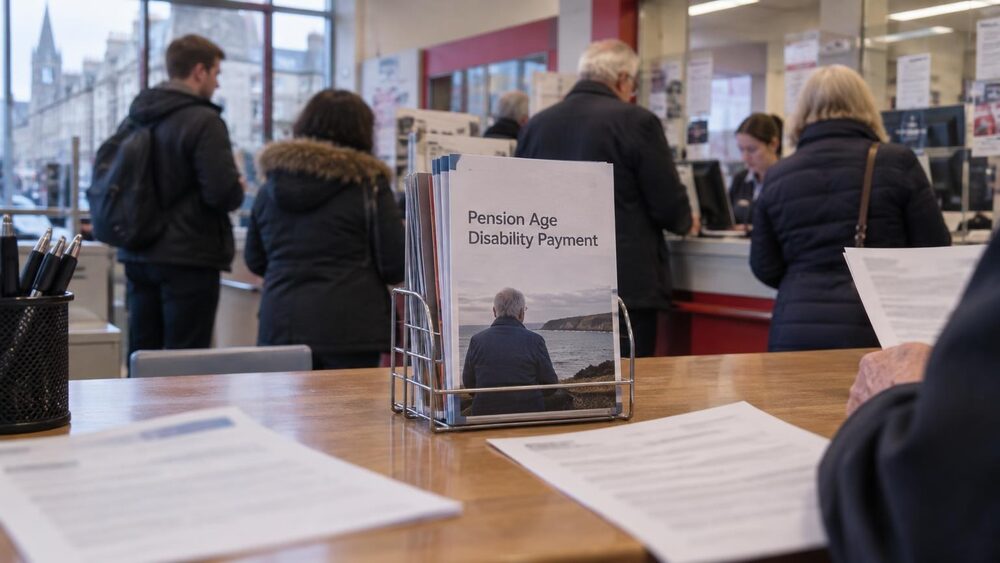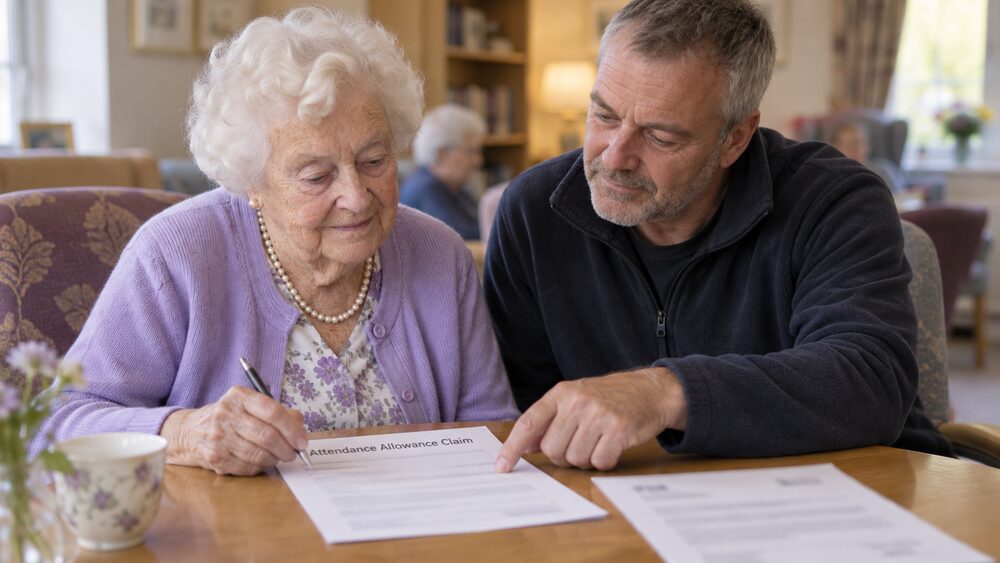
The single most important rule is this: you cannot start claiming Personal Independence Payment (PIP) once you have reached State Pension age. If you were already getting PIP before that point, it carries on. If you were not, the benefit designed for you is Attendance Allowance, which is for people at State Pension age or older who need help at home1.
The two benefits are not interchangeable, and the difference matters most for mobility. Attendance Allowance has no mobility component at all, so it cannot help with the extra costs of getting around, and it cannot be used for Motability3. PIP, by contrast, can include a mobility award, which is why it usually pays more overall3.
Attendance Allowance is paid at two rates: £76.70 a week at the lower rate and £114.60 a week at the higher rate4. Which one applies depends on the level of care you need, not on your income or savings, because Attendance Allowance is not means-tested5.
Already on PIP: you can keep it after State Pension age
Reaching State Pension age does not end a PIP award that is already running. If you were awarded PIP before you got to State Pension age, you continue to receive it afterwards, for as long as you meet the conditions7. Getting older is not, by itself, a reason for the award to stop.
There is a longer-term protection here too. From 31 May 2019, a guidance change means that claimants whose review would have taken place when they were of State Pension age are now generally given ongoing awards, with a review at the 10-year point rather than the usual cycle10. In practice, PIP recipients who are over State Pension age continue to receive payments indefinitely without further assessments11.
The trap is the gap. If your PIP award has already ended, the position is different. If you are over State Pension age and your last award of PIP ended more than a year ago, you cannot renew the claim or make a new one12. You may be able to claim Attendance Allowance instead, but that benefit does not include a mobility component12.
There is also a one-way door to be aware of. If you claim Attendance Allowance, you cannot go back to claiming PIP3. That matters if you are weighing up whether to let a PIP award lapse, because the decision is not reversible.
PIP or Attendance Allowance: which pays more
PIP is usually more than Attendance Allowance3. The reason is structural rather than a matter of rates: PIP is built from two components, daily living and mobility, and a claimant can receive one or both. Attendance Allowance is a single benefit paid at one of two rates, with no mobility element to add on2.
Attendance Allowance is paid at £76.70 a week at the lower rate and £114.60 a week at the higher rate4. The lower rate applies where you need support either in the day or in the night only; the higher rate applies where the need is greater1. The rates are set in legislation and uprated, and the figures here are the 2026 rates14.
Because Attendance Allowance is not means-tested, other income or savings do not reduce it5. It also does not count as income or savings for means-tested benefits such as Pension Credit, so claiming it does not cut those payments16. That is a meaningful difference from some other benefits, and it is one reason Attendance Allowance is worth checking even for people who assume they would not qualify.
Take-up is a real issue. Official statistics show 1.7 million claimants were receiving a payment under DWP ownership, and 99,000 (5.5%) were entitled to the benefit but not receiving payment17. Independent research has noted that Attendance Allowance is among the benefits with no take-up estimates at all, which makes it harder to know how many people are missing out18.
| PIP | Attendance Allowance | |
|---|---|---|
| Age rule | Claim before State Pension age | State Pension age or older2 |
| Components | Daily living and mobility | Single benefit, no mobility part2 |
| Rates | Two components, each with standard and enhanced rates | £76.70 lower, £114.60 higher4 |
| Means-tested | No | No5 |
| Affects Pension Credit | No | No16 |
| Motability | Possible with mobility award | Not possible3 |
Attendance Allowance has no mobility component
This is the difference that catches people out. Attendance Allowance does not cover mobility needs2. There is no mobility component, and you cannot use the benefit for Motability3. If your main extra cost is getting around, rather than personal care, Attendance Allowance will not address it.
The mobility part of PIP or Adult Disability Payment is what unlocks other help: a free bus pass, a Blue Badge, and the ability to lease mobility equipment19. None of that flows from Attendance Allowance. For someone whose needs are mainly about care and supervision at home, that may not matter. For someone whose needs are mainly about transport, it is the central issue.
There is a further restriction on what you can claim alongside it. While you are claiming Attendance Allowance you cannot also claim PIP (including Motability) or Disability Living Allowance1. The benefits are alternatives, not additions.
Attendance Allowance does have advantages of its own. It is not means-tested, so income and savings are irrelevant5. It is exempt from the Benefit Cap if you or your partner receive it20. And it does not count as income or savings for means-tested benefits like Pension Credit16.
One practical point for people in care settings: in England, the mobility component of PIP does not count as income when adult social care charges are worked out21. That is a specific protection for the mobility part of PIP, and it is another reason the loss of a mobility component on moving to Attendance Allowance can have knock-on effects.
Can I claim PIP if I am over State Pension age?
No, not normally. Once you have reached State Pension age, you cannot normally make a new claim for PIP, and Attendance Allowance is the benefit to consider instead6. If you have reached State Pension age and have not claimed PIP before, you are not eligible, and the route is Attendance Allowance24.
The rule is about the claim, not the person. PIP is for people aged between 16 and State Pension age26. People who have reached State Pension age are not affected by the planned changes to PIP and can continue to receive or claim Attendance Allowance27.
If you are making a new claim and you are over State Pension age, you have to apply for Attendance Allowance, or Pension Age Disability Payment in Scotland11. Attendance Allowance is for people at State Pension age or older who need help at home, and you can claim it regardless of income and savings29.
There is one more condition to check. Attendance Allowance is for people at State Pension age or older who do not get Disability Living Allowance30. If you are still on DLA, that changes the picture, and it is worth checking how the two interact before applying.
Below State Pension age, the position reverses: people under State Pension age should apply for PIP instead31. The boundary is State Pension age itself, and it is worth confirming your own State Pension age before assuming which side of the line you are on.
What if my PIP award ended more than a year ago and I am now over State Pension age?
This is the hardest position to be in, and the rules are strict. If you are over State Pension age and your last award of PIP ended more than a year ago, you cannot renew your claim or make a new one12. The renewal route closes after that period.
What remains open is Attendance Allowance, or Pension Age Disability Payment in Scotland, but neither includes a mobility component12. So someone who previously had a PIP award including mobility, and who let it lapse, cannot recover that mobility element through the older-age benefit.
If your award ended more recently, within the year, the renewal position is different and worth checking promptly, because the window is time-limited. The general rule that getting older does not stop an award applies to awards that are still running, not to ones that have already ended12.
Attendance Allowance itself can help with extra costs if you are over State Pension age and have long-term care or supervision needs32. It is paid at two rates depending on the level of care needed33. It is not means-tested, so it does not matter what other income or savings you have5.
If a decision goes against you, there are routes to challenge it. Mandatory reconsideration and tribunal appeal both exist, and the deadlines are strict, so it is worth acting quickly rather than assuming the first answer is final.
Will the new four-point rule for PIP affect me if I am over State Pension age?
No. People who have reached State Pension age are not affected by the planned changes to PIP, and those aged under 16 or at State Pension age can continue to receive or claim their existing benefits27. The changes are aimed at working-age claimants.
The background is worth knowing even so, because it explains why the question comes up. A Government-led review of PIP, the Timms Review, is expected to outline future changes to PIP, with publication expected in October 202634. Disability people's organisations have opposed the draft recommendations of the review35. The Work and Pensions Secretary has said the review was likely to lead to a change in assessment in the future36.
Separately, a change to the daily living qualification is planned from November 2026, requiring at least four points in one daily living activity for new claims and for existing claimants at their next review after that date37. That change is directed at the working-age caseload, not at people who have reached State Pension age.
For anyone already over State Pension age, the practical position is stability: PIP recipients over State Pension age continue to receive payments indefinitely without further assessments11. The changes being debated apply to a different group.
Scotland: Adult Disability Payment and Pension Age Disability Payment
Scotland runs its own disability benefits, and the names are different. Below State Pension age, PIP has been replaced by Adult Disability Payment, which also replaced Disability Living Allowance for those aged between 16 and State Pension age38. Adult Disability Payment was first rolled out in March 202210, and it replaced PIP in Scotland for new applicants39.
Above State Pension age, Attendance Allowance has been replaced by Pension Age Disability Payment40. It replaces Attendance Allowance for people in Scotland that was previously delivered by the Department for Work and Pensions41. It is paid at the same rates as Attendance Allowance24, and it is now widely available across Scotland8. From 22 April 2025, those in Scotland over pension age could apply for Pension Age Disability Payment rather than the DWP-administered Attendance Allowance43.
The eligibility rules mirror the rest of the UK in one important respect: there is no mobility component of Pension Age Disability Payment41. So the same limitation applies north of the border as elsewhere.
You cannot receive Pension Age Disability Payment at the same time as a list of other benefits, including Adult Disability Payment, armed forces independence payment, Attendance Allowance, Disability Living Allowance, Personal Independence Payment or Scottish Adult Disability Living Allowance44. The benefits are mutually exclusive.
Adult Disability Payment initially has very similar rules to PIP, though the Scottish Government intends to carry out a full review45. If you move between Scotland and the rest of the UK, the benefit you claim changes with your address, and it is worth checking how the transfer works before you move39.
Where to get free help
Attendance Allowance and PIP decisions can be complicated, and free, impartial help exists. MoneyHelper, the Money and Pensions Service's consumer service, and the charities named in this article all provide guidance without charge. Age UK, Scope, Turn2us, Carers UK and Macmillan all publish detailed guidance on these benefits1.
If a claim is refused, the challenge routes are mandatory reconsideration first, then tribunal appeal. Both have deadlines, and both are free. The DWP also has its own complaints process, and the Parliamentary and Health Service Ombudsman can look at maladministration.
For anyone in Scotland, Social Security Scotland administers Pension Age Disability Payment and Adult Disability Payment, and its own reconsideration and appeal routes apply.
Sources45 cited
- Attendance Allowance Scope, 2026-04-16
- Attendance Allowance GOV.UK, 2026-09-25
- Terminally ill benefits Scope, 2025-10-27
- The Social Security Benefits Up-rating Regulations 2026, schedule 1 legislation.gov.uk, 2026
- Unclaimed Attendance Allowance Entitledto, 2026-09-26
- Personal Independence Payment Scope, 2026-08-10
- Personal Independence Payment Age UK, 2026-04-06
- Attendance Allowance Carers UK Scotland, 2026-09-26
- Can I claim PIP for mental health? Mental Health and Money Advice, 2025-04-01
- Personal Independence Payment official statistics to April 2026 DWP, 2026-04-06
- Personal Independence Payment Which?, 2026-04-06
- When does PIP stop? Turn2us, 2026-08-14
- What is Attendance Allowance? Turn2us, 2025-10-29
- The Social Security Benefits Up-rating Regulations 2026, schedules legislation.gov.uk, 2026
- The Social Security Benefits Up-rating Regulations 2026, PDF legislation.gov.uk, 2026-03-02
- Financial support at State Pension age Scope, 2026-04-22
- Annual DWP benefits statistics compendium 2026 DWP, 2026-03
- Boosting benefit take-up Resolution Foundation, 2018-12-20
- Disability benefits for adults under State Pension age Independent Age, 2026-09-26
- How much Attendance Allowance will I get? Turn2us, 2025-10-29
- Paying for adult care services Contact, 2026-05-08
- Attendance Allowance Age UK, 2026-08-26
- How to have your benefits paid GOV.UK, 2026-09-26
- Benefits and pensions Which?, 2026-05-20
- Benefits for older people Which?, 2026-05-20
- Personal Independence Payment Guide Entitledto, 2026-09-26
- Personal Independence Payment Entitledto, 2026-09-26
- Personal Independence Payment Which?, 2026-04-06
- The Disability Assistance for Working Age People (Scotland) Regulations 2022 legislation.gov.uk, 2022-01-27
- Disability Living Allowance GOV.UK, 2026-09-26
- Attendance Allowance Macmillan Cancer Support, 2025-06-01
- Guidance on social security abroad (NI38) GOV.UK, 2026-07-07
- Attendance Allowance Turn2us, 2025-10-29
- Benefit changes timetable Turn2us, 2026-10
- Applying for Disabled Students' Allowance Disability Rights UK, 2026-09-25
- DWP PIP new update WalesOnline, 2026-09-25
- Spring Statement policy changes Entitledto, 2026-11
- Benefit combinations official statistics to March 2026 DWP, 2026-09-15
- Pension Age Disability Payment Carers UK Scotland, 2026-09-26
- Pension Age Disability Payment factsheet Social Security Scotland, 2026-03
- Perks and benefits of being retired Which?, 2026-05-20
- Public funds: accessible GOV.UK, 2025-04-22
- The Disability Assistance for Older People (Scotland) Regulations 2024 legislation.gov.uk, 2024-06-06
- Adult Disability Payment Contact, 2025-10-09
- Supporting clients moving to Scotland Social Security Scotland, 2026-01-27


 Turn2usFree benefits calculator and grants search from a charity
 Citizens AdviceFree advice on money, consumer and legal problems in England and Wales
 GOV.UKOfficial information on tax, benefits and government services
 MoneyHelperFree, impartial money and pensions guidance, set up by government