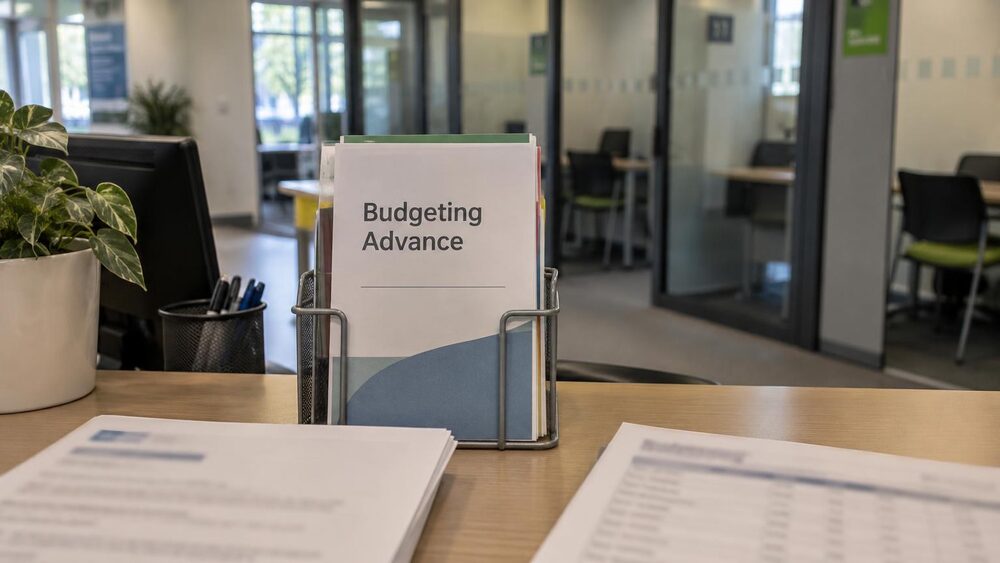
If you are waiting for your first Universal Credit payment, or you are already on benefits and hit with an emergency cost, the Department for Work and Pensions (DWP) offers three interest-free ways to borrow against money you are due to receive. None of them is a commercial loan: there is no credit check with a bank, no interest is added, and the repayment is collected automatically from your benefit payments rather than by direct debit1.
The three schemes are separate, and which one applies to you depends mainly on which benefit you get and how long you have been getting it. A Universal Credit advance is for people waiting for a first payment, or whose payment is going up after a change of circumstances, and can be worth up to 100 per cent of the estimated payment2. A Budgeting Advance is for people already on Universal Credit who face an emergency household cost, and runs up to £812 for families with children3. A Budgeting Loan is the older scheme, for people still on legacy benefits rather than Universal Credit, and in Northern Ireland runs from £100 to £1,5004.
All three have to be paid back, and the repayment comes out of your benefits whether or not you can easily afford it. That makes them very different from a grant such as the Scottish Welfare Fund, and it is worth understanding the rules before you apply, because a refused application, a deduction you did not expect, or a debt that follows you after your claim ends are all common outcomes.
Three ways to borrow against your benefits
The DWP's interest-free schemes sit alongside Universal Credit and the benefits it replaced, and each is aimed at a different situation. Knowing which one is yours saves an application that is bound to fail, because the eligibility rules do not overlap.
A Universal Credit advance exists because of the way Universal Credit is paid: you get your first payment about five weeks after you claim, and in Northern Ireland payments then arrive twice a month rather than monthly7. The advance is designed to bridge that five week wait for people in urgent financial need8. It is a loan, repaid from your future payments.
A Budgeting Advance is for people who are already receiving Universal Credit and hit an emergency household cost, or need help getting a job or staying in work2. It is the Universal Credit equivalent of the older Budgeting Loan, and Universal Credit claimants cannot apply for the Budgeting Loan instead9.
A Budgeting Loan is for people on the older, legacy benefits: Income Support, income-based Jobseeker's Allowance, income-related Employment and Support Allowance and Pension Credit. In Great Britain it is administered by the DWP; in Northern Ireland it is called the Social Fund Budgeting Loan and runs on its own rules, with loans of £100 to £1,5004. People who claim Universal Credit cannot get a Budgeting Loan9.
| Scheme | Who it is for | What it is for | Amount |
|---|---|---|---|
| Universal Credit advance | New claimants, or claimants whose payment is rising after a change | Bridging the wait for a first payment | Up to 100% of estimated payment2 |
| Budgeting Advance | People on Universal Credit for 6 months or more, with exceptions | Emergency household costs, work costs | £100 up to £812 with children3 |
| Budgeting Loan | People on legacy benefits, not Universal Credit | Furniture, clothing, rent in advance, moving costs | £100 to £1,500 in Northern Ireland4 |
All three are interest free, which is what separates them from every commercial alternative. A payday loan or credit card charges interest and fees; a DWP advance or Budgeting Loan costs only the amount borrowed5. The trade-off is that repayment is not optional and is taken at source from your benefits, as the guide to advance repayment explains in detail.
Universal Credit advance: up to 100 per cent of your first payment
The headline rule is simple: if you are eligible, you can get up to 100 per cent of your estimated Universal Credit payment as an advance2. The advance is based on what the DWP estimates your first payment will be, not on what you ask for, so the amount offered may be less than the maximum.
The reason the scheme exists is the five week wait. Your first Universal Credit payment arrives about five weeks after you claim, and in Northern Ireland the first payment is for 50 per cent of your monthly entitlement, with the rest following a couple of weeks later7. An advance is designed to help you through that gap5.
An advance is also available when your Universal Credit is going up because of a change of circumstances. Here the calculation is different: the advance is based on the increase, not your whole payment. Scope gives the example of payments going up by £20 a month after a change of circumstances, where the advance available is up to half of that increase, £1010. So a change of circumstances advance is normally much smaller than a new claim advance.
A worked example from the Mental Health and Money Advice service shows how the numbers fit together. If your first estimated Universal Credit payment is £221.53 and you receive an advance of £221.53, and you choose to repay over 12 months, the deduction works out at £18.46 per month, leaving £203.07 of that month's payment11. The repayment period is yours to choose within the limit: you have up to 24 months to pay back the advance1.
Who can get a Universal Credit advance, and when it can be refused
An advance is not automatic. The official guidance sets out who may be eligible and, just as importantly, the reasons a decision maker can refuse.
You may be eligible if you are awaiting your first Universal Credit payment and are in urgent financial need8. Before any advance can be paid, you must give details of your bank or building society account and prove your identity1. Identity verification normally happens at your first Universal Credit interview, and if you have not yet had that interview you will need to apply in person at the Jobcentre11. Advances are not available until identity is verified, and there can be lengthy delays in verification13.
The decision maker has discretion, and the guidance lists circumstances in which you might be refused:
- you will have enough money to live on until your Universal Credit payment arrives
- you live with parents, relatives or friends
- you will receive a final wage or redundancy payment
- you have savings available to you1
In practice this means the DWP looks at whether you genuinely cannot manage until the first payment. Someone with a final salary payment due, or living rent-free with family, is likely to be refused even if they meet every other condition.
There are limits on repeat applications too. You can only apply for one new claim advance1. For a Budgeting Advance, you must have paid off any previous Budgeting Advances before you can get another14.
How to apply for a Universal Credit advance
There are three routes to apply, and the fastest is usually your online account. You can apply through your Universal Credit online account, by calling the Universal Credit helpline, or by talking to your work coach at your first Universal Credit interview15. In Northern Ireland, you contact Universal Credit through your journal or by phone1.
There are conditions on applying online. You can only apply for an advance online if you are within your first Universal Credit assessment period and have had an interview at the Jobcentre Plus office, or in Northern Ireland, an interview at a Jobs and Benefits office or a home visit11. If you have not yet had your interview, you cannot use the online route: you need to apply in person instead11. Attending the appointment you are given matters, because the interview is what unlocks the online application1.
The process in order:
- Claim Universal Credit and wait for your appointment.
- Attend the interview and verify your identity.
- Ask for an advance through your online account, your journal, the helpline or your work coach.
- Give your bank or building society account details.
- Accept the repayment terms offered.
- Receive the money, normally within three working days5.
The decision is normally given straight away when you apply1. Once agreed, the money should reach your account within three working days, and if the DWP accepts your situation is urgent, payment can be made quicker, in some cases on the same day5. If you are asking for an advance because of a change of circumstances, the same routes apply: leave a note in your journal, speak to your work coach, or call the helpline10.
Repaying an advance: deductions of up to 15 per cent of your standard allowance
Repayment is automatic. Money is taken off your Universal Credit payments until the advance has been paid off17, and in Northern Ireland repayments are taken from your twice monthly payment2. You have up to 24 months to pay back the advance1.
The size of the deduction is capped. Normally the most that can be taken from your payment to repay a debt is 15 per cent of your Universal Credit standard allowance18. The standard allowance is the basic personal amount in your Universal Credit award, before elements for children, housing or disability are added, as explained in how Universal Credit is worked out. Independent guidance gives the practical effect: for a single person aged 25 or over the advance deduction is £64 per month, and for a single person under 25 it is £51 per month18.
The 15 per cent cap covers all debt deductions together, not just your advance. If your total deductions would be more than 15 per cent of your standard allowance, they are taken in a priority order: sanctions first, then the advance loan after a new claim or change of circumstances, then the advance loan after transferring from another benefit, then the Budgeting Advance19. So if you have a sanction as well as an advance, the sanction is paid first and the advance repayment may be squeezed.
There are two important exceptions to the cap. If last resort deductions are being taken, your deductions may be more than 15 per cent of your standard allowance20. And the DWP can still make debt deductions even if your Universal Credit is already too low to live on because of the benefit cap21.
If you cannot afford the repayments, they can be delayed. For a new claim advance, or one taken after transferring from another benefit, repayments can be delayed for up to three months1. For an advance taken after a change of circumstances, the deadline can be extended by up to one month20. For a Budgeting Advance, repayments can be delayed for up to six months in exceptional circumstances2. You can ask by leaving a message in your journal, speaking to your work coach or someone at your local Jobcentre, or calling the Universal Credit helpline5. If a fraud penalty or sanction is applied to your payments, advance repayments are stopped until it ends20.
You can check the balance of your advance loan through your Universal Credit online account22. If the deductions look wrong, contact Universal Credit through your journal, by phone or at your local Jobcentre22.
Budgeting Advance: up to £812 for people on Universal Credit
A Budgeting Advance is the emergency loan for people already on Universal Credit. It is designed to help pay for emergency household costs, or for help getting a job or staying in work2. In Northern Ireland it is described as helping pay emergency household costs such as furniture, clothing or travel1.
The amounts are fixed by household type. The smallest amount you can borrow is £100, and the maximum is £812 if you have children2. The award is reduced by any savings you have above £1,000, or £2,000 if you or your partner are aged 63 or over3.
The main eligibility condition is time on benefit. You must have been getting Universal Credit, Employment and Support Allowance or Pension Credit for six months or more, unless you need the money to help you start a new job or keep an existing job2. Northern Ireland's guidance adds Housing Benefit to that list1. If you have been on Universal Credit for less than six months, you can still qualify if you have been on Income Support, income-based Jobseeker's Allowance, income-related Employment and Support Allowance or Pension Credit for six months or more9. You must also have paid off any previous Budgeting Advances14.
Budgeting Advances can be used for a range of costs, including work clothes and equipment, childcare costs, buying essential household items, and help with rent14. To apply, contact the Universal Credit Service Centre via your online account or speak to your work coach2.
Repayment works like a Universal Credit advance: it comes out of your payments, and you must repay within 24 months20. The deduction is within the same 15 per cent cap and priority order as other DWP debts20. If you are struggling with money, Universal Credit may agree to extend the repayment deadline by six months20. If you move from Universal Credit to another benefit, repayments usually continue from your benefit payments until the advance is paid off2.
Budgeting Loans are only for people on older benefits
The Budgeting Loan is the legacy scheme, and its defining rule is who cannot have it: you cannot get a Budgeting Loan if you are getting Universal Credit9. It is for people on Income Support, income-based Jobseeker's Allowance, income-related Employment and Support Allowance or Pension Credit, and you must have been on one of those benefits for at least six months23.
The loan is interest free and can pay for things like a washing machine, advance rent or moving house24. The amount you get depends on your household, your ability to repay, and your savings, and the award is reduced by savings above £1,000, or £2,000 if one of you is 63 or over4.
The reason this scheme is shrinking is the migration to Universal Credit. When you claim Universal Credit, the benefits it replaces stop25, and from April 2027 Universal Credit will have fully replaced legacy benefits such as income-related ESA and Housing Benefit for working age people. As claimants move across, the Budgeting Loan is replaced by the Budgeting Advance, which works on similar principles but with its own limits. The comparison page on the Budgeting Advance vs Budgeting Loan sets the two side by side.
If you are still on a legacy benefit and facing an emergency cost, the Budgeting Loan is likely to be the route open to you; if you have already moved to Universal Credit, it is the Budgeting Advance instead9. Debt charity StepChange makes the same point from the other direction: you need to apply for a Budgeting Advance if you are on Universal Credit26.
Social Fund Budgeting Loan in Northern Ireland: £100 to £1,500
Northern Ireland runs its own version of the scheme, the Social Fund Budgeting Loan, with its own amounts and rules. You can apply to borrow between £100 and £1,5004.
The eligibility rules are stricter than in Great Britain in one respect: you or your partner must have been continuously receiving one or more of the qualifying benefits for the past 26 weeks, and you cannot get a loan if you or your partner currently claim Universal Credit4. Universal Credit itself operates across Northern Ireland, where the average amount paid to the 226,800 households in payment was £1,056 per month in May 202627.
The list of permitted uses is set out in the official guidance:
- furniture or household equipment
- clothing or footwear
- advance rent and removal costs when moving to a new home
- travelling expenses within the UK
- things to help you look for or start work
- improving, maintaining or securing your home
- maternity or funeral expenses
- repaying hire purchase or other debts taken out to pay for any of the above4
The amount you get depends on the number of people in your household, any money already owed to the Social Fund for previous loans, your ability to repay, and your savings. Your award will usually be reduced by the amount of any savings above £1,000, or £2,000 if one of you is 63 or over4.
You can apply online, request a form by phoning the Social Fund Budgeting loans service, or call into your local Jobs and Benefits office4. The loan is interest free and must be repaid, but it does not count as income and will not affect other benefits you are getting4.
If you stop getting benefits, the debt does not go away
This is the point most claimants underestimate. An advance or Budgeting Loan is a debt to the DWP, and it survives the end of your claim. If you stop getting Universal Credit, Debt Management will take repayments from your other benefit payments or your wages, or through a debt collection agency1. The official guidance says the same: if you no longer get Universal Credit, repayments will be taken by other means, such as other benefit payments, your wages or through a debt collection agency2.
The debts that can be deducted from Universal Credit include UC advances, budgeting loans or advances, other benefit and tax credit overpayments, and hardship payments if your Universal Credit is sanctioned21. Not all debts can be taken this way: your payment cannot go down for credit cards, bank overdrafts or payday loans21.
Two other rules are worth knowing. If you move from Universal Credit to another benefit, Budgeting Advance repayments usually continue from your benefit payments until the advance is paid off2. And debt deductions might pause if your benefit is sanctioned or you have to pay a fraud penalty, but the debt itself remains21.
If the deductions are causing hardship, ask for them to be delayed as described above, and if you are in problem debt more widely, free help is available from debt advice charities and from the guidance on debt. In Scotland, the cost of living campaign signposts free debt and money advice24.
Refused? Asking for the decision to be looked at again
If your application for an advance is refused, your options are narrower than for most benefit decisions. You can ask Universal Credit to look at the decision again, but you cannot appeal against the decision1. The official guidance is explicit: you can ask for the decision to be reconsidered, but you do not have a right of appeal2.
Asking for a second look is still worth doing if you think the decision missed something, for example if the decision maker was wrong about your savings or your final wage. A different decision maker will look at the decision and decide whether it should be changed; if the original decision is wrong, they change it and send a new decision letter28.
This is different from most Universal Credit decisions, where a refusal can be taken through mandatory reconsideration and then to a tribunal appeal. For those decisions you must ask for the decision to be looked at again and receive the mandatory reconsideration notice before you can appeal28. Advance refusals sit outside that route: reconsideration by the DWP itself is the end of the road.
If you are refused an advance and have no money for essentials, other help exists. In Scotland the Scottish Welfare Fund offers Crisis Grants, in Wales the Discretionary Assistance Fund plays that role, and across the UK local authorities and charities offer emergency support. The page on checking your entitlement lists free calculators and advisers who can check whether you are missing benefits you are already entitled to, which is often the underlying problem when an advance is needed at all.
Sources28 cited
- Help while waiting for your Universal Credit payment nidirect, 2026-06-30
- Universal Credit advance payments nidirect, 2026-05-20
- Interest-free loans from the Social Fund Shelter England, 2026-07-02
- Social Fund Budgeting loan nidirect, 2026-06-25
- How much Universal Credit advance will I get Turn2us, 2026-02-24
- Find out about money taken off your Universal Credit payment GOV.UK, 2026
- How much Universal Credit you get and how you're paid nidirect, 2026-07-15
- Scottish Welfare Fund statutory guidance, April 2025 Scottish Government, 2025-04-01
- Budgeting advance and loan Shelter Scotland, 2024-04-11
- Change of circumstances and Universal Credit Scope, 2026-07-14
- How to apply for a Universal Credit advance payment Mental Health and Money Advice, 2025-08-29
- Take-up and use of the Universal Credit advance payment GOV.UK, 2024-10-07
- Scottish Welfare Fund statutory guidance, April 2025 (PDF) Scottish Government, 2025-04
- Additional help if you are claiming Universal Credit Law Centre NI, 2022-11-21
- Universal Credit (UC) Gingerbread, 2026-04-16
- Scottish Welfare Fund statutory guidance Scottish Government, 2026-03-25
- Manage your Universal Credit claim after you apply GOV.UK, 2025-09-03
- Universal Credit advance deductions Turn2us, 2026-02-25
- How much can be taken from your Universal Credit payments nidirect, 2025-07-24
- Money taken from your Universal Credit payments nidirect, 2026-05-15
- Universal Credit debt deductions Shelter England, 2026-04-07
- Who to talk to about deductions from your Universal Credit nidirect, 2026-06-30
- Budgeting loans Shelter Cymru, 2026-08-29
- Debt and money Scottish Government, 2026-09-25
- What moves to Universal Credit nidirect, 2026-02-24
- Short-term loan debt StepChange, 2026-09-25
- Benefits statistics summary, May 2026 NISRA, 2026
- Appeal against the decision Turn2us, 2026-02-25






 Turn2usFree benefits calculator and grants search from a charity
 Citizens AdviceFree advice on money, consumer and legal problems in England and Wales
 GOV.UKOfficial information on tax, benefits and government services
 MoneyHelperFree, impartial money and pensions guidance, set up by government